
 Germany
The Heiligenberg is a large wooded hill overlooking the town of Heidelberg in Baden-Württemberg [1]. Archaeological investigations have taken place there several times since 1881, including in the 1920s and 1930s during the building of a guest house and the Nazi-era Thingstätte; finds of Neolithic linear pottery show it was inhabited as early as 5500–5100 BCE [1]. Celts settled there beginning in the first half of the first millennium BCE and constructed a double-walled hill fort around the primary and secondary peak [1]. The mountain was already being mined for iron ore in the early La Tène period [1]. The settlement was the political, religious and cultural centre of the region from the 5th century BCE until about 200 BCE, when the centre of political power shifted to the Roman settlement of Lopodunum [1]. Under the Romans there was a sacred precinct on the mountain: the foundations of a north-orientated temple to Mercury can be seen in the nave of the now ruined medieval basilica of St. Michael [1].
Text: Wikipedia – 'Heiligenberg (Heidelberg)' (revision of 2026-08-13), CC BY-SA 4.0 · sentences selected and shortened by an AI system · source →Heiligenberg, Heidelberg
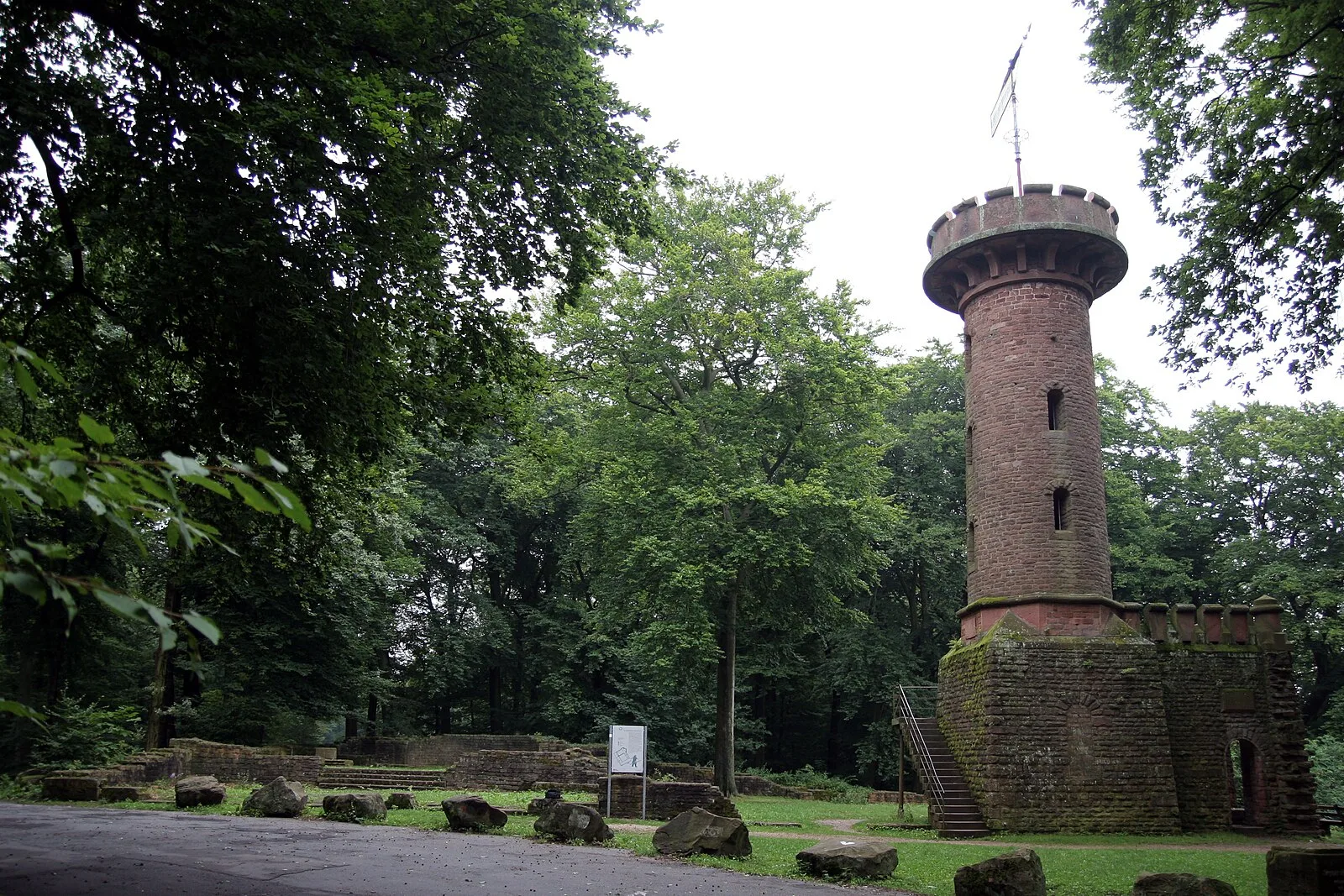
Also known as: Heiligenberg, Heiligenberg (bukid sa Alemanya, Baden-Württemberg Region, Karlsruhe Region, lat 49,43, long 8,71), Heiligenberg (Heidelberg), Гайлігенберг, Гайлігенберг (гора), Хайлигенберг, Хайлигенберг (холм), جبل هيليجينبيرج
| Type | Fortification |
|---|---|
| Period | 500 BC - 1 AD |
| Country | Germany |
| Coordinates | 49.4258° N, 8.7062° E |