
 Germany
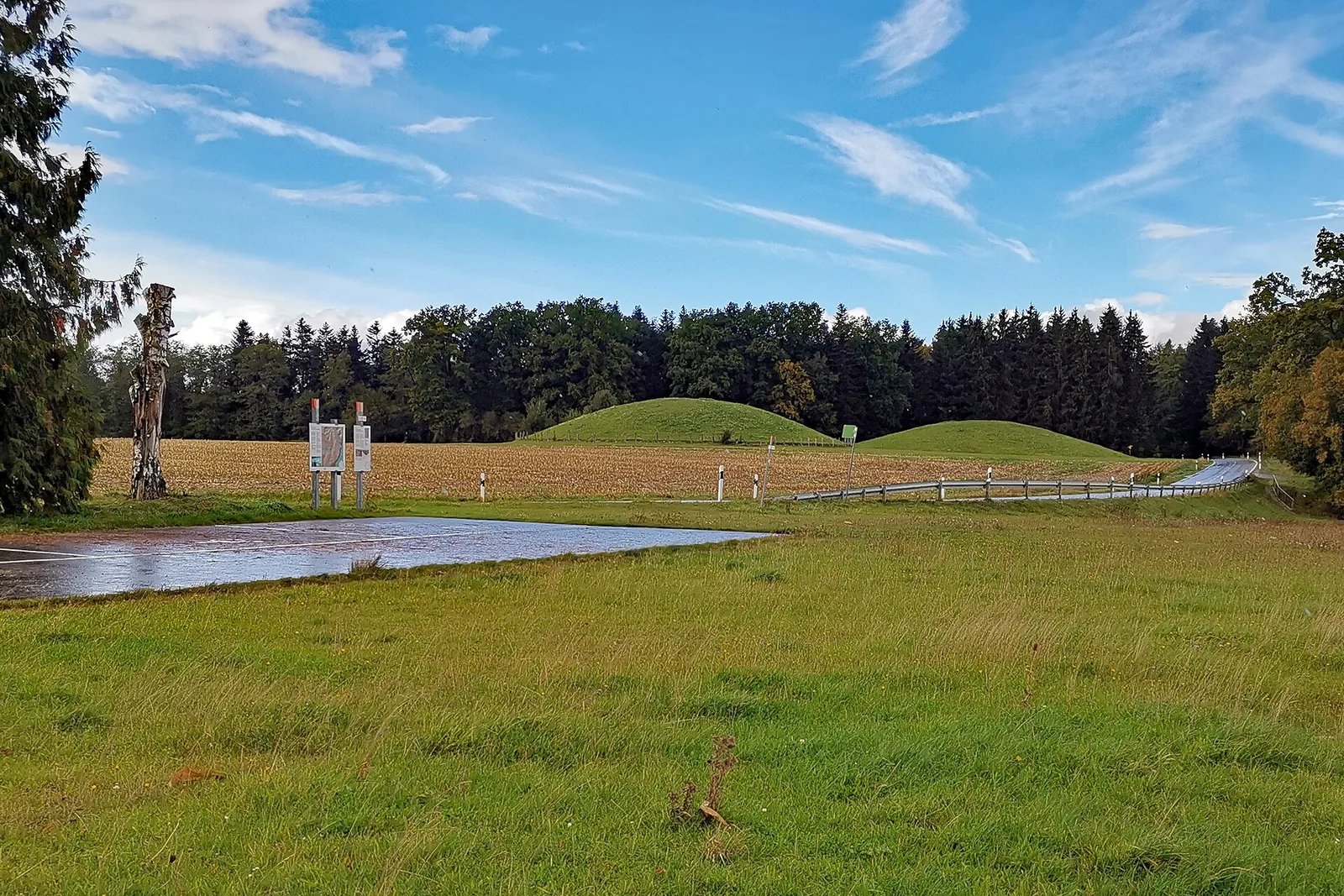
The Heuneburg is a prehistoric Celtic hillfort by the river Danube in Hundersingen near Herbertingen, between Ulm and Sigmaringen, Baden-Württemberg, in the south of Germany [1]. It is considered to be one of the most important early Celtic centres in Central Europe, particularly during the Iron Age Hallstatt culture period [1]. Apart from the fortified citadel, there are extensive remains of settlements and burial areas spanning several centuries [1]. The fortified citadel measures about 300 by 150 m [1]. It stood on a strategically positioned mountain spur that rises steeply 40 m above the Danube [1]. Although best known for its role as an important early Celtic centre from the 7th to 5th centuries BC, the Heuneburg was occupied at several other points during its history [1]. The first settlement on the site dates to the Middle Bronze Age (15th to 12th century BC) during the Tumulus culture period [1].
Text: Wikipedia – 'Heuneburg' (revision of 2026-09-12), CC BY-SA 4.0 · sentences selected and shortened by an AI system · source →Heuneburg
Also known as: Freilichtmuseum Heuneburg, Heunenburg, Гойнебург, Хойнебург, هوینه بورگ, 休訥堡
| Type | Fortress/citadel |
|---|---|
| Period | 3000 - 1500 BC |
| Country | Germany |
| Coordinates | 48.0947° N, 9.4119° E |