
 Germany
The Drususstein is a nearly 20-metre-high masonry block of Roman origin in the grounds of the citadel of Mainz [1]. It was originally cased in marble [1]. Researchers now largely accept that it is a remnant of the cenotaph mentioned by writers such as Eutropius and Suetonius, erected in 9 BC by Roman troops in honour of the deceased general Drusus, in Mogontiacum [1]. During the early days of the Principate, the Drususstein was the starting point for elaborate memorial services in honour of Drusus, and the centre of the imperial cult in Mogontiacum [1]. After being robbed of its marble casing in the early Middle Ages, the Drususstein served as a watchtower in the fortifications of the city in the 16th century [1]. For that purpose a staircase and doorframe were made in the structure, which had been up to that point a solid building [1].
Text: Wikipedia – 'Drususstein' (revision of 2026-06-14), CC BY-SA 4.0 · sentences selected and shortened by an AI system · source →Drususstein
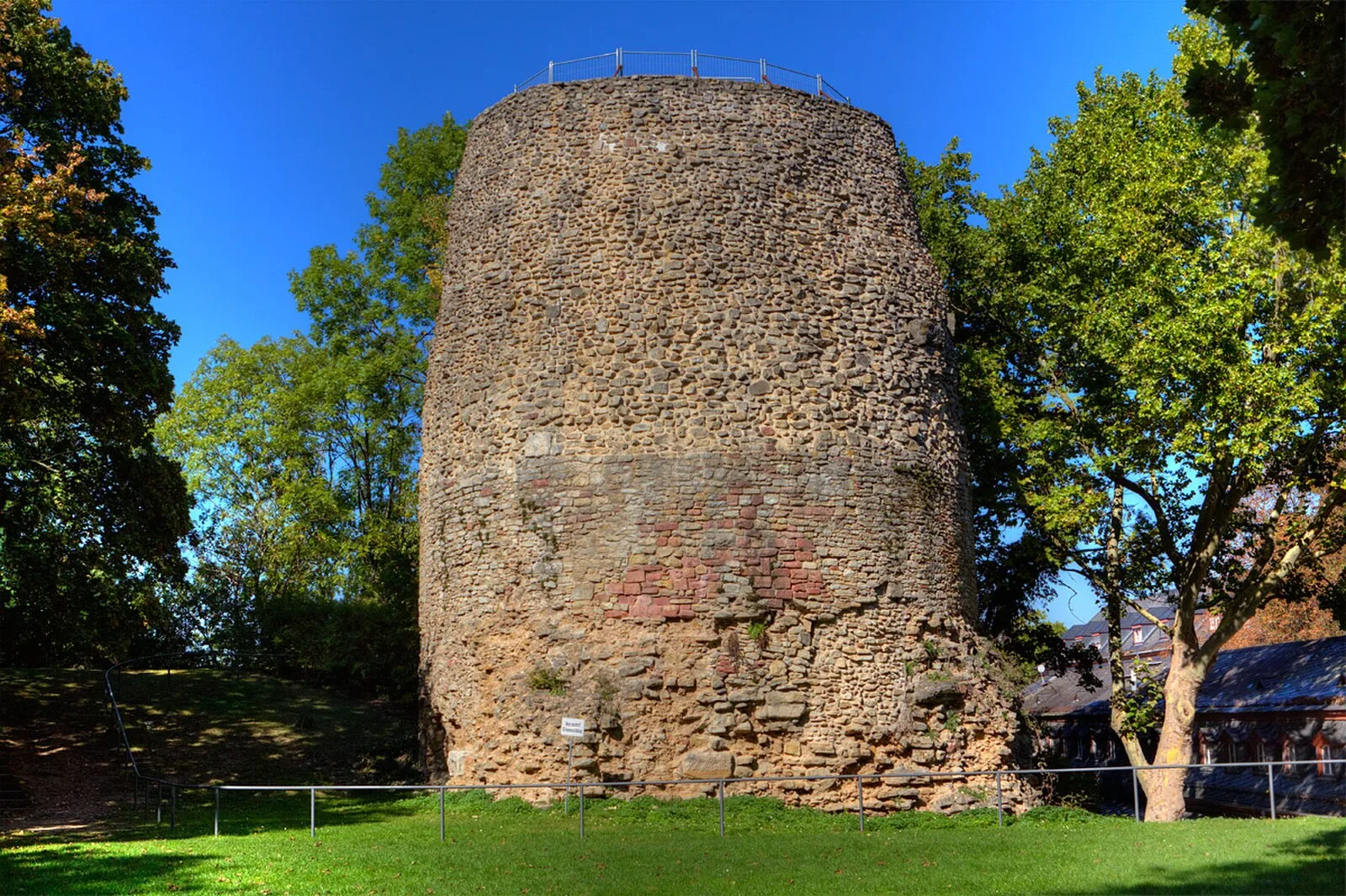
Also known as: Cenotafi de Drus, Cenotafio de Druso, Cenotafio di Druso, Cénotaphe de Drusus, Drususe kenotaaf, Drususe kivi, Drusus-kő, Drususturm, Drusův kenotaf, ड्रूज़ुसश्टाइन
| Type | Monument |
|---|---|
| Period | 500 BC - 1 AD |
| Country | Germany |
| Coordinates | 49.9922° N, 8.2742° E |