
 Germany
The archaeological site of Herxheim was a ritual center and a mass grave formed by people of the Linear Pottery culture in Neolithic Europe [1]. The site dates from between 5300 and 4950 BC [1]. Herxheim was discovered in 1996 on the site of a construction project when locals reported finds of bones, including human skulls [1]. The deposition of the human remains occurred only within the final 50 years of occupation at the site [1]. A detailed study published by the excavators in 2015 estimates that the site contains the scattered remains of more than 1000 individuals [1].
Text: Wikipedia – 'Herxheim (archaeological site)' (revision of 2026-07-27), CC BY-SA 4.0 · sentences selected and shortened by an AI system · source →Herxheim - Archaeological Site
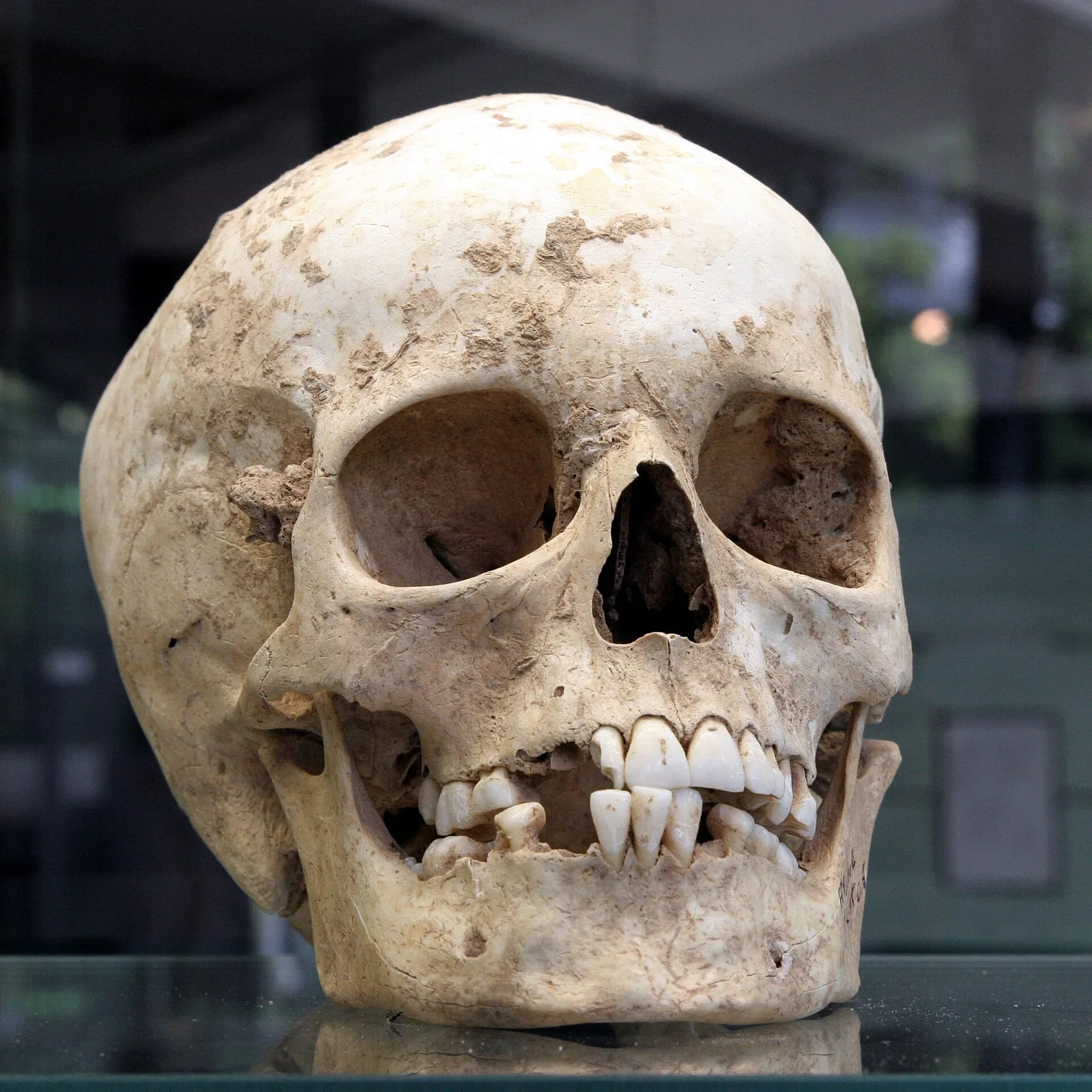
Also known as: Aardwerk van Herxheim, Grabenanlage von Herxheim, Grubenanlage von Herxheim, Herxheim, Herxheim (archaeological site), Herxheim (site néolithique), Herxheim (sitio arqueológico), Захоронение в Херксхайме
| Type | City/town/settlement |
|---|---|
| Period | < 4500 BC |
| Country | Germany |
| Coordinates | 49.1453° N, 8.1906° E |