
 Germany
The Hochdorf Chieftain's Grave is a richly-furnished Celtic burial chamber near Hochdorf an der Enz in Baden-Württemberg, Germany, dating from 530 BC in the Hallstatt culture period [1]. It was discovered in 1968 by an amateur archaeologist and excavated from 1978 to 1979 by the State Historical site office known as the Baden-Württemberg Landesdenkmalamt under the direction of German archeologist Jörg Biel with association from excavation technician Fritz Maurer [1]. A man, roughly 50 years of age and 180 cm tall, was laid out on an exceptionally richly decorated 275 cm bronze recliner with eight wheels inside the burial chamber [1]. At the foot of the couch was a large cauldron decorated with three lions around the brim, originally imported from Magna Graecia but subsequently altered [1]. This cauldron was originally filled with about 400 L of mead [1]. The east side of the tomb contained an iron-plated wooden four-wheeled wagon holding a set of bronze dishes—along with the drinking horns found on the walls enough to serve nine people [1]. The whole burial chamber was lined with elaborate textiles [1].
Text: Wikipedia – 'Hochdorf Chieftain's Grave' (revision of 2025-10-11), CC BY-SA 4.0 · sentences selected and shortened by an AI system · source →Hochdorf Chieftain's Grave
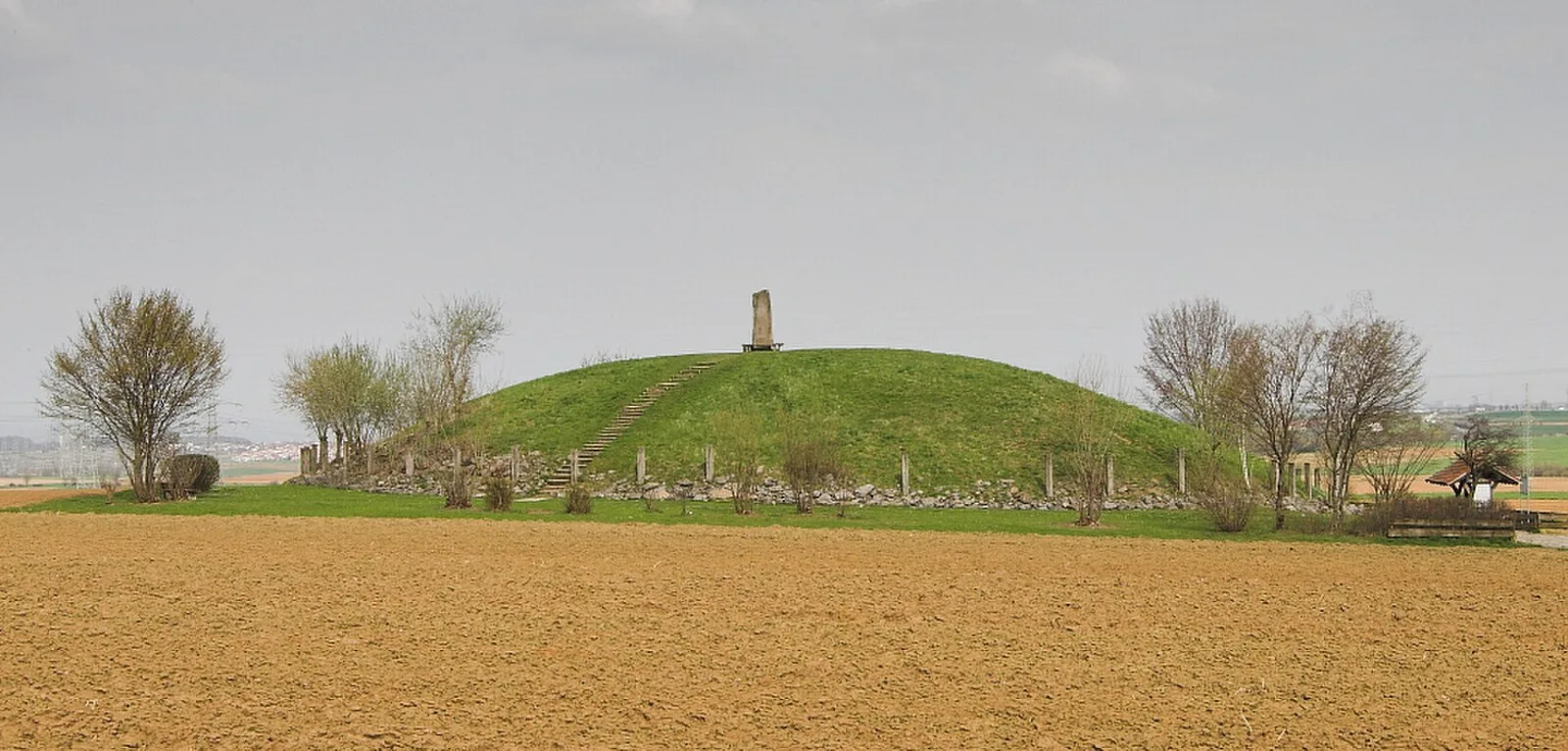
Also known as: Grób wodza z Hochdorf, Hochdorf, Hochdorf Celtic Museum, Hochdorf (fornminne), Hochdorfin hautakumpu, Keltengrabhügel Hochdorf, Keltenmuseum Hochdorf, Museum Celticum Hochdorf, Naboxa ke Hochdorf, Náčelnický hrob z Hochdorfu, Príncipe de Hochdorf, Sepultura principalis Hochdorf
| Type | Mound/tumulus |
|---|---|
| Period | 1500 - 500 BC |
| Country | Germany |
| Coordinates | 48.8892° N, 9.0033° E |