

Weekly Archaeology Journal
Week of October 12: 10,500-Year-Old Staked Auroch Skull at Duvensee, 6,000-Platform Upano Valley Network, and More
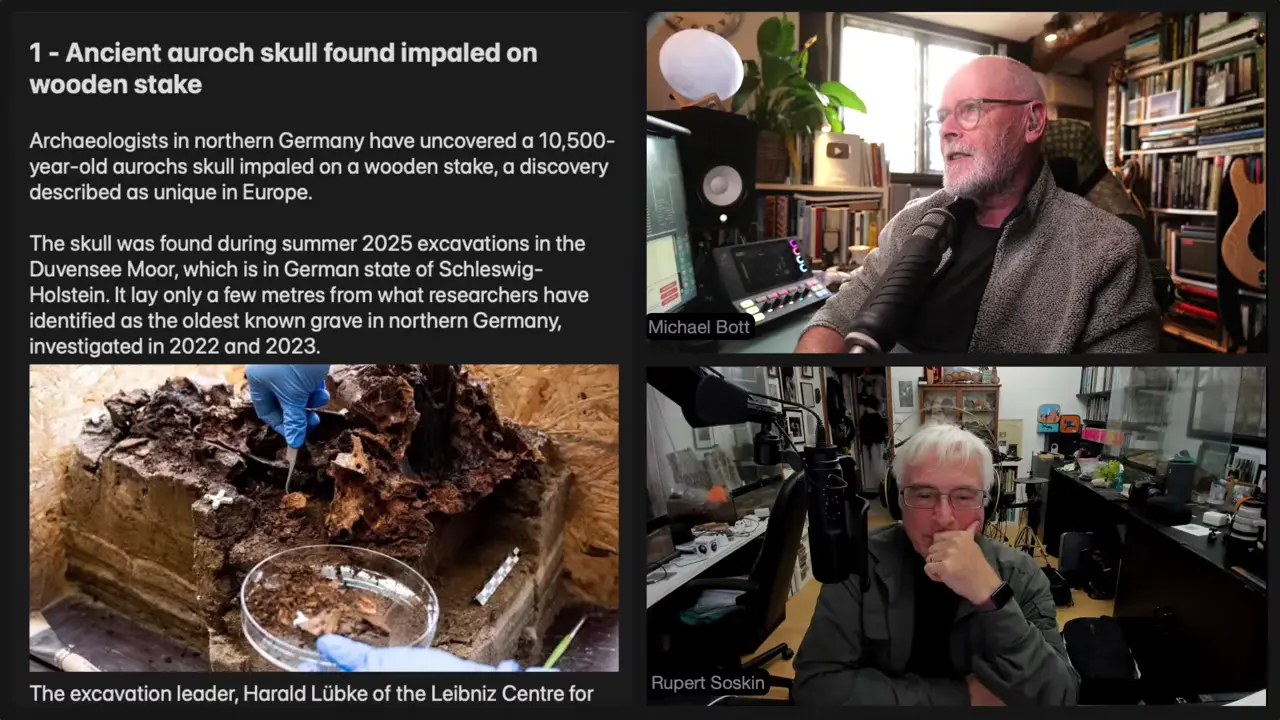
Oct 12 – Oct 18~16 min readArchaeologists in Schleswig-Holstein recovered an approximately 10,500-year-old auroch skull impaled on a wooden stake at Duvensee moor, just metres from Germany's oldest known grave, with excavation leader Harald Lüchmann linking the two to a protective burial ritual. Airborne LiDAR in Ecuador's Upano Valley revealed a network of more than 6,000 earthen platforms across roughly 300 square kilometres, dated to about 2,500 years ago and described as the largest known Amazonian urban network at publication. Other coverage examined Mesolithic worked timbers recovered from Lake Arendsee at roughly 20 m depth, the Bent Pyramid's chimney masonry shown to be contemporary with its lower chamber, and LiDAR surveys identifying more than 60,000 Maya structures in Guatemala's Petén region.
Week of October 5: Harbin Cranium Confirmed as Denisovan by 95 Proteins, Göbekli Tepe Pillars Traced to Local Firat Limestone, and More
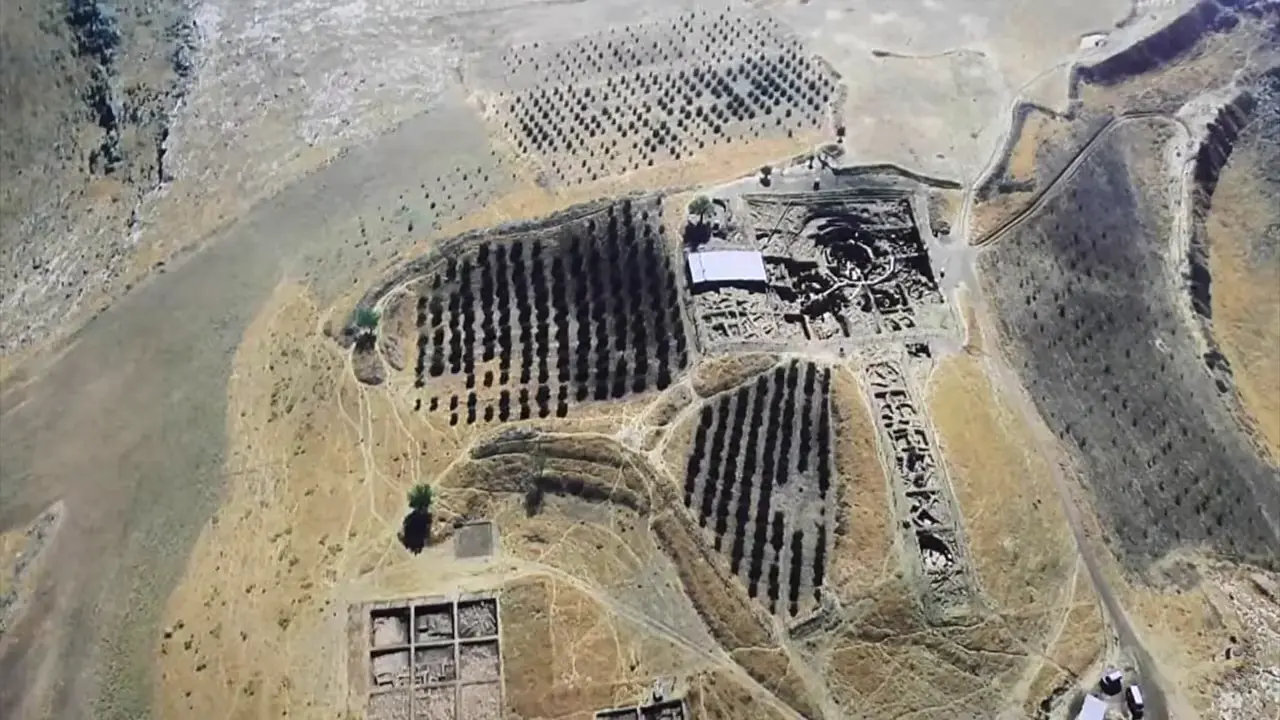
Oct 5 – Oct 11~16 min readTwo 2025 studies placed the Harbin cranium — presented in 2021 as Homo longi and at least 146,000 years old — within the Denisovan lineage, yielding 95 endogenous proteins in Science and Denisovan mitochondrial DNA from dental calculus in Cell. Geological study of Göbekli Tepe traced most T-shaped pillars to limestone outcrops roughly 600 m northwest of the oval buildings, with no bedding boundaries inside the pillars suggesting single-bed, horizontal extraction. A BYU survey team reconstructed Egypt's Seila pyramid at over 36 m base and about 23.4 m high, far exceeding the 6.8 m surviving ruin, while Cladh Hallan on South Uist yielded five centuries of domestic debris sampled at millimetre scale. Guyaju's Guantangzi "Golden Temple" emerged as its largest complex with eight chambers across two floors, though the site still has no secure chronology.
Week of September 28: Greece's Record Pushed Back 700,000 Years, Chan Chan's 38-Burial Platform, and More
Sep 28 – Oct 4~17 min readCoal mining at Megalopolis in Arcadia has pushed Greece's archaeological record back to about 700,000 years with stone tools at Kipparissia 4 and 430,000-year-old wooden digging sticks from Marathousa 1, alongside new uranium-series dating putting the Petralona cranium at a minimum of 286 ± 9 thousand years. At Chan Chan, excavators uncovered a nearly intact 600-year-old walled funerary platform, roughly 17 meters per side, holding at least 38 Chimú burials with gold, metal and shell grave goods. A sandstone lintel inscribed with Ramesses II's royal titles and a reference to restoring a statue of Horus, Lord of Mesen, is the strongest clue yet that Tell Abu Saifi in northern Sinai is ancient Mesen, though specialists call the identification strengthened rather than confirmed. Other findings include 25,000-year-old Indonesian teeth with arecoline indicating the earliest known drug use, newly mapped roads and a 1.2-kilometre trail extending the Mandor network around Machu Picchu, and modelled Indus basin droughts lasting more than 85 years each between 4400 and 3400 years ago.
Week of September 21: Teotihuacan Trophy Ornaments Found, Sacsayhuamán Waterworks, and More
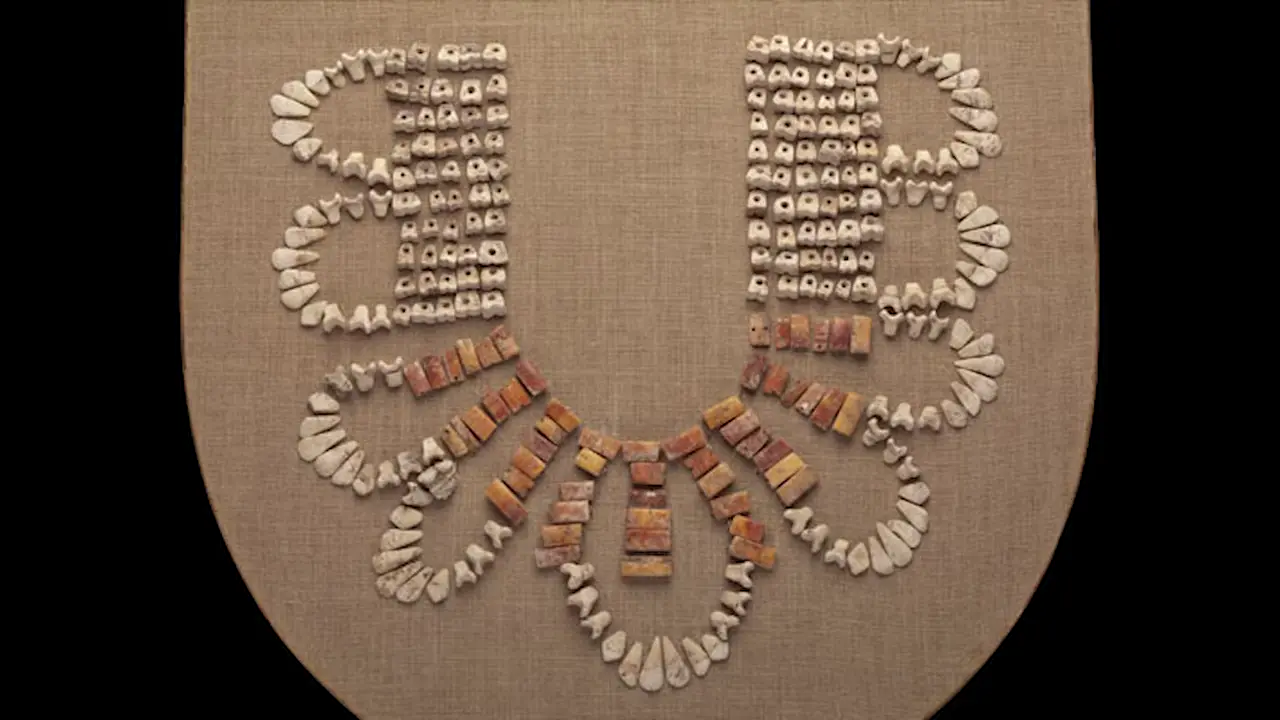
Sep 21 – Sep 27~9 min readA fresh study of the Temple of the Feathered Serpent at Teotihuacan reveals 72 males identified as soldiers were sacrificed, with four wearing 7–11 real human maxillae as trophy ornaments drawn from at least three regions. New hydraulic analysis of Sacsayhuamán's Muyuqmarka structure reframes the Inca complex as a sophisticated water-engineering achievement rather than a fortress. Separately, the Dresden Codex's eclipse table used overlapping Saros and Inex cycles to keep Maya solar-eclipse forecasting reliable for thousands of years.

Week of September 14: 17,000 Artifacts at Sanxingdui, 557M-Year Cnidarian, and More
Sep 14 – Sep 20~14 min readSix newly excavated sacrificial pits at Sanxingdui yielded more than 17,000 artifacts in bronze, jade, gold, ivory, and elephant tusk. The formal description of Auroralumina attenboroughii from the Ediacaran rocks of Charnwood Forest confirmed the oldest known crown-group cnidarian at approximately 557–562 million years old, predating the Cambrian diversification of animal life. Meanwhile, excavations at a Roman villa near Rossett revealed the first Roman villa discovered in North Wales, featuring a winged corridor plan with painted wall plaster and a hypocaust central heating system.

Week of September 7: 1.04M-Year Sulawesi Tools Found, Fourth Mallorca Talayot, and More
Sep 7 – Sep 13~12 min readSeven stone flakes from a cornfield in Calio, southern Sulawesi, dated to approximately 1.04 million years ago, represent the oldest known evidence of a human presence on the island and raise questions about ancient seafaring. Archaeologists discovered a previously unknown fourth talayot at Son Fornés in Montuïri, Mallorca, hidden beneath vegetation during land clearance for a new archaeological park museum. A study using 425 radiocarbon dates and Bayesian modeling re-dates the Ohio Hopewell ritual complex to AD 90-120, while a scuba expedition led by Pearce Paul Creasman entered the flooded tomb of King Nastasen at Nuri, Sudan—the first to do so in approximately 100 years.

Week of August 31: 476,000-Year-Old Wooden Structure Found, Dire Wolf Pups Born, and More
Aug 31 – Sep 6~14 min readArchaeologists at Kalambo Falls on the Zambia-Tanzania border uncovered the oldest known wooden structure, with two interlocking notched timbers dated to approximately 476,000 years ago. Colossal Biosciences announced the birth of three genetically engineered dire wolf puppies, while Chinese researchers identified 232 carved symbols across more than 1,000 ceramic vessels from the Lianshi site in Hubei province, dated to approximately 5000 BC. A Griffith University team led by Paul Taçon also documented 14 new thylacine paintings in Arnhem Land, some depicting the animals as hunting partners.
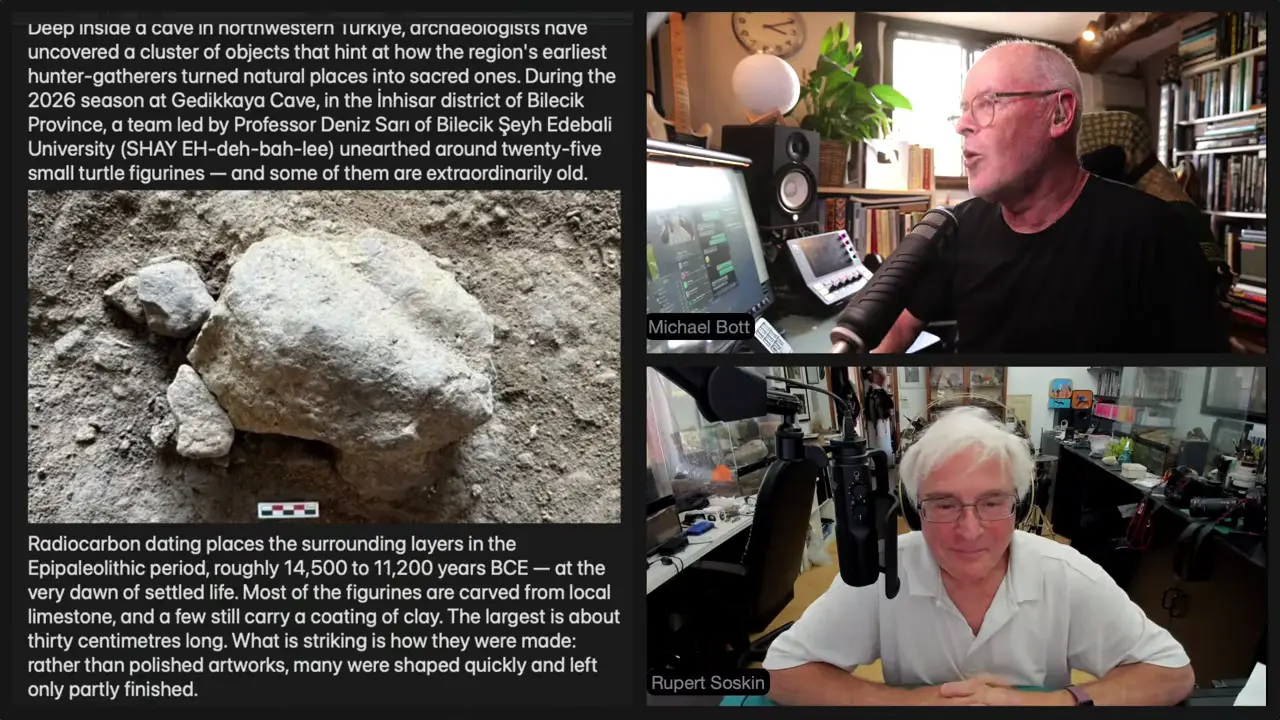
Week of August 24: 25 Turtle Figurines in Turkish Cave, World's First Brand, and More
Aug 24 – Aug 30~11 min readArchaeologists recovered 25 turtle figurines from Turkey's Gedikkaya Cave suggesting a 14,500-year-old Epipaleolithic ritual site, while researchers identified Qurayyah Painted Ware in northwestern Saudi Arabia as possibly the world's earliest known branded commodity from approximately 3,600 years ago. A 2026 PNAS paper found Aurignacian symbolic notation remained standardized across hundreds of miles for roughly 10,000 years, and Lazio research dated Italian cyclopean platforms to before 800 BC.

Week of August 17: Denisovan Leg Bones Reveal Exceptional Height, Sayburç Chamber, and More
Aug 17 – Aug 23~11 min readPenghu 2 and 3, Denisovan leg bones dated to 43,000–45,000 years ago and identified via palaeoproteomic analysis, rank among the largest known from any Pleistocene Homo individual and extend the Denisovan range roughly 4,000 km southeast of Denisova Cave. At Sayburç, a Pre-Pottery Neolithic site in the Eastern Taurus foothills, excavators uncovered a bedrock-carved subterranean chamber roughly 18 by 25 feet with benches and column-like corners, while a 2026 Antiquity reassessment by Aurora Petan argues the contested Sinaia lead plates may constitute a genuine Dacian royal archive. Separately, LiDAR-based estimates place the southwestern Amazon's precolonial population at 1.2–4 million people, and the Great Breach on Menkaure's Pyramid has been dated to between 1639 and 1792.
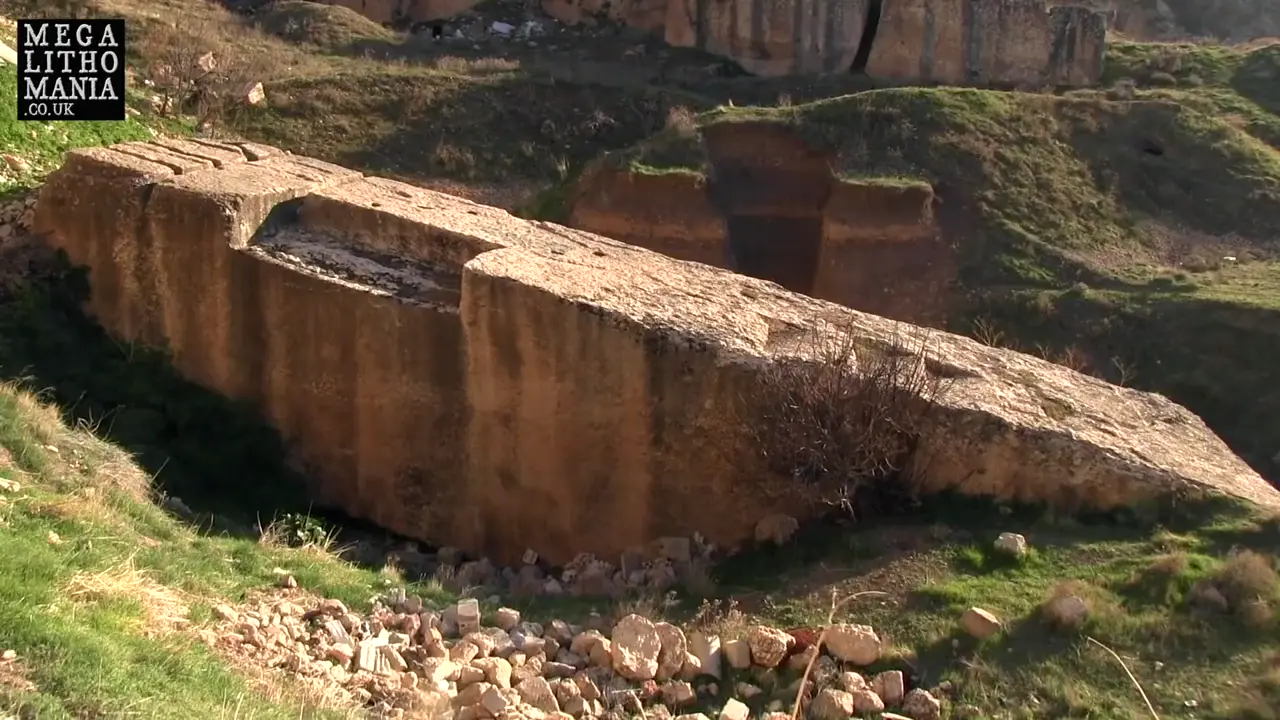
Week of August 10: 1,240-Ton Baalbek Monolith Found, Yukon Horse DNA Persists, and More
Aug 10 – Aug 16~13 min readA second monolith weighing approximately 1,240 tons has been identified in the western quarry at Baalbek, distinct from the Stone of the Pregnant Woman. Sedimentary ancient DNA from Yukon's Klondike region detected genetic traces of woolly mammoth and North American horse persisting as much as 7,000 years into the Holocene beyond the last macrofossil evidence. At Göbekli Tepe, new excavations uncovered rectangular domestic buildings, while a joint Chinese-Turkish venture began digging at the Pre-Pottery Neolithic site of Yoğunburç.

Week of August 3: 2,600-Year-Old Picene Chariot Burial, Hiawatha Crater Redated, and More
Aug 3 – Aug 9~11 min readA 2,600-year-old Picene funerary complex organized around a prince's tomb containing a two-wheeled chariot, helmet, axe, and weapons has been identified near Sirolo on Italy's Adriatic coast. The 31-kilometer-wide Hiawatha impact crater beneath Greenland has been redated to 57.99 ± 0.54 million years ago via multiple radiometric analyses, separating it from any Younger Dryas scenario. Genome-wide ancient DNA from Roopkund Lake revealed three distinct ancestry clusters among remains dating to approximately 800 CE and 1800 CE, while a Rapa Nui DNA study spanning AD 1670 to 1950 showed steady population growth before European contact in 1722, directly refuting the ecological suicide hypothesis.

Week of July 27: 432 Amazon Earthworks Found by LiDAR, Shroud Dating Reassessed, and More
Jul 27 – Aug 2~11 min readA LiDAR survey in Acre, Brazil documented 432 earthworks—396 of them newly identified—leading researchers to estimate 24,000–30,000 such structures across the Amazon linked to the "Aquiry civilization." Statistical reanalysis of the Shroud of Turin's 1988 radiocarbon data, released in 2017 following a legal request, revealed inter-laboratory heterogeneity that undermines the original dating's accuracy. Meanwhile, 1.95-million-year-old cut marks at Grăunceanu may push back the earliest European hominin date, and GPR at Hawara revealed an underground grid tied to the Labyrinth complex offset 20–25 degrees from Amenemhat III's pyramid.

Week of July 20: 1,600 Mustatils Found in Saudi Arabia, Pompeii Shanty Towns, and More
Jul 20 – Jul 26~13 min readOver 1,600 mustatils dating to 5,300–5,000 BC have been documented across northern Saudi Arabia, predating Stonehenge and the pyramids of Giza. Excavations at Pompeii's Insula Meridionalis reveal that the city remained inhabited by shanty-town dwellers well after the 79 CE eruption, until a 472 CE eruption of Vesuvius displaced its residents. Meanwhile, a revised Xitle eruption chronology undermines the Cuicuilco refugee theory of Teotihuacan's origins, and Hoq Cave on Socotra preserves roughly 200 multilingual inscriptions spanning the 1st century BC to the 6th century AD.

Week of July 13: Sanctuary of Odysseus Identified on Ithaca, Oldest Known Bedding, and More
Jul 13 – Jul 19~10 min readArchaeologists identified a Hellenistic sanctuary of Odysseus on Ithaca through inscribed dedications and tile stamps from the School of Homer site. The earliest known constructed bedding, made from grasses approximately 23,000 years ago, was documented at Ohalo II on the shore of the paleo-Sea of Galilee. Separately, David Stewart deciphered the name of Sak Tahn Waax at Xultun, the first named Maya astronomer, while Phnom Kulen yielded unique Yali carvings depicting the hybrid creature alongside its elephant and tiger parents.
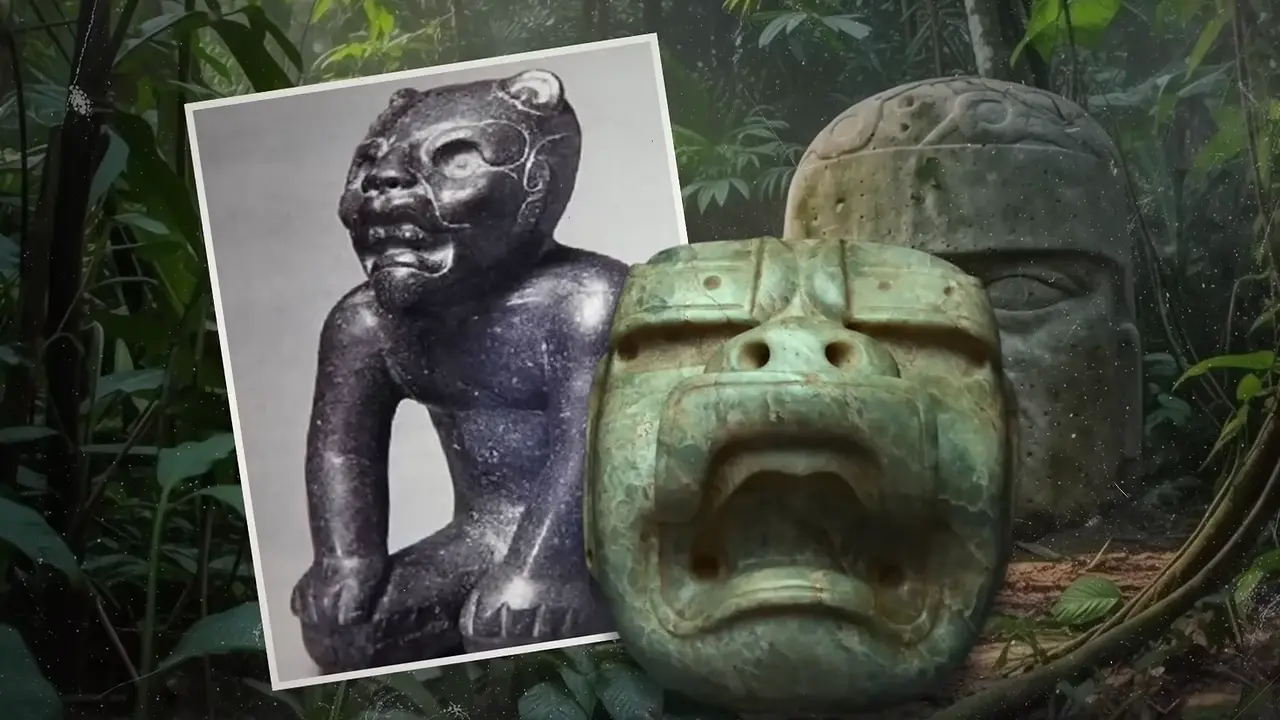
Week of July 6: Olmec Heads Were Royal Portraits, Khmer Capital Rediscovered, and More
Jul 6 – Jul 12~4 min readNew analysis of the Olmec colossal heads—ranging from 1.47 to 3.4 meters tall and weighing up to 28 metric tons—reveals distinctive elite markers like artificial cranial deformation and strabismus, reinforcing the case that each monument commemorated a specific individual king rather than a standardized deity. In Cambodia, Phnom Kulen in Siem Reap Province has been identified as Mahendraparvata, the first capital of the Khmer Empire established by King Jayavarman II in 802 CE, featuring an elaborate grid-pattern urban plan with planned temple complexes and water reservoirs. Meanwhile, an oral account documents Indigenous rock arrangements piled on a water-girdled island in the Cusa (Coosa) River, situated near a massive impact crater and accessible only by swimming or shimmying between rocks.

Weekly Archaeological Digest
Jun 29 – Jul 5~4 min read
Week of June 22: Kailasa Temple's Monolithic Marvel, Chinkultic's Sacred Cenote, and More
Jun 22 – Jun 28~5 min readThe Kailasa Temple at Ellora, the world's largest monolithic structure, was carved entirely from a single basalt rock during the 8th century CE under the Rashtrakuta dynasty's King Krishna I, with life-sized elephant sculptures flanking its entrance. LiDAR imaging has revealed Angkor as a sprawling pre-industrial metropolis hidden beneath Cambodia's forest canopy, spanning approximately 400 km². Meanwhile, the Maya site of Chinkultic in Chiapas flourished under the Chan Ajaw dynasty between 700 and 900 CE, centered on its sacred Agua Azul cenote connected by sightline to the Acropolis.

Week of June 8: Archaeology's Scientific Status Debated, Radiocarbon Dating's Predictive Power, and More
Jun 8 – Jun 14~2 min readA DeDunking video frames archaeology's scientific standing around the distinction between replicability and prediction, citing radiocarbon dating's reliance on the predictable decay of carbon-14 to nitrogen-14 as a foundational method. The broader debate involves Flint Dibble, an American archaeologist and science communicator who has explained scientific reasoning to wide audiences, including a documented exchange with Joe Rogan. The video's characterization of Dibble's position represents the presenter's own interpretation rather than a direct statement from Dibble.
Week of June 1: 59,000-Year-Old Neanderthal Dental Drilling, Easter Island Crops, and More
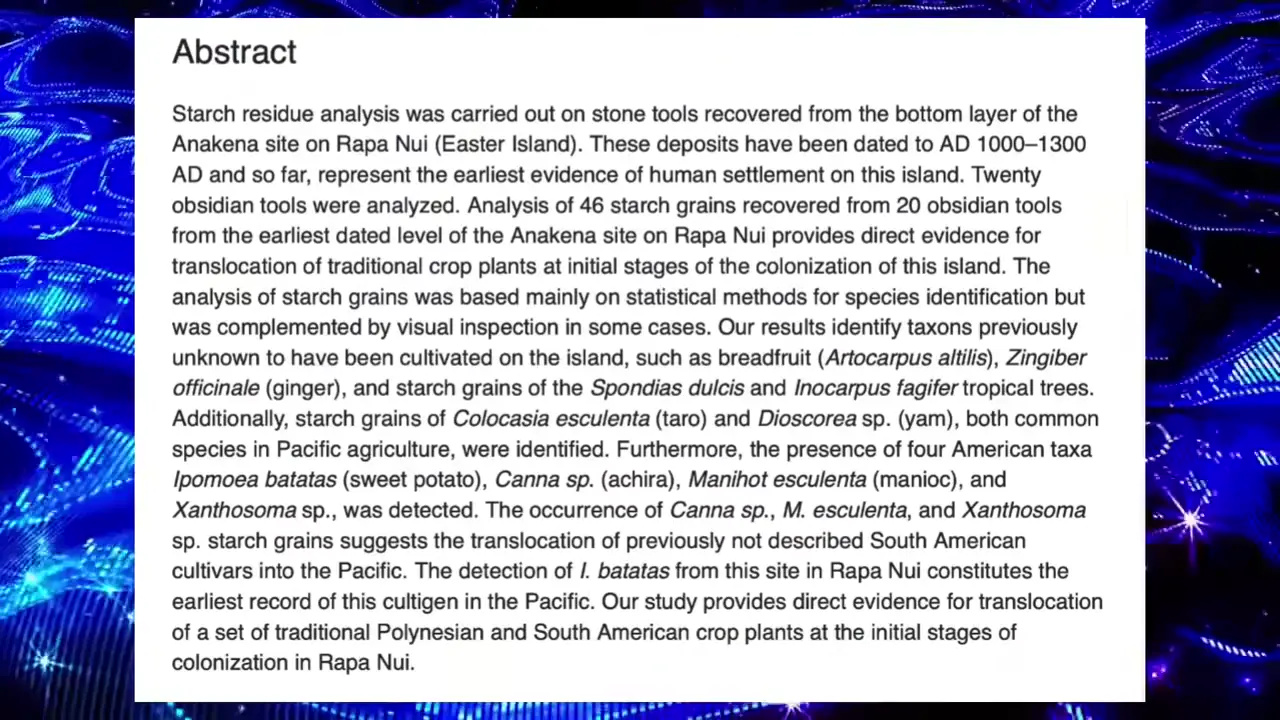
Jun 1 – Jun 7~14 min readA lower second molar from Chagyrskaya Cave in Siberia shows Neanderthals performed deliberate dental drilling 59,000 years ago—the earliest evidence of such treatment in human history, predating previous examples by more than 40,000 years. Starch residue analysis of obsidian tools at Anakena on Rapa Nui (Easter Island) revealed previously unknown cultivated crops including breadfruit, ginger, sweet potato, and manioc from the earliest settlement layers dating to AD 1000–1300. Elsewhere, the earliest known shipwreck in Singapore waters—a Chinese junk loaded at Quanzhou and bound for Temasek—was dated to 1340–1352 CE, while Room 3 of the Bonampak murals captured Maya noble women performing bloodletting with stingray spines and obsidian-studded ropes.
Week of May 25: Great Pyramid's Natural Earthquake Protection, Pompeii Construction Site, and More
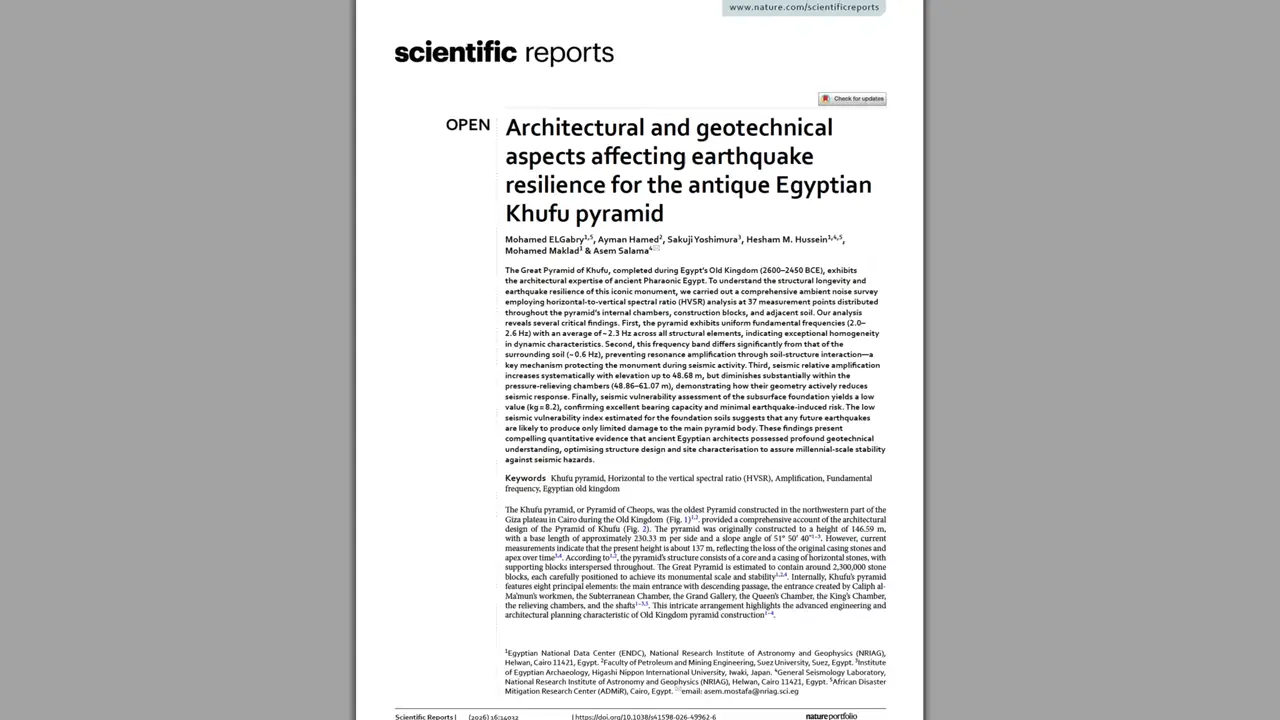
May 25 – May 31~7 min readResearchers discovered the Great Pyramid of Giza vibrates at 2.3 Hz while its foundation oscillates at 0.6 Hz, providing natural earthquake protection through this frequency separation. Excavations in Pompeii's Regio IX uncovered an intact 79 CE construction site preserving unfinished masonry, paving in progress, and fresh plastering left by workers. MIT analysis revealed Romans used a 'hot-mixing' technique with quicklime and volcanic pozzolana to create self-healing concrete superior to modern Portland cement. Meanwhile, Dr. Ed Barnhart's algorithm debunked balsa wood raft theories for transporting Olmec colossal basalt heads—the rafts couldn't fit through the Coatzacoalcos River's narrow stretches.
Week of May 18: 12,890-Year-Old Towers Found at Tell Qaramel, Natufian Art, and More
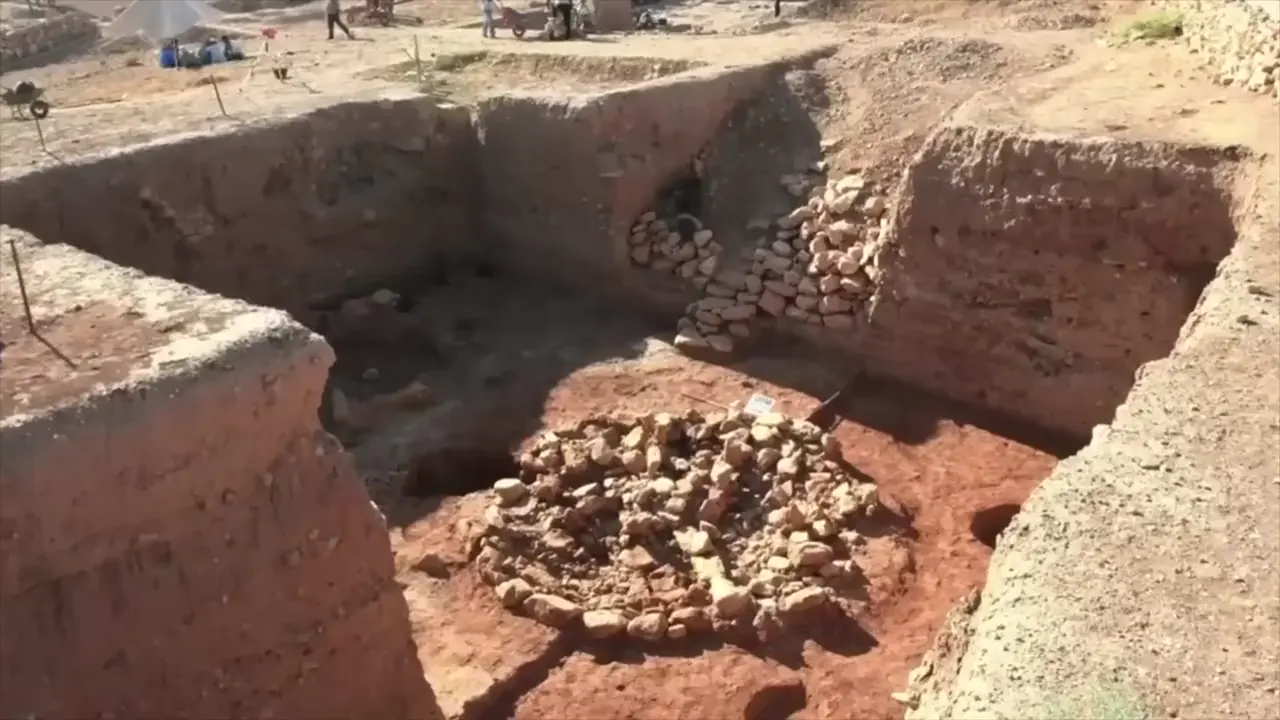
May 18 – May 24~16 min readExcavations at Tell Qaramel have uncovered five round stone towers predating even Jericho's famous tower, with radiocarbon dating establishing they were built 12,890-10,870 years ago using a dual-wall construction technique.Archaeologists at Nahal Ein Gev II discovered a human face carved on a 12,000-year-old pebble alongside 351 decorated specimens and 100+ spindle whorls, pushing back the origins of textile technology by approximately 4,000 years.Research reveals that Aboriginal oral traditions at 21 locations accurately preserve memories of coastal inundation from 11,000-5,300 years ago, with stories of submerged landscapes confirmed by bathymetric data showing post-glacial sea level rise.

Week of May 11: 31,000-Year-Old Amputation Found in Borneo, Hawara Labyrinth Wall, and More
May 11 – May 17~14 min readA 31,000-year-old surgical amputation in Borneo rewrites medical history, with the patient surviving 6-9 years post-procedure, predating previous estimates by over 20,000 years. Geoarchaeological surveys at Egypt's Pyramid of Hawara have validated scans by confirming a megalithic wall matching Herodotus's account of the legendary Labyrinth with 3,000 chambers. Maya caves in Belize revealed infant burials and human skeletal remains demonstrating ritualized treatment of the dead as portals to the underworld. Jebel Irhoud fossils in Morocco have been redated to approximately 300,000-315,000 years old, establishing the oldest known Homo sapiens remains and supporting a pan-African origin of our species.
Week of April 20: Osirion Megalithic Architecture Revealed, Olmec Sculptures Reinterpreted, and More
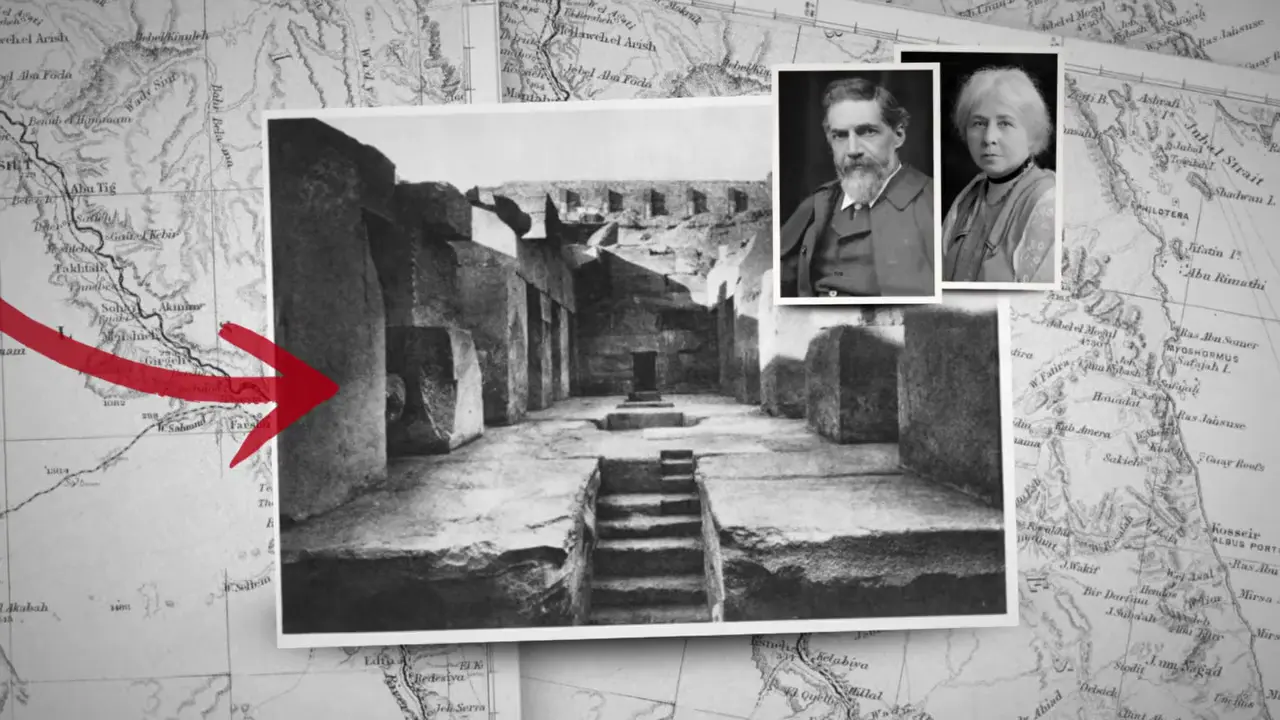
Apr 20 – Apr 26~15 min readMargaret Murray's 1902 excavation of Egypt's Osirion at Abydos uncovered 10 monolithic rose granite columns standing 4 meters high, surrounding a subterranean moat designed to flood and recede in imitation of Osiris's cycle of death and rebirth. Ground-penetrating scan analysis has revealed monumental chambers approximately 80 meters by 50 meters at Hawara, the pyramid complex of Amenemhat III, with giant corridors descending to depths of 40, 60, 80, and 100 meters. Scholars now suggest the controversial Olmec sculptures El Negro and Head Two depict spider monkeys and quetzal feathers rather than Africans, with visual comparisons to La Venta's "monkey" monument supporting zoomorphic interpretations. Only three Roman face-mask helmets have ever been found in Britain, including the Ribchester helmet discovered in 1796 and the Crosby Garrett helmet found in 2010, revealing functional cavalry equipment with idealized faces and female characteristics.

Week of April 27: 900K-Year-Old Near-Extinction Event Discovered, Lost Spanish Colony Found, and More
Apr 27 – May 3~16 min readA genomic study reveals human ancestors experienced catastrophic population collapse approximately 930,000 to 813,000 years ago, declining by 98-98.7% to roughly 1,280 breeding individuals, with about 50% of modern humans still carrying this genetic signature. Archaeologists have definitively identified the site of a 440-year-old Spanish colony founded by Pedro Sarmiento de Gamboa in 1584 after rediscovering a silver coin placed on the foundation stone. Monument 19 at La Venta, dating to 1400-400 BCE, represents the earliest known feathered serpent depiction in Mesoamerica, an iconographic symbol that would later appear in Maya and Aztec civilizations. Airborne LiDAR surveys continue transforming understanding of pre-Columbian civilization, revealing continuous Maya urban sprawl with raised highways and causeways connecting previously unknown centers into integrated networks.
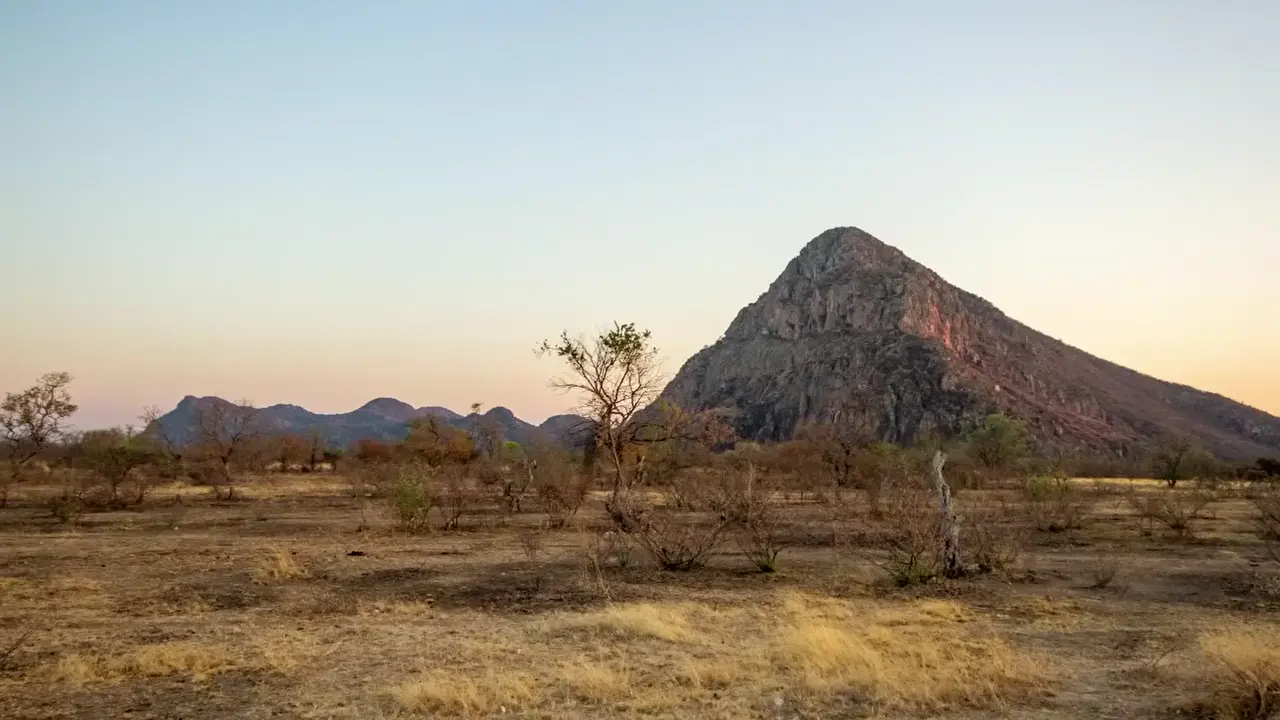
Week of April 13: 70,000-Year-Old Botswana Python Cave Ritual, 35m Pelusium Temple, and More
Apr 13 – Apr 19~16 min readThe 70,000-year-old Python Cave in Botswana reveals what may be the world's earliest known Homo sapiens ritual, featuring thousands of deliberately burned spear points and stone tools as ritually decommissioned offerings. Archaeologists uncovered a 35-meter circular water basin temple at Pelusium in North Sinai with 8 centuries of religious use from the 2nd century BC through the 6th century AD, displaying Egyptian, Hellenistic, and Roman architectural influences. The PADIE project discovered jadeite sources at 2,400 meters altitude in the Italian Alps, with axeheads traveling up to 1,800 km from origin points during production from 5300-3500 BCE. A massive 20-foot submerged Vishnu carving at Phnom Kulen in Cambodia—believed to be the largest in the country—depicts the Hindu deity with Lakshmi and cosmic imagery from the Angkor period.
Week of April 6: 42,000-Year-Old Horse with Liquid Blood, Sohag Ostraca Find, and More
Apr 6 – Apr 12~17 min readScientists extracted liquid blood from a 42,000-year-old prehistoric horse foal discovered in Siberia's Batagaika crater—the oldest liquid blood ever recorded. An Egyptian-German team uncovered 13,000 ostraca at Sohag near the Temple of Athribis, bringing the total to 43,000 and establishing the site as the largest collection ever found at a single location in Egypt. Researchers identified 9,000-year-old Mesolithic shaman remains at Bad Dürrenberg adorned with flower pollen, including meadowsweet, mullein, and buttercup, along with a deer antler headdress and dental modifications indicating survival through ritual practices. A comprehensive study of 200+ objects from Central Europe revealed that early modern humans developed structured information encoding systems approximately 43,000 years ago, with geometric signs exhibiting information density comparable to proto-cuneiform tablets from 3,000 BCE.

Week of March 9: 2,300-Year-Old Crystal Cup Defies Replication, Oldest Solstice Alignment, and More
Mar 9 – Mar 15~12 min readThe Warring States Crystal Cup, discovered in 1990 near Hangzhou, remains an archaeological enigma—carved from a single quartz block during China's 4th–3rd century BC, it has yet to be replicated by modern craftsmen. Karahan Tepe in southeastern Turkey contains the oldest known winter solstice alignment, predating Stonehenge by approximately 7,000 years, with researchers proposing the site may encode the world's oldest solar or lunisolar calendar. A massive cache of 40,000 ilmenite cubes was unearthed at San Lorenzo's Red Palace, each with three precisely drilled holes, representing a sophisticated tradition of standardized ceremonial deposition in elite contexts.
Week of March 23: 303 New Nazca Geoglyphs Discovered, 7-Foot-Tall Skeleton Found in Poland, and More
Mar 23 – Mar 29~19 min readAI-powered analysis revealed 303 previously unknown figurative geoglyphs in Peru's Nazca Desert, nearly doubling the known total from approximately 430 to 733, with smaller relief-type figures predominantly depicting human motifs including decapitated heads. Archaeologists uncovered a remarkably tall woman measuring 215 cm (7 ft 2 in) in a medieval Polish church cemetery, surpassing all previously documented archaeological gigantism cases. Non-destructive geophysical techniques including electrical resistivity tomography validated the North Face Corridor void within the Great Pyramid of Giza, confirmed at approximately 2.5m × 2.5m dimensions. Lake sediment cores from Lake Superior and Isle Royale provided geochemical evidence of Old Copper Complex mining activity between approximately 6500 and 5400 years before present.

Week of March 30: 12th Century Sword in Stone Verified Genuine, Göbekli Tepe Porthole Door, and More
Mar 30 – Apr 5~17 min readMaterial analysis has confirmed that the sword embedded in stone at Tuscany's Chapel of Montesiepi dates to the 12th century, with Saint Galgano (1148-1181) attributed as the owner of the blade driven into rock during his religious conversion. Ancient DNA analysis has pushed back evidence of dog domestication to approximately 15,800 years ago, with remains found at Pinabashi in Turkey and Goff's Cave in the UK representing the oldest genetic confirmation of Paleolithic dogs that spread across Western Eurasia alongside human hunter-gatherers. Researchers at Göbekli Tepe have documented the most impressive porthole door in the archaeological record—a larger, more ornate example featuring two doors and flanked by guardian beasts that likely served as the entrance to a ceremonial center.
Keep exploring
Every site on this page sits on the globe, and the people who research them are on the Discord.
3D Globe · Sites by country · Story Archive · Research Library · Weekly Journal · Search