
 Germany
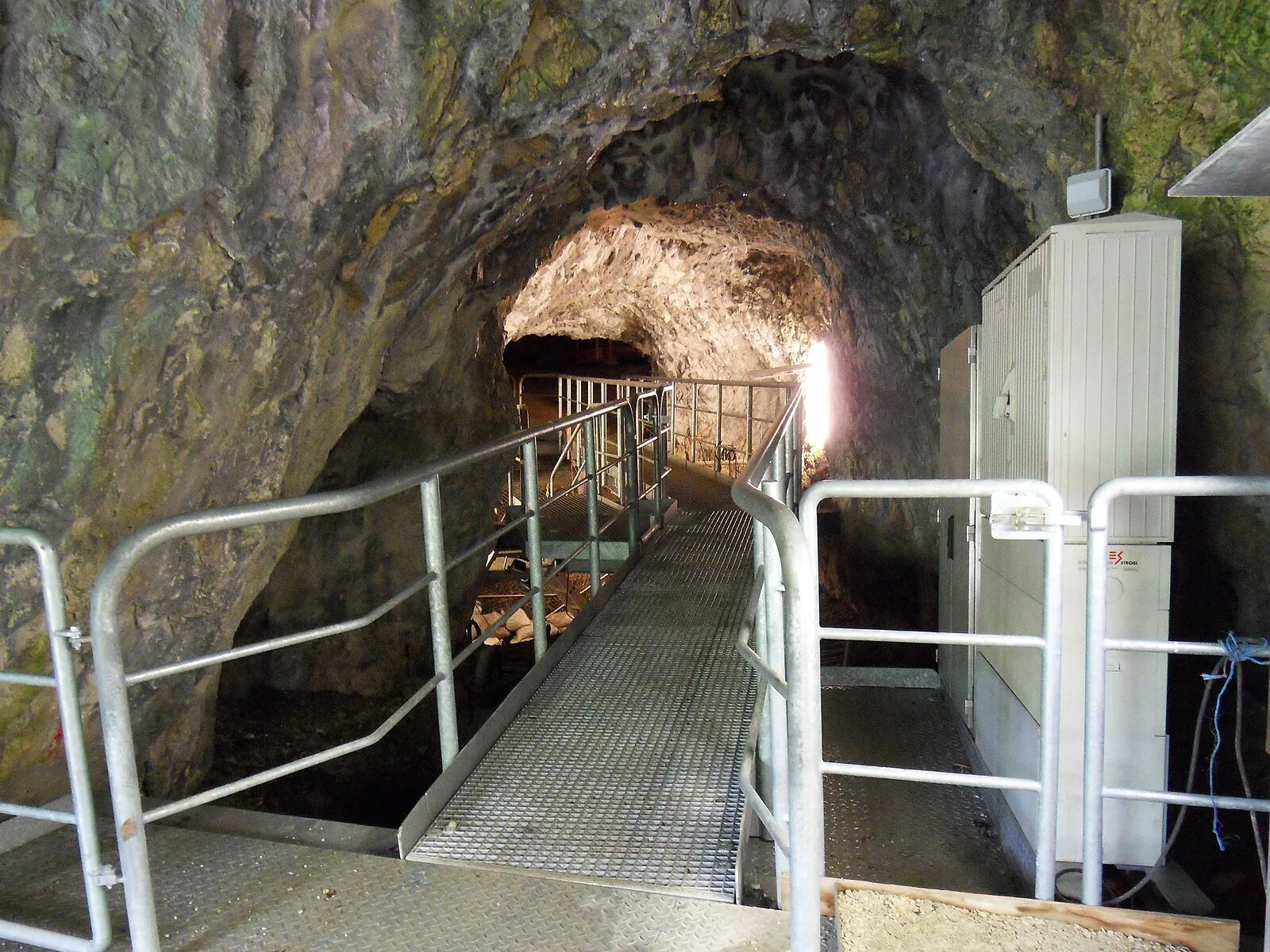
The Caves and Ice Age Art in the Swabian Jura are a collection of six caves in southern Germany which were used by Ice Age humans for shelter about 33,000 to 43,000 years ago [1]. Within the caves were found the oldest non-stationary works of human art yet discovered, in the form of carved animal and humanoid figurines, in addition to the oldest musical instruments ever found [1]. Some of the figurines depict creatures that are half animal, half human [1]. Bone flutes from the Geissenklösterle cave, dated around c. 43,150–39,370 BP, are the oldest musical instruments ever found [1]. The 41,000 to 39,000-year-old Lion-man and the 42,000 to 41,000-year-old Venus of Hohle Fels are the oldest confirmed sculptures in the world [1].
Text: Wikipedia – 'Caves and Ice Age Art in the Swabian Jura' (revision of 2026-09-08), CC BY-SA 4.0 · sentences selected and shortened by an AI system · source →Caves and Ice Age Art in the Swabian Jura
Also known as: Għerien u Arti tal-Era Glaċjali fil-Jura tas-Swabja, Grotte e arte dell'era glaciale nel Giura svevo, grottes et art de la période glaciaire dans le Jura souabe, Grutas e Arte da Idade do Gelo em Swabian Jura, Grutas e arte glacial nos Alpes Suábios, Grutas y arte del periodo glacial en el Jura suabo, Gua dan Seni Zaman Es di Jura Schwaben, Gua dan Seni Zaman Es di Swabian Jura, Hang động và Nghệ thuật đá kỷ Băng hà tại Swabian Jura, Höhlen und Eiszeitkunst der Schwäbischen Alb, Höhlen und Eiszeitkunst im Schwäbischen Jura, Huler og istidskunst i de svabiske jurafjellene
| Type | Cave Structures |
|---|---|
| Period | 500 BC - 1 AD |
| Country | Germany |
| Coordinates | 48.3878° N, 9.7655° E |