
 England
Cissbury Ring is an 84.2-hectare biological Site of Special Scientific Interest north of Worthing in West Sussex [1]. It is owned by the National Trust and is designated a Scheduled monument for its Neolithic flint mine and Iron Age hillfort [1]. The earthworks that form the fortifications were built around the beginning of the Middle Iron-Age possibly around 250 BC but abandoned in the period 50 BC - 50 AD [1]. The site of the fort contains a Neolithic mine, one of the first flint mines in Britain [1]. Around 270 shafts were dug into Cissbury hill over around 300 years of use [1]. Shafts were up to 12 metres deep with 7 metres diameters at the surface [1]. Up to eight galleries extended outwards from the bottoms of the shafts, often interconnecting with one another [1]. The shafts at Cissbury were excavated with antler picks, much like those at Grimes Graves and elsewhere [1].
Text: Wikipedia – 'Cissbury Ring' (revision of 2026-09-16), CC BY-SA 4.0 · sentences selected and shortened by an AI system · source →Cissbury Ring
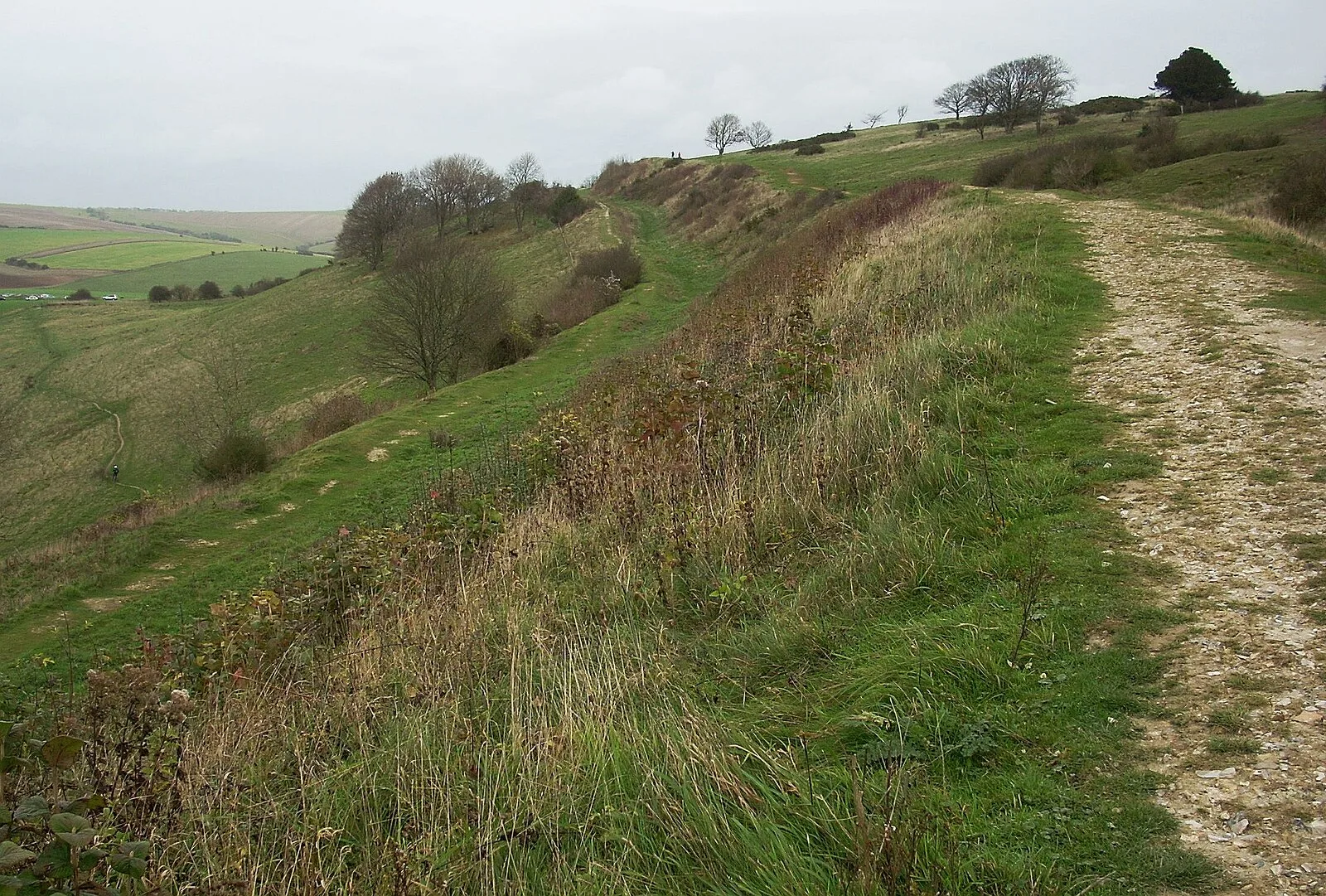
Also known as: Cissbury, Cissbury Camp, シスベリリング, 西斯伯里環
| Type | Fort |
|---|---|
| Period | 4500 - 3000 BC |
| Country | England |
| Coordinates | 50.8581° N, 0.3750° W |