
 England
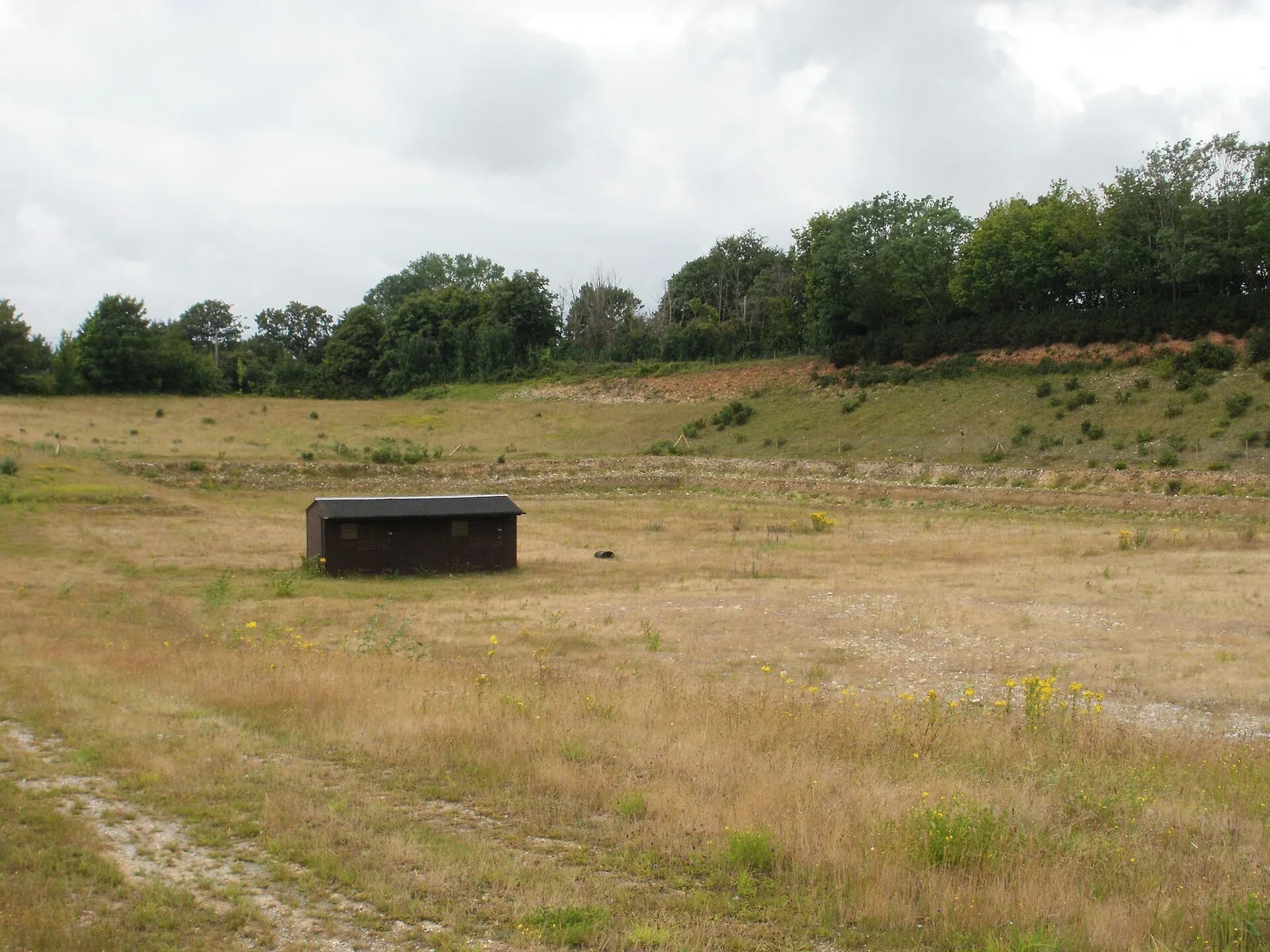
The Boxgrove Palaeolithic site is a complex of internationally important Lower Palaeolithic archaeological sites in the former Eartham Quarry, north-east of Boxgrove in West Sussex, dating to around 480,000 years ago during the Middle Pleistocene [1]. Boxgrove is also one of the oldest sites in Europe with direct evidence of hunting and butchering by early humans [1]. The site was discovered by Andrew Woodcock and Roy Shephard-Thorn in 1974 [1]. Parts of the site complex were later excavated between 1982 and 1996 by a team led by Mark Roberts of the Institute of Archaeology, University College London [1]. The site is now some 10 kilometres inland and 35–43.5 metres above present sea level, because of later tectonic uplift of the area after the deposition of the Boxgrove site [1]. Numerous species of animals, including snails, fish, lizards, amphibians including frogs and salamanders, and 50 species of mammals have been found at the site [1].
Text: Wikipedia – 'Boxgrove Palaeolithic site' (revision of 2026-09-18), CC BY-SA 4.0 · sentences selected and shortened by an AI system · source →Eartham Pit, Boxgrove
Also known as: Boxgrove, Boxgrove (locus archaeologicus), Boxgrove Palaeolithic site, Boxgrove Quarry, Boxgrove Site, Eartham Pit, گودال ارتهام
| Type | Archaeological site |
|---|---|
| Period | 500 BC - 1 AD |
| Country | England |
| Coordinates | 50.8701° N, 0.6900° W |