
 England
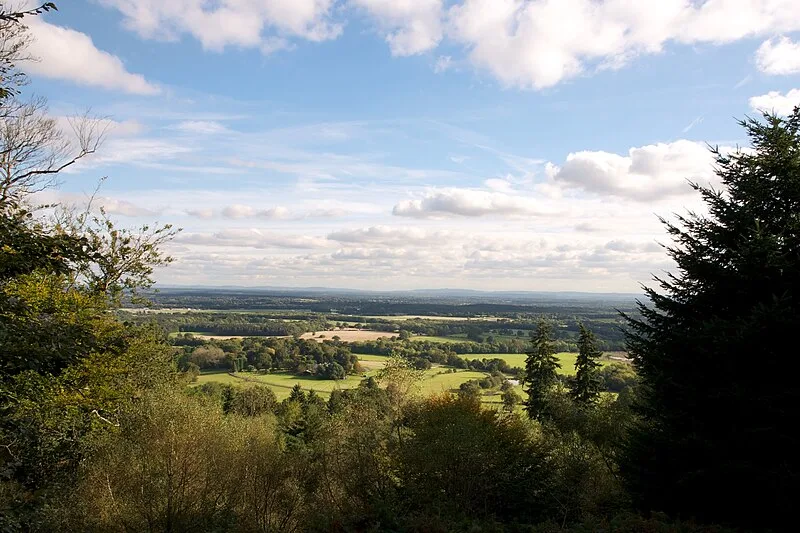
Hascombe Hill or Hascombe Camp is the site of an Iron Age multivallate hill fort close to the village of Hascombe in Surrey, England [1]. The site was excavated in 1931 by S. E. Winbolt, who dated the occupation of the site to the 1st century BCE [1]. The hillfort encloses a thickly wooded area of approximately 2.4 hectares [1]. The sides of the fort, which are naturally very steep, were scarped at the top to make them almost unassailable [1]. Encircling the crest of the hill is a defensive ditch 1.5 metres deep [1]. The defences are reinforced on the northeast side with a strong line of ramparts and ditches broken by a single entrance passage some 24 metres long [1]. There is pottery evidence that the site was occupied until quite late and signs that it was forcefully evacuated, possibly coinciding with the Roman invasions under Julius Caesar in 55 and 54 BCE [1].
Text: Wikipedia – 'Hascombe Hill' (revision of 2026-07-21), CC BY-SA 4.0 · sentences selected and shortened by an AI system · source →Hascombe Hill
| Type | Fortress/citadel |
|---|---|
| Period | 500 BC - 1 AD |
| Country | England |
| Coordinates | 51.1376° N, 0.5653° W |