
 England
Dungeon Hill is an Iron Age hillfort, about 1+1⁄4 miles north of the village of Buckland Newton in Dorset [1]. The fort is on a low hill, height 600 feet; it has a single bank in a roughly oval shape, enclosing an area of about 9 acres [1]. The rampart is 7 metres wide and about 1.5 m above the interior [1]. It has an external ditch of width 13 m and depth 2 m [1]. The height of the rampart above the base of the ditch is up to 6 m [1]. In the late 18th century Fitzwalter Foy, resident of nearby Duntish Court, who was the owner of the fort, cleared the site of woodland, and he recovered human bones, sword blades, Roman coins and other finds [1]. In 1881 there was some excavation of the site: Roman pottery, fragments of Roman querns and building stone were found; Roman tiles were found in the interior [1].
Text: Wikipedia – 'Dungeon Hill' (revision of 2026-07-21), CC BY-SA 4.0 · sentences selected and shortened by an AI system · source →Dungeon Hill
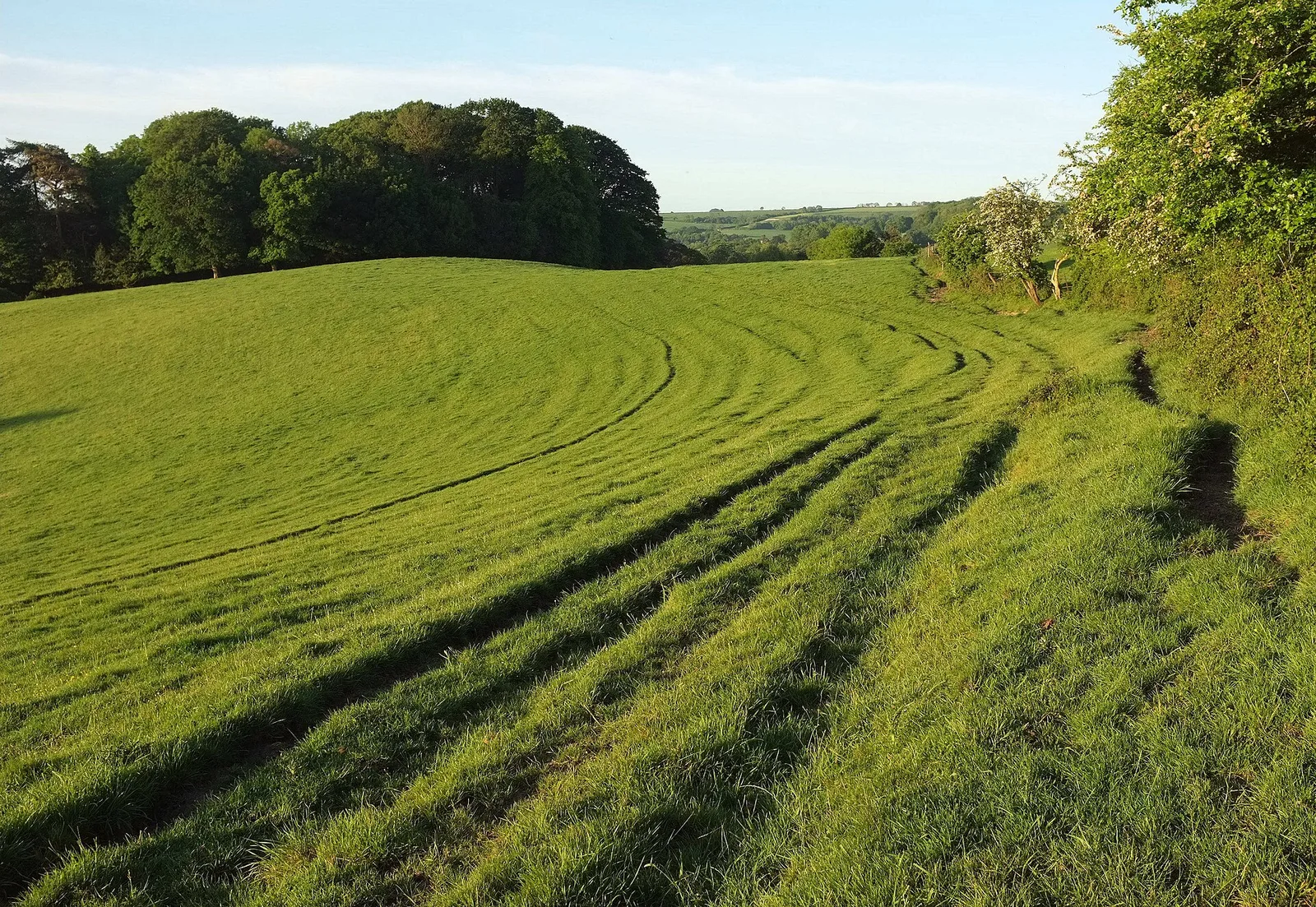
Also known as: Dungeon Camp, Dunset Camp, Hillfort and later strip lynchets on Dungeon Hill, 500m north of Castle Hill Cottages
| Type | Fortress/citadel |
|---|---|
| Period | 1500 - 500 BC |
| Country | England |
| Coordinates | 50.8654° N, 2.4416° W |