
 England
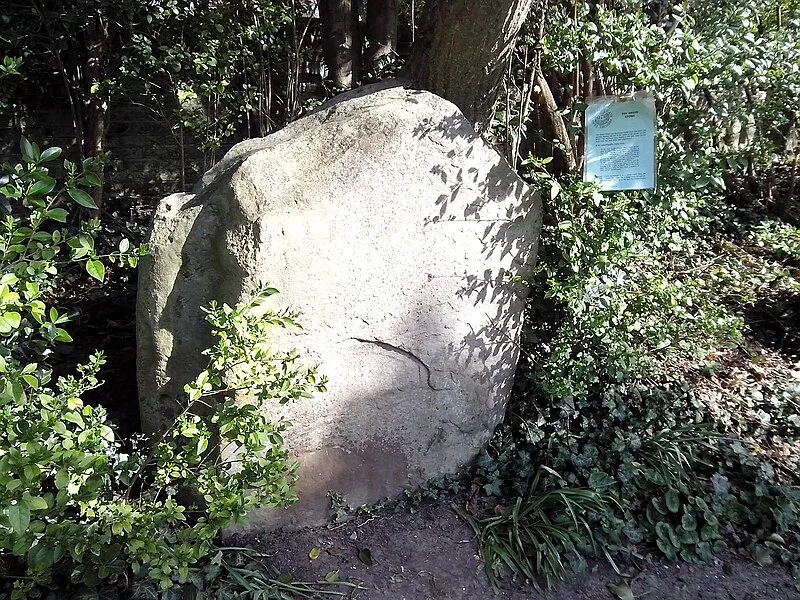
Flagstones is a late Neolithic interrupted ditch enclosure (similar to a causewayed enclosure) on the outskirts of Dorchester, Dorset, England [1]. It derives its name from having been discovered beneath the site of the demolished Flagstones House [1]. Half of it was excavated in the 1980s when the Dorchester by-pass was built; the rest of it still exists under the grounds of Max Gate, author and architect Thomas Hardy's former house [1]. The part of the enclosure in the grounds of Flagstones House was excavated by Wessex Archaeology [1]. The enclosure comprised a circular ring of unevenly spaced pits constructed in the late 4th millennium BC [1]. The chalk walls of some of the pit/ditch segments featured engraved designs, probably cut with flint [1]. An adult cremation and two child inhumations were found at the bottom of ditch sections, each beneath a slab of sandstone or sarsen [1].
Text: Wikipedia – 'Flagstones Enclosure' (revision of 2026-08-27), CC BY-SA 4.0 · sentences selected and shortened by an AI system · source →Flagstones Enclosure
Also known as: Flagstones
| Type | Earthwork |
|---|---|
| Period | 4500 - 3000 BC |
| Country | England |
| Coordinates | 50.7072° N, 2.4200° W |