
 England
Cadbury Castle is a Bronze and Iron Age hillfort in the parish of South Cadbury in the English county of Somerset [1]. The hillfort is formed by a 7.28 hectares plateau surrounded by ramparts on the surrounding slopes of the limestone Cadbury Hill [1]. The site has been excavated in the late 19th and early 20th century by James Bennett and Harold St George Gray [1]. More recent examination of the site was conducted in the 1960s by Leslie Alcock and since 1992 by the South Cadbury Environs Project [1]. These have revealed artifacts from human occupation and use from the Neolithic through the Bronze and Iron Ages [1]. Evidence of various buildings at the site has been unearthed, including a "Great Hall", round and rectangular house foundations, metalworking, and a possible sequence of small rectangular temples or shrines [1]. Bones recovered from the site have been radiocarbon dated to 3500 and 3300 BC [1]. Between 1010 and 1020, the hill was reoccupied for use as a temporary Saxon mint, standing in for that at Ilchester [1].
Text: Wikipedia – 'Cadbury Castle, Somerset' (revision of 2026-07-18), CC BY-SA 4.0 · sentences selected and shortened by an AI system · source →Cadbury Castle, Somerset
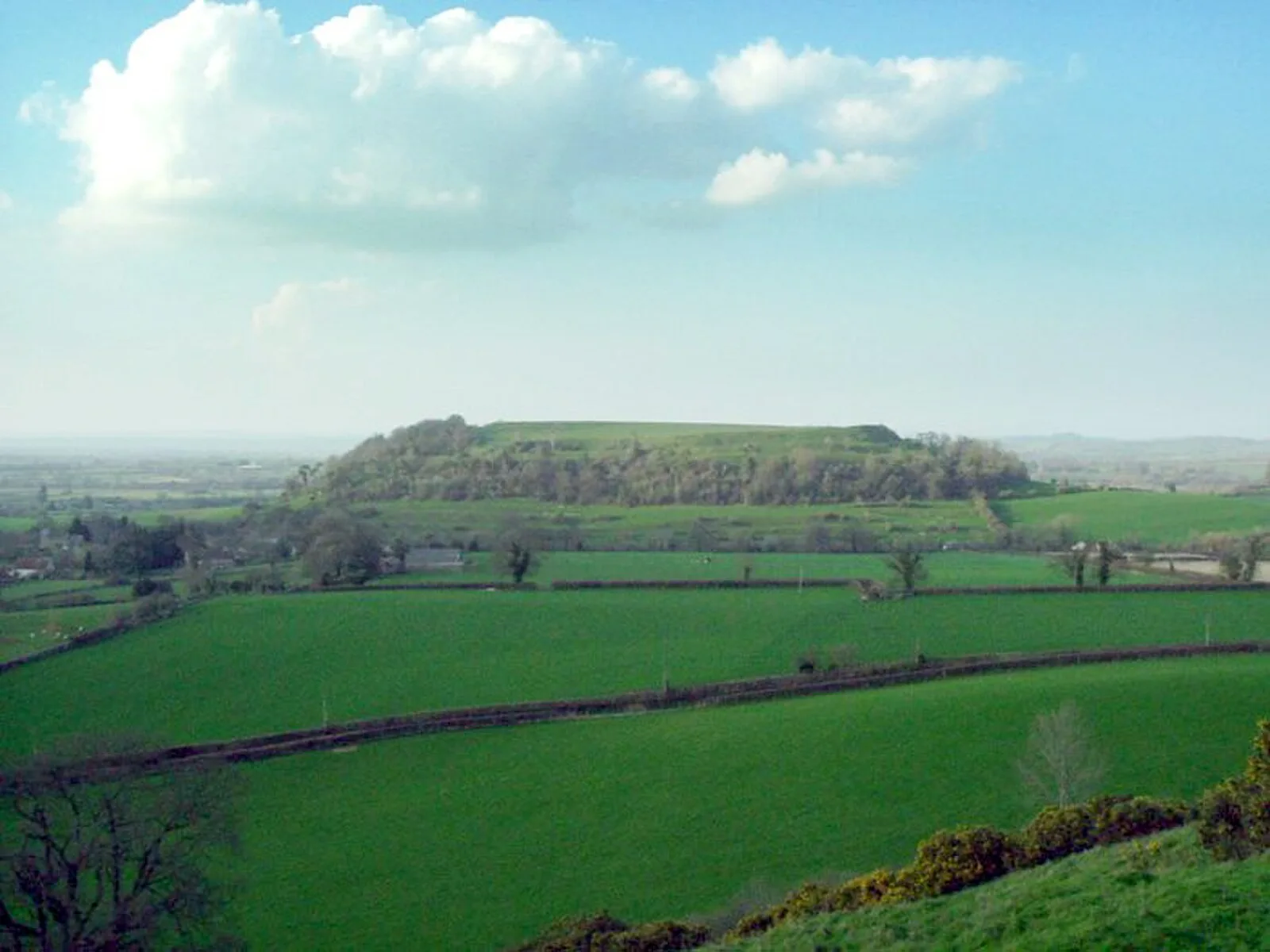
Also known as: Cadbury Castle, Cadbury Castle (South Cadbury), Cadbury Castle, South Cadbury, Cadbury Kalesi, Somerset, Camelot, Castelo Cadbury (Somerset), Castelo de Cadbury (Somerset), Castillo de Cadbury, Large multivallate hillfort and associated earthworks at South Cadbury, South Cadbury, South Cadbury Castle, 凱德伯里城堡
| Type | Fortress/citadel |
|---|---|
| Period | 4500 - 3000 BC |
| Country | England |
| Coordinates | 51.0242° N, 2.5317° W |