
 England
Ham Hill is a geological Site of Special Scientific Interest, Scheduled Ancient Monument, Iron Age hill fort, Roman site, Local Nature Reserve and country park, to the west of Yeovil in Somerset [1]. Quarrying has unearthed many important historical artefacts, but also destroyed much of the archaeological context [1]. The name may come from the Old English ham and hyll giving a meaning of "the settlement hill", however its original name was Hamdon, meaning "the hill among the water meadows" [1]. There is evidence of occupation from the Mesolithic and Neolithic periods [1]. Ham Hill is the site of a very large Bronze Age and Iron Age hill fort of the Durotriges tribe, from the 1st century BC [1]. The 3 miles (5 km) ramparts enclose an area of 210 acres (85 ha) [1]. Most of the perimeter is a double bank and ditch ("multivallate") [1]. There is a major entrance to the south-east, on the line of the modern road and another to the north-east [1].
Text: Wikipedia – 'Ham Hill, Somerset' (revision of 2026-06-06), CC BY-SA 4.0 · sentences selected and shortened by an AI system · source →Ham Hill, Somerset
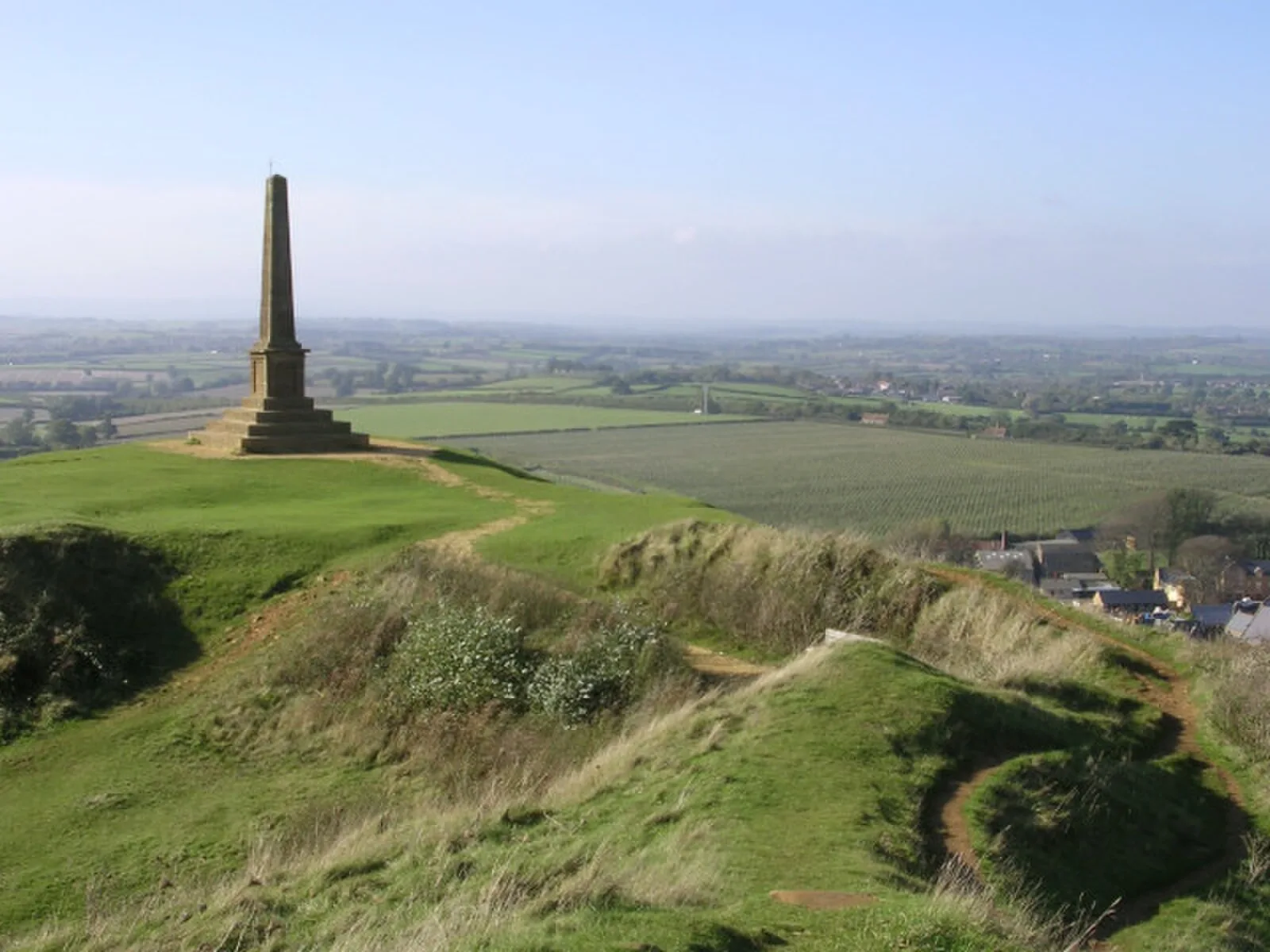
Also known as: Hamdon Hill, Ham Hill
| Type | Fort |
|---|---|
| Period | 1500 - 500 BC |
| Country | England |
| Coordinates | 50.9519° N, 2.7410° W |