
 Spain
SpainAxlor is a prehistoric archeological site in the village of Dima in Biscay in the Autonomous Basque Community of Spain, dating from the Middle Paleolithic or Mousterian period [1]. The archaeologist Jose Miguel Barandiaran discovered the site and directed the first excavations from 1967 until 1974 [1]. Barandiaran noted the presence of 9 different layers at the site, 5 of which contained Mousterian lithic artifacts [1]. Jose Maria Basabe studied 5 teeth from a young Neanderthal found on the site [1]. Axlor has a sequence of Middle Paleolithic levels, representing the later stages of the Mousterian in the Pyrenees region [1]. The most recent levels at Axlor are dated to approximately 42,000 years before present (using C14 radiocarbon analysis) [1]. Axlor is one of few securely-dated late Middle Palaeolithic sites in the Basque region [1]. The Neanderthals of Axlor made stone tools using flint from distant places (between 30 and 60 kilometers from the site) [1].
Text: Wikipedia – 'Axlor' (revision of 2026-07-19), CC BY-SA 4.0 · sentences selected and shortened by an AI system · source →Axlor
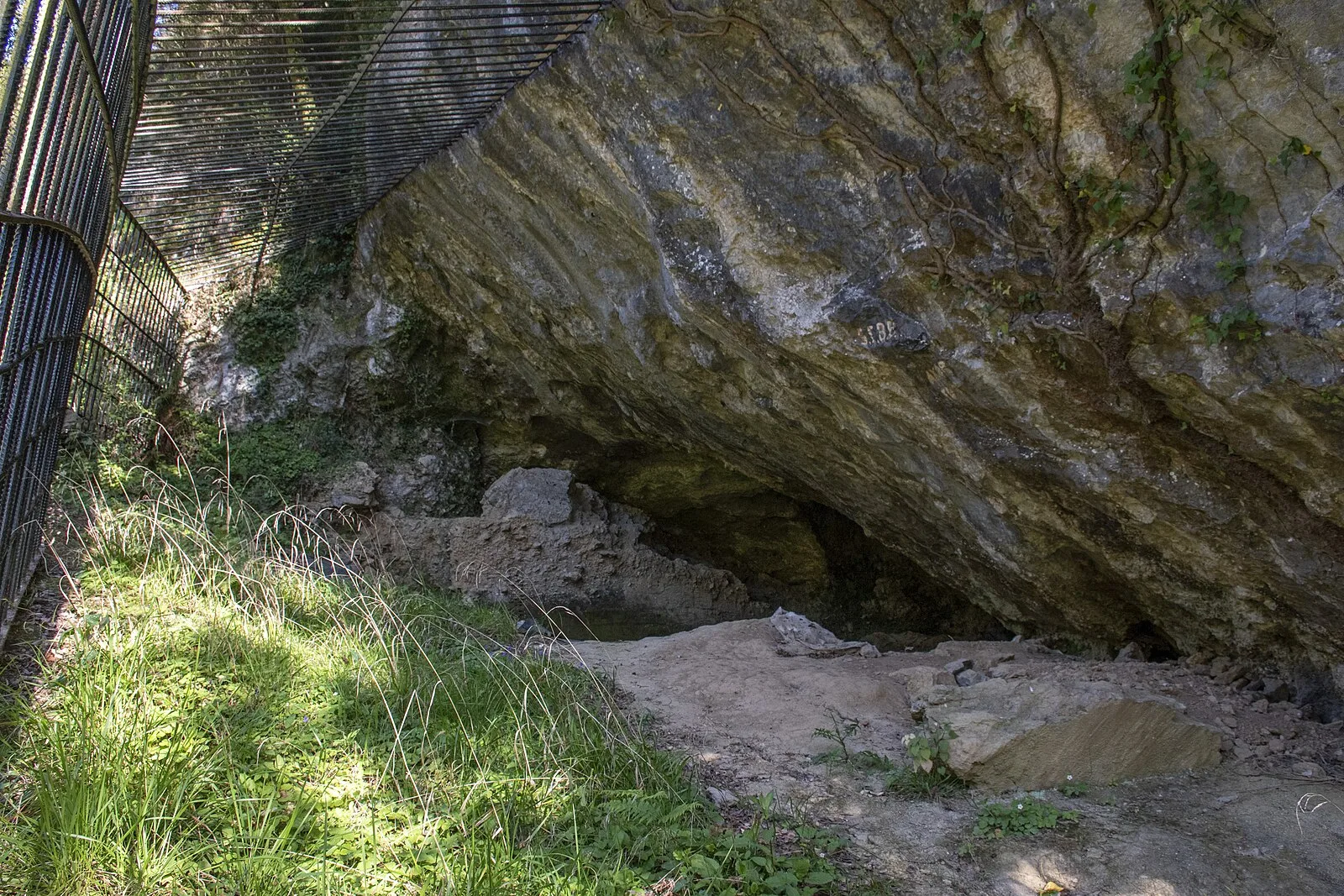
Also known as: Abri Axlor, abri d'Axlor, Axlor cave, Axlor rockshelter, Grotte d'Axlor, أكسلور, アクスロル
| Type | Cave Structures |
|---|---|
| Period | < 4500 BC |
| Country | Spain |
| Coordinates | 43.1212° N, 2.7280° W |