
 Spain
The Cave of El Castillo in Puente Viesgo, Cantabria, was discovered in 1903 by Hermilio Alcalde del Rio [1]. Part of the Caves of Monte Castillo complex, it contains a red stippled disk in the Panel de las Manos, uranium-thorium dated to at least 40,800 years ago [1] [2]. The cave holds over 150 catalogued figures including hand stencils, animal depictions of bison, deer, horses, and mammoth, plus abstract symbols [1] [3] [4]. It is a UNESCO World Heritage Site as part of the Cave of Altamira and Paleolithic Cave Art of Northern Spain inscription [5] [6].
Cave of El Castillo
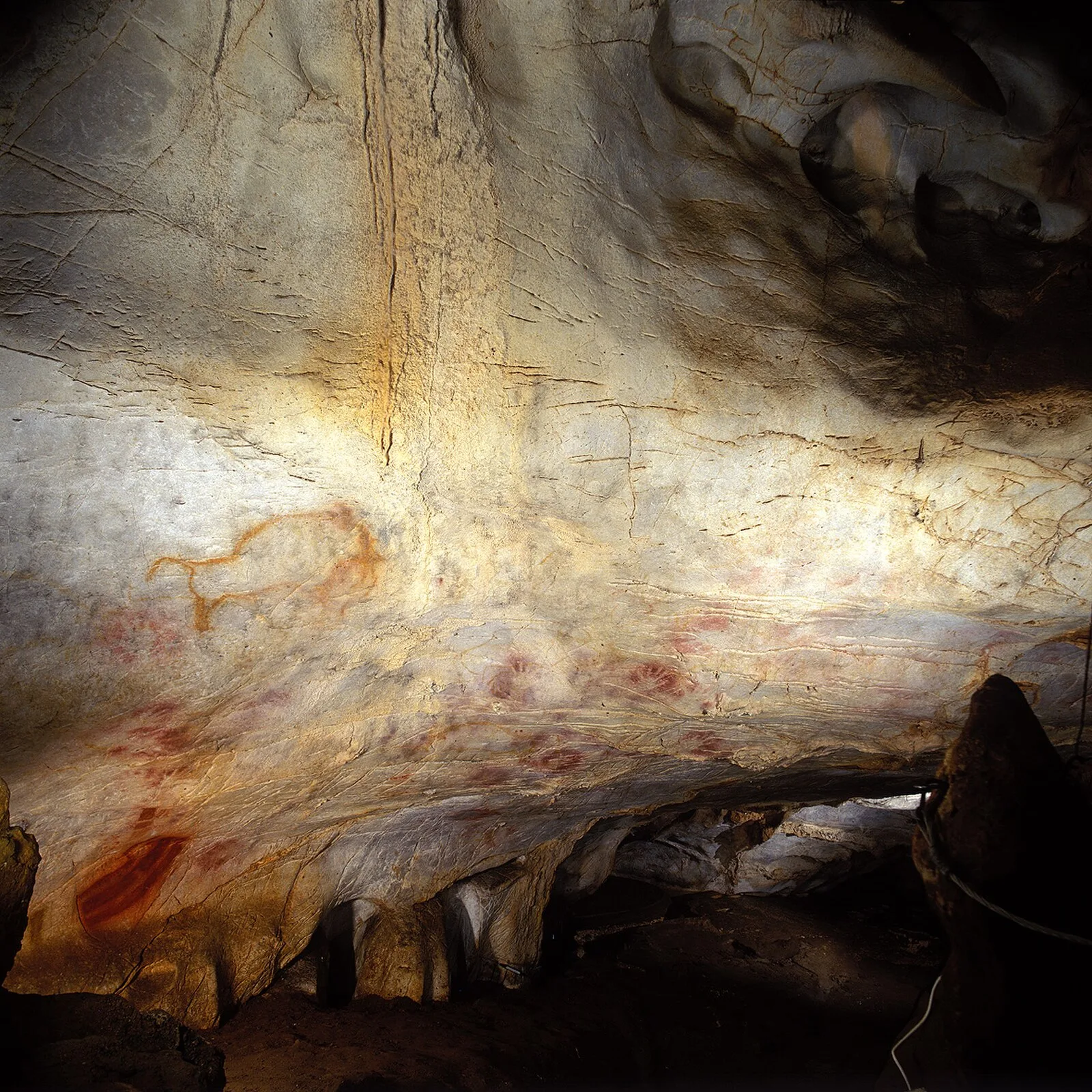
Also known as: Caverna de El Castillo, Cova de El Castillo, cova d'El Castillo, Cueva de El Castillo, Cueva del Castillo, El Castillo, El-Castillo-Höhle, El Castillo-hulen, El Castillo (jaskinia), El Castillo kobazuloa, El Castillo Mağarası, Grotte d'El Castillo
| Type | Rock art |
|---|---|
| Period | < 4500 BC |
| Country | Spain |
| Coordinates | 43.2924° N, 3.9652° W |