
 Spain
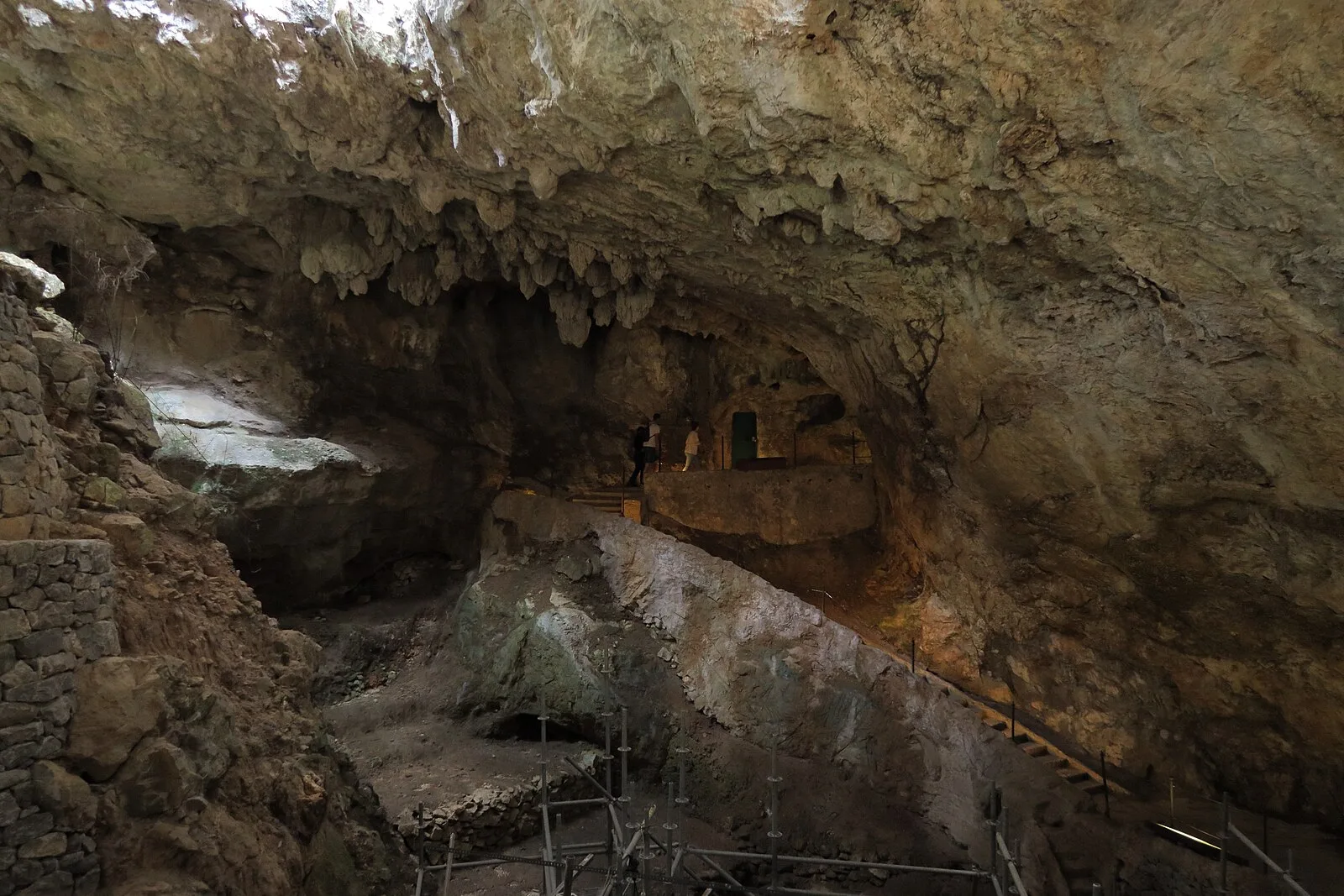
SpainA complex of karstic caves on the slopes of Monte Castillo in Puente Viesgo, Cantabria, Spain, inscribed as a UNESCO World Heritage Site in 2008 under 'Cave of Altamira and Paleolithic Cave Art of Northern Spain'. The complex includes four major caves: El Castillo, La Pasiega, Las Chimeneas, and Las Monedas. El Castillo, discovered in 1903 by Hermilio Alcalde del Rio, contains over 150 catalogued figures and stratigraphic deposits exceeding 20 meters in depth. Uranium-thorium dating of a red disk on the Panel de las Manos yielded a minimum age of 40,800 years, making it the oldest dated cave art in Europe, predating France's Chauvet paintings by approximately 4,000 years.
Caves of Monte Castillo
Also known as: Các hang Monte Castillo, Cavernas de Monte Castillo, Cavernas do monte Castillo, Caves del Monte Castillo, Coves del Monte Castillo, Cuevas del monte Castillo, grotten van Monte Castillo, Grottes du Monte Castillo, Höhlen von Monte Castillo, Kavernaro de monto Castillo, غارهای مونته کاستیو, كهف لاس مونيداس
| Type | Rock art |
|---|---|
| Period | < 4500 BC |
| Country | Spain |
| Coordinates | 43.2913° N, 3.9643° W |