
 Spain
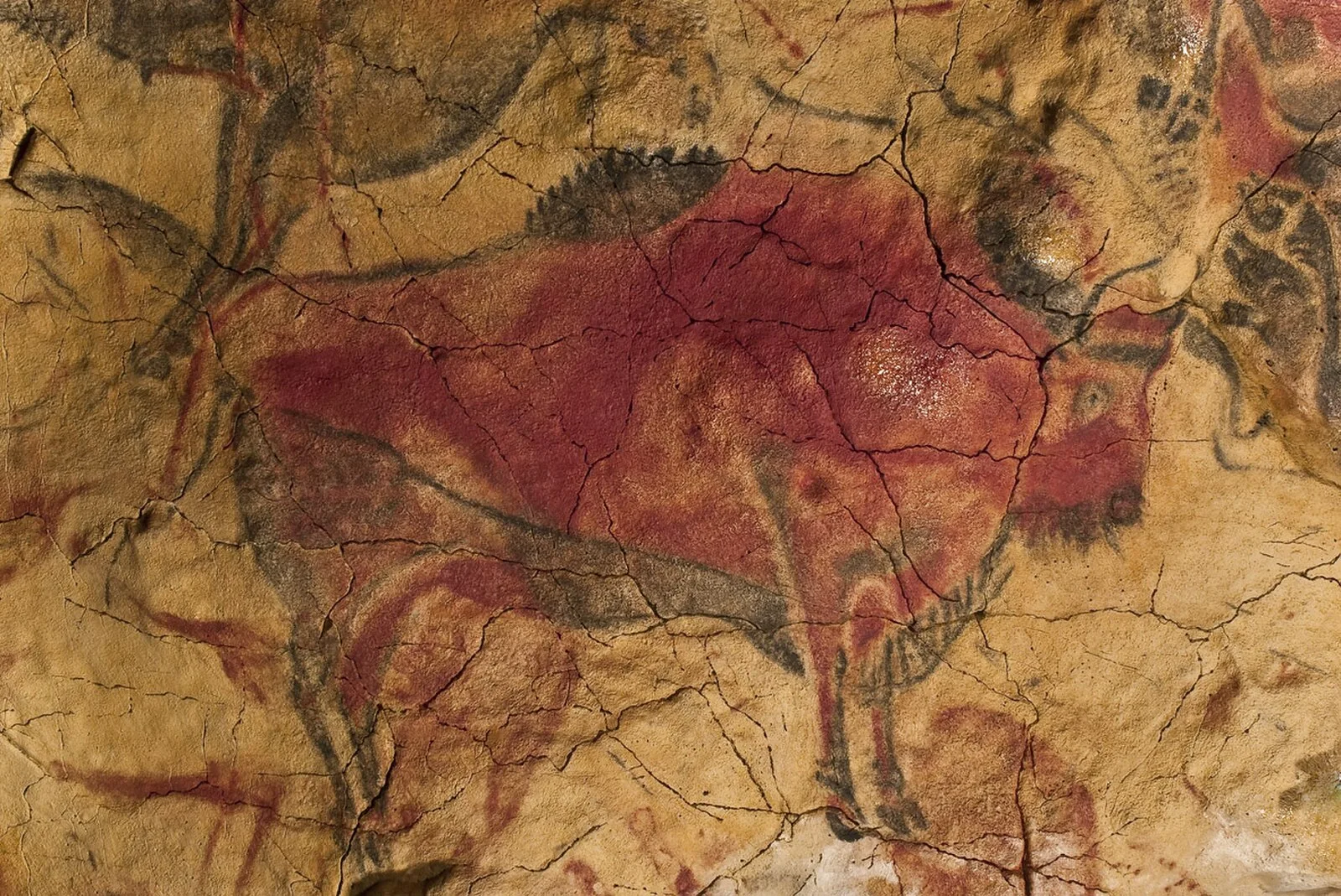
SpainThe Cave of Altamira is a cave complex, located near the historic town of Santillana del Mar in Cantabria [1]. It is renowned for prehistoric cave art featuring charcoal drawings and polychrome paintings of contemporary local fauna and human hands [1]. The site was discovered in 1868 by Modesto Cubillas and subsequently studied by Marcelino Sanz de Sautuola [1]. Aside from the striking quality of its multicolor art, Altamira's fame stems from the fact that its paintings were the first European cave paintings for which a prehistoric origin was suggested and promoted [1]. Altamira is located in the Franco-Cantabrian region and in 1985 was declared a World Heritage Site by UNESCO as a key location of the Cave of Altamira and Paleolithic Cave Art of Northern Spain [1]. The cave is approximately 270 m long and consists of a series of twisting passages and chambers [1]. In 2008, researchers using uranium-thorium dating found that the paintings were completed over a period of up to 20,000 years rather than during a comparatively brief period [1].
Text: Wikipedia – 'Cave of Altamira' (revision of 2026-09-08), CC BY-SA 4.0 · sentences selected and shortened by an AI system · source →Cave of Altamira
Also known as: 알타미라 동굴, Al tamira, Al-tamira, Altamira, Altamira-barlang, Altamira (grot), Altamiragrottan, Altamira-Höhle, Altamira (jaskinia), Altamira (jaskyňa), Altamira Kobazuloa, Altamirako haitzuloa
| Type | Rock art |
|---|---|
| Period | < 4500 BC |
| Country | Spain |
| Coordinates | 43.3827° N, 4.1202° W |