
 Spain
SpainThe archaeological site of Atapuerca is located in the Province of Burgos in the north of Spain and is notable for its evidence of early human occupation [1]. Among numerous faunal and floral fossils, a jaw fragment was found during the 1970s and a skull fragment in 1995, which both belong to Homo heidelbergensis [1]. They date to between 600,000 and 400,000 years BP [1]. Since 1997, the excavators have located more than 5,500 human skeletal remains deposited during the Middle Pleistocene period, at least 350,000 years old, which represent 28 individuals of Homo heidelbergensis [1]. Associated finds include Ursus deningeri fossils and a hand axe called Excalibur [1].
Text: Wikipedia – 'Archaeological site of Atapuerca' (revision of 2026-08-25), CC BY-SA 4.0 · sentences selected and shortened by an AI system · source →Archaeological Site of Atapuerca
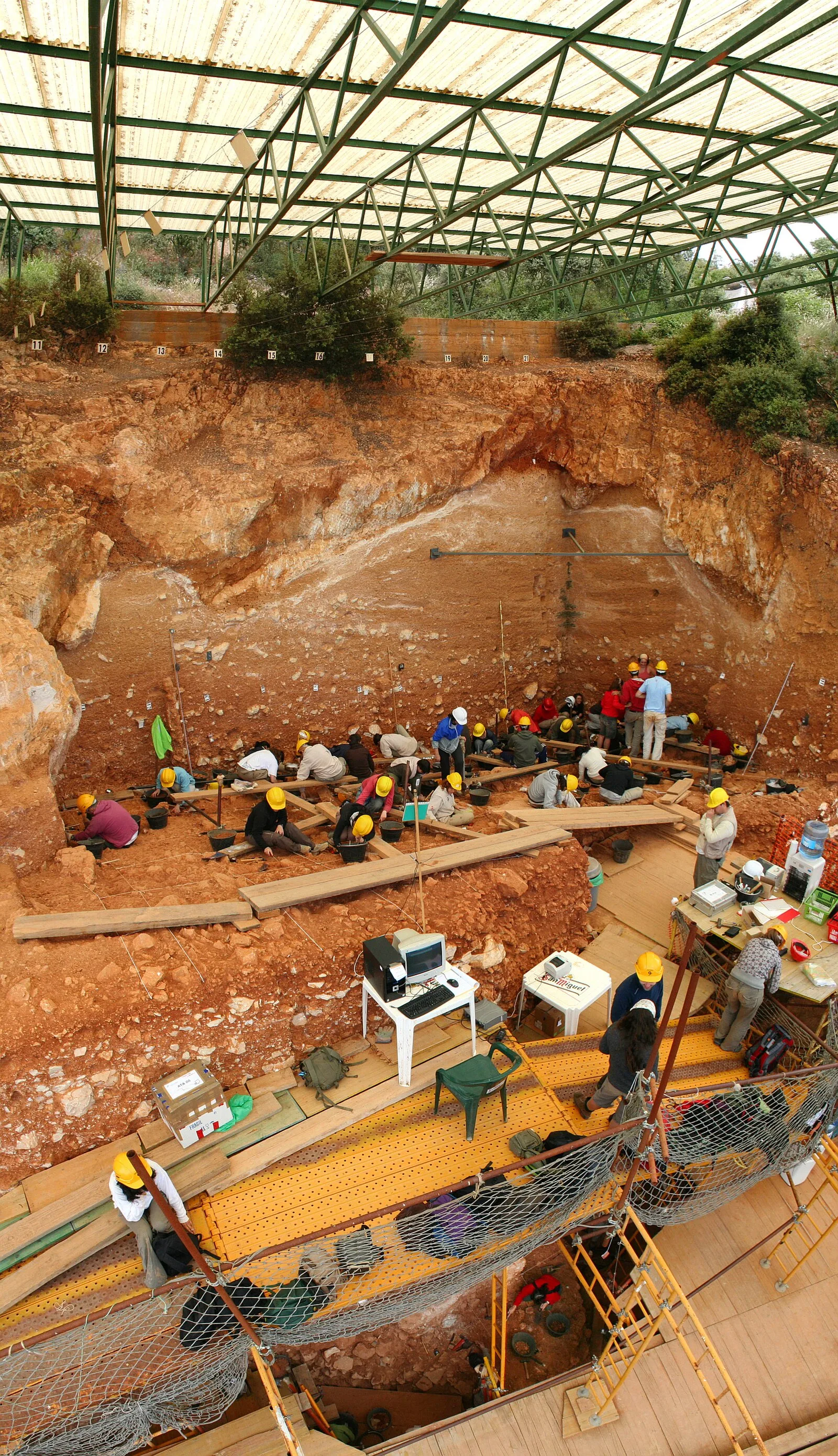
Also known as: Archaeological Site of Atapuerca World Heritage Site, archäologische Fundstätte von Atapuerca, archäologische Stätte von Atapuerca, archeologické naleziště Atapuerca, Archeologisch gebied Atapuerca, arheološko najdišče Atapuerca, arheopaleontološko najdišče Atapuerca, Arkeologia kuŝejo de Atapuerca, Ataporca (loci archaeologici), Atapuerca, Atapuerca archaeopaleontological sites, Atapuerca Arkeolojik Siti
| Type | Cave Structures |
|---|---|
| Period | < 4500 BC |
| Country | Spain |
| Coordinates | 42.3527° N, 3.5184° W |