
 Spain
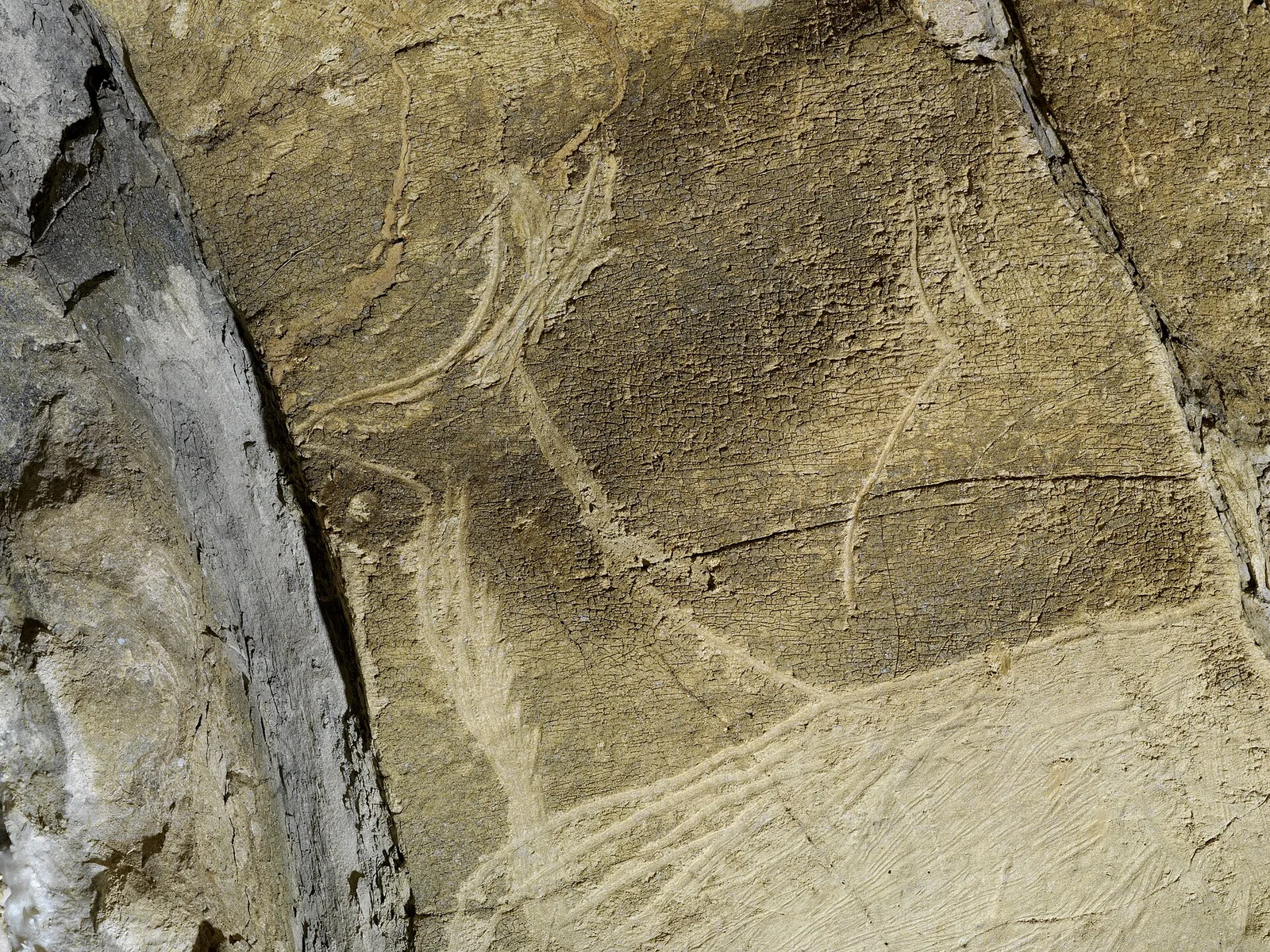
SpainThe Cave of Altxerri is located in the municipality of Aya in the Basque Country [1]. The original grotto preserves rock paintings and engravings which have been dated from the end of the Upper Magdalenian period, within the Upper Paleolithic; the pictures situated in an upper gallery, known as Altxerri B, have been dated in a 2013 study as the oldest stone paintings in Europe, with an estimated age of 39,000 years [1]. Its artistic style forms part of the so-called Franco-Cantabrian School [1]. Altxerri houses one of the largest sets of rock engravings of the area [1]. It contains around one hundred and twenty engravings of which ninety-two are of animals [1]. The bison is the best-represented animal, with a total of fifty-three engravings [1]. Other animals present in the cave are the reindeer, with six engravings, four deer and goats, three horses and aurochs, two saiga antelope, a wolverine, a fox, a hare and a bird [1]. It was declared a World Heritage Site in 2008 as part of the group known as the Cave of Altamira and Paleolithic Cave Art of Northern Spain [1].
Text: Wikipedia – 'Cave of Altxerri' (revision of 2026-07-21), CC BY-SA 4.0 · sentences selected and shortened by an AI system · source →Cave of Altxerri
Also known as: Altxerri, Cova d'Altxerri, Cueva de Altxerri, grotte d'Altxerri, grot van Altxerri, Höhle von Altxerri, Альчерри, Альчеррі, Альчэры, Пещера Альчерри, מערת אלצ'רי, 阿尔特克谢里洞
| Type | Cave Structures |
|---|---|
| Period | < 4500 BC |
| Country | Spain |
| Coordinates | 43.2688° N, 2.1338° W |