
 Serbia
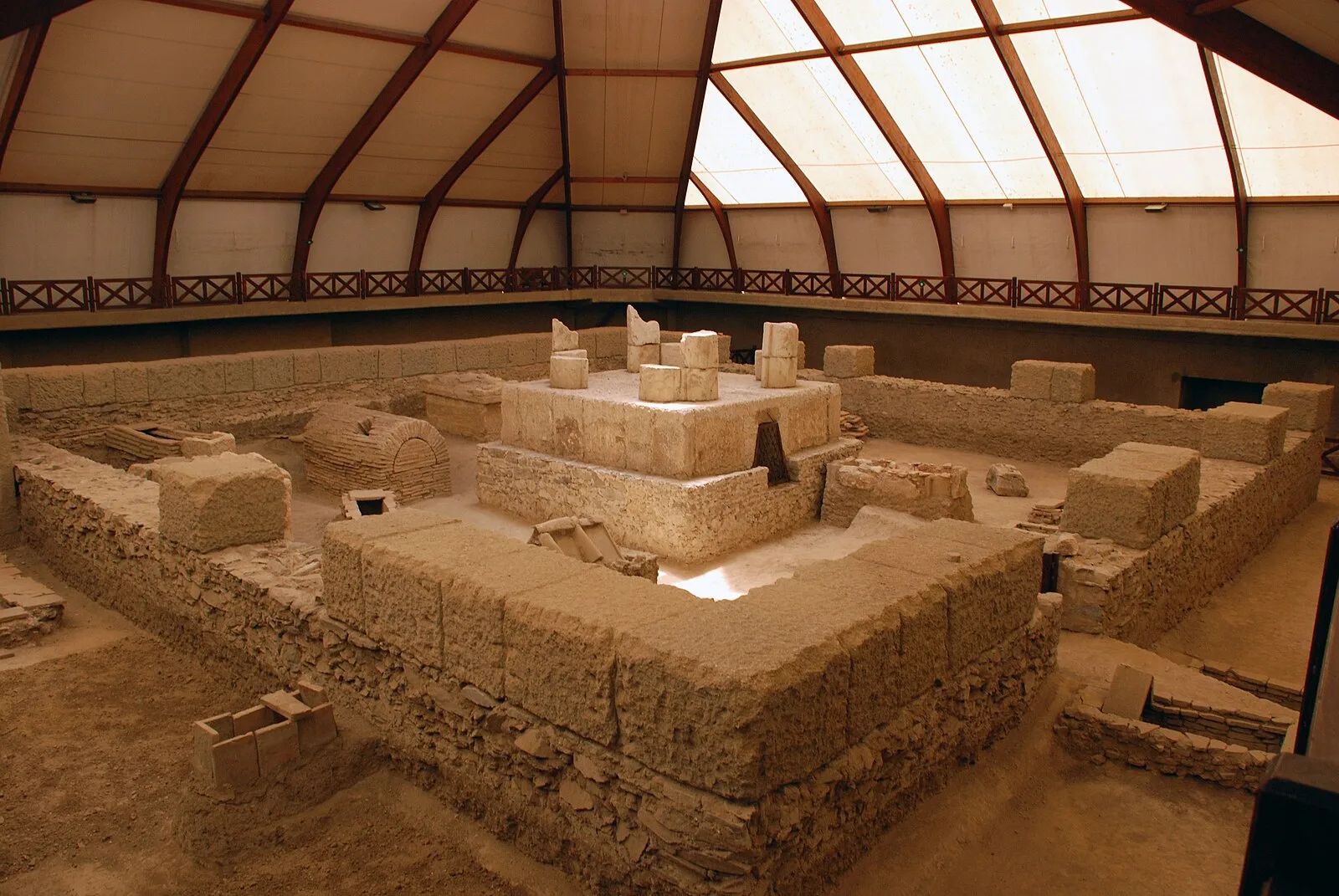
Viminacium was a major city, military camp, and the capital of the Roman province of Moesia [1]. The city dates back to the 1st century AD, and at its peak it is believed to have had 40,000 inhabitants, making it one of the biggest cities in the Balkans of that time [1]. It lies on the Roman road Via Militaris [1]. Viminacium was devastated by Huns in the 5th century, but was later rebuilt by Justinian [1]. It was completely destroyed with the arrival of Slavs in the 6th century [1]. Today, the archaeological site occupies a total of 450 hectares, and contains remains of temples, streets, squares, amphitheatres, palaces, hippodromes and Roman baths [1]. Viminacium holds the distinction of having the largest number of graves discovered in any Roman archaeological site [1]. Viminacium was one of the most important Roman cities and military camps in the period from the 1st to the 4th centuries [1].
Text: Wikipedia – 'Viminacium' (revision of 2026-07-18), CC BY-SA 4.0 · sentences selected and shortened by an AI system · source →Viminacium
Also known as: Biminakion, Mint of Viminacium, Viminacijum, Viminacium (miasto), Viminatium, Viminiacum, Βιμινάκιο, Βιμινάκιουμ, Биминакион, Виминацијум, Виминациум, Вімінаціум
| Type | City/town/settlement |
|---|---|
| Period | 1 - 500 AD |
| Country | Serbia |
| Coordinates | 44.7372° N, 21.2256° E |