
 Portugal
The Castro of Chibanes is located in the Arrábida Nature Park, on the Serra do Louro (Louro Hill), in the municipality of Palmela in the Setúbal District of Portugal, about 25 km south of the capital of Lisbon [1]. The Castro, or hill fort, is located at the top of the hill, naturally defended by a scarp to the south [1]. It covers about one hectare and was first occupied in about 2900 BCE, during the Chalcolithic or Copper Age [1]. The site was identified and first excavated by António Inácio Marques da Costa in 1906 [1]. The first phase of development took place from the Copper Age until the early Bronze Age (about 2000 BC) [1]. The occupants practised agriculture and livestock rearing, although hunting and gathering of molluscs from the nearby sea were also carried out [1]. Remains of fauna discovered from the Chalcolithic included bones of the European rabbit [1]. Butchery marks on the bones suggest the animals were used for food [1].
Text: Wikipedia – 'Castro of Chibanes' (revision of 2026-07-21), CC BY-SA 4.0 · sentences selected and shortened by an AI system · source →Castro of Chibanes
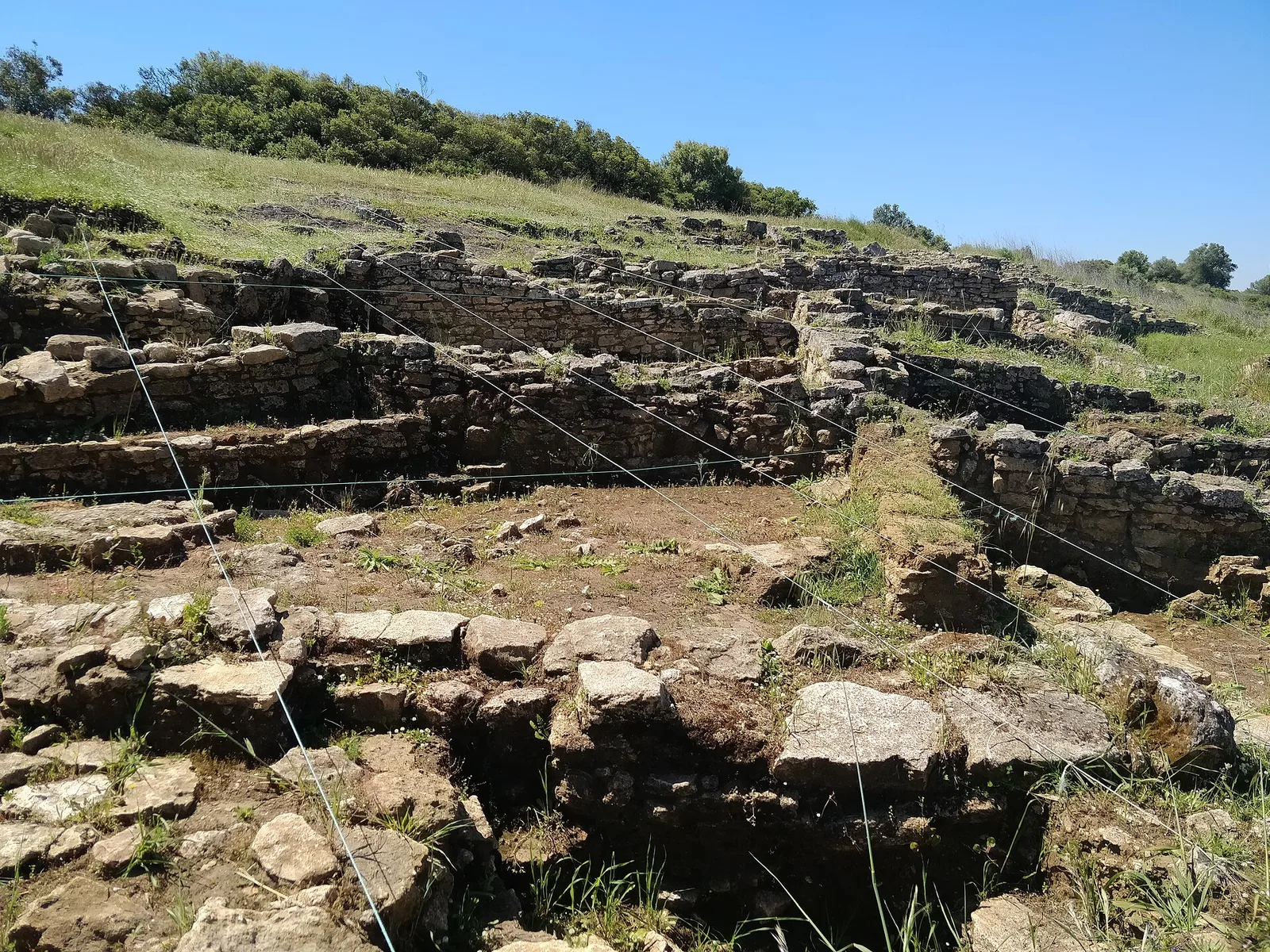
Also known as: Castro de Chibanes
| Type | Fortress/citadel |
|---|---|
| Period | 3000 - 1500 BC |
| Country | Portugal |
| Coordinates | 38.5641° N, 8.9187° W |