
 Portugal
The four Artificial caves of Casal do Pardo, also known as the Caves of Quinta do Anjo, were neolithic tombs [1]. They are situated in Palmela municipality in the Setúbal District, of Portugal, about 25 km south of the capital of Lisbon [1]. The caves were the first of their type to be discovered in Portugal with the site being identified as a result of limestone extraction on the site [1]. They consist of four independent tombs or hypogea cut in soft, miocene limestone, using stone tools [1]. All of the four caves were dug out around 3000 BCE, and were probably used and re-used until around 2000 BCE [1]. The two best-preserved tombs of this complex contain a larger circular domed burial chamber, 4–5 metres in diameter and with a height of up to 2.30 metres [1]. The excavations at the caves have discovered a wide variety of items, including microliths, arrowheads, axes and adzes of polished stone, and flint blades, as well as a variety of polished stone artifacts, ritual objects, limestone idols, shale items and bone buttons [1].
Text: Wikipedia – 'Artificial caves of Casal do Pardo' (revision of 2026-07-21), CC BY-SA 4.0 · sentences selected and shortened by an AI system · source →Artificial Caves of Casal do Pardo
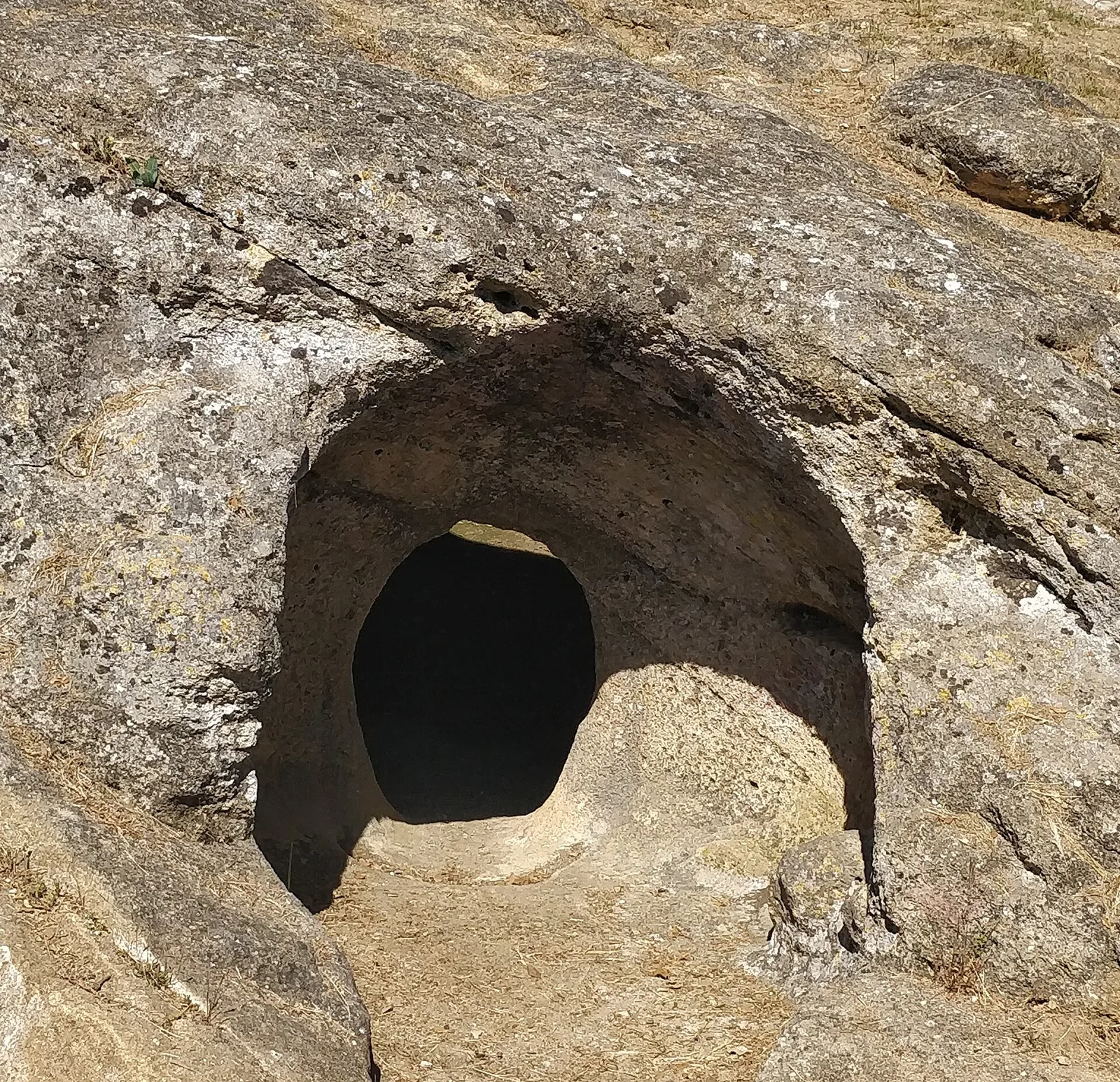
Also known as: Covas da Moura, Coves de la Quinta do Anjo, Felskuppelgräber von Palmela, Grottes de Quinta do Anjo, Grutas da Quinta do Anjo, Grutas do Casal do Pardo, Hipoxeos de Palmela, Hipoxeos de Quinta do Anjo
| Type | Necropolis/tombs complex |
|---|---|
| Period | 4500 - 3000 BC |
| Country | Portugal |
| Coordinates | 38.5643° N, 8.9386° W |