
 Portugal
The Necropolis of Carenque is an archaeological site consisting of three well-preserved late Neolithic collective sepulchres or tombs, dating back to about 3000 BCE [1]. It is situated in the municipality of Amadora in the Lisbon District of Portugal [1]. The site was discovered and excavated in 1932 and was classified as a National Monument in 1936 [1]. Tombs such as these are usually designated as 'artificial caves' or hypogea because they were excavated in the rock [1]. They are part of a Mediterranean funeral tradition that was widely practised in the area of what is now known as Portugal [1]. The first depositions of corpses in the Necropolis of Carenque go back to the end of the Neolithic period (around 3000 BCE), when there was already an agro-pastoral economy in the area, as opposed to hunting and gathering [1].
Text: Wikipedia – 'Necropolis of Carenque' (revision of 2026-07-22), CC BY-SA 4.0 · sentences selected and shortened by an AI system · source →Necropolis of Carenque
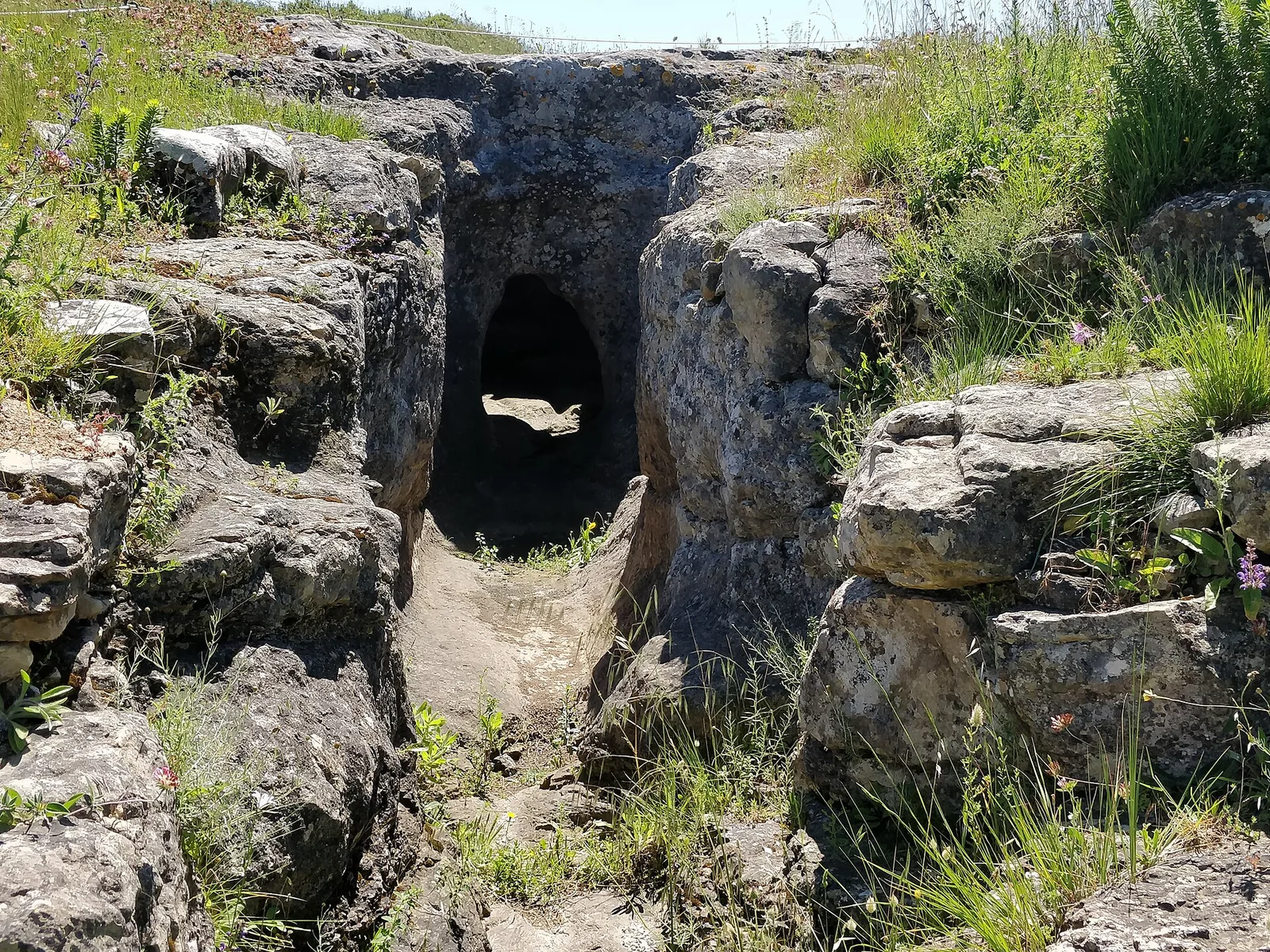
Also known as: Grutas artificiais de Carenque, Grutas artificiais do Tojal de Vila Chã, Grutas artificiais do Tojal de Vila Chã ou Carenque, Necropole de Carenque, Necròpoli de Carenque, Necrópolis de Carenque, Nekropole von Carenque, Νεκρόπολη του Καρένκουε
| Type | Necropolis/tombs complex |
|---|---|
| Period | 3000 - 1500 BC |
| Country | Portugal |
| Coordinates | 38.7735° N, 9.2439° W |