
 Portugal
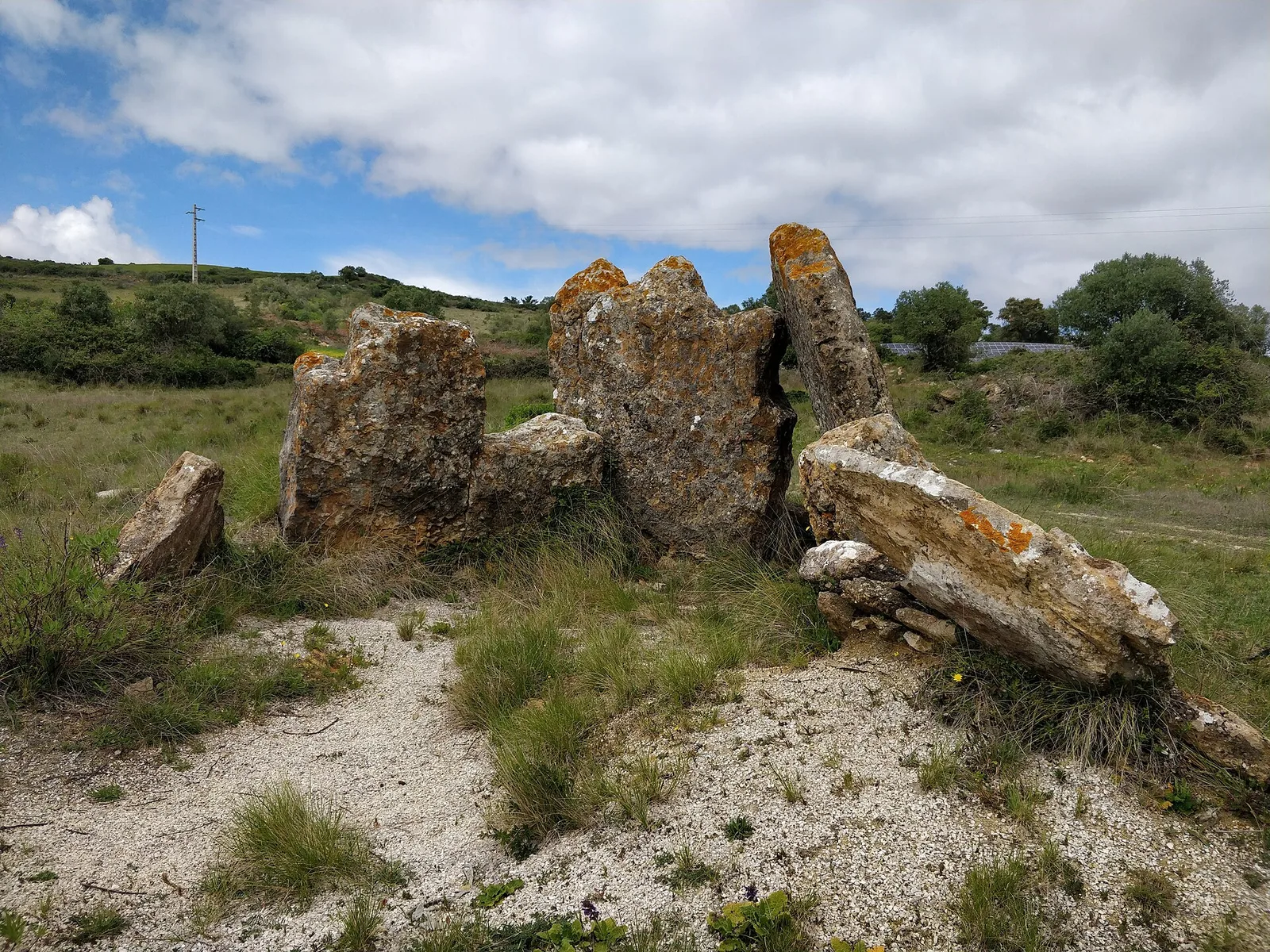
The Anta de Carcavelos, located close to the village of Carcavelos near the town of Lousa in the municipality of Loures in the Lisbon District of Portugal, is a stone age dolmen or megalithic monument from the Chalcolithic period [1]. The Anta was a communal grave consisting of a sepulchral chamber with a polygonal shape [1]. The remains of the tomb consist of six cretaceous limestone slabs that originated in the area, which has several sizeable limestone outcrops [1]. Hastened as a result of looting at the site, the first excavations were carried out in 1986 and continued again from 1991-1994 [1]. From the studies carried out in 1994, many bones were collected, with over 80 adult males and females believed to have been buried there [1]. Various objects were also found such as flint arrowheads, smooth and decorated bell-shaped ceramics, dishes, cylindrical idols, and objects of adornment [1]. The evaluation of items found suggested a probable initial use of the dolmen as being in the last centuries of the 4th millennium BCE, with an intensification in its use between 3000 and 2600 BCE [1].
Text: Wikipedia – 'Anta de Carcavelos' (revision of 2026-07-18), CC BY-SA 4.0 · sentences selected and shortened by an AI system · source →Anta de Carcavelos
| Type | Dolmen |
|---|---|
| Period | Undated |
| Country | Portugal |
| Coordinates | 38.8860° N, 9.2163° W |