
 Portugal
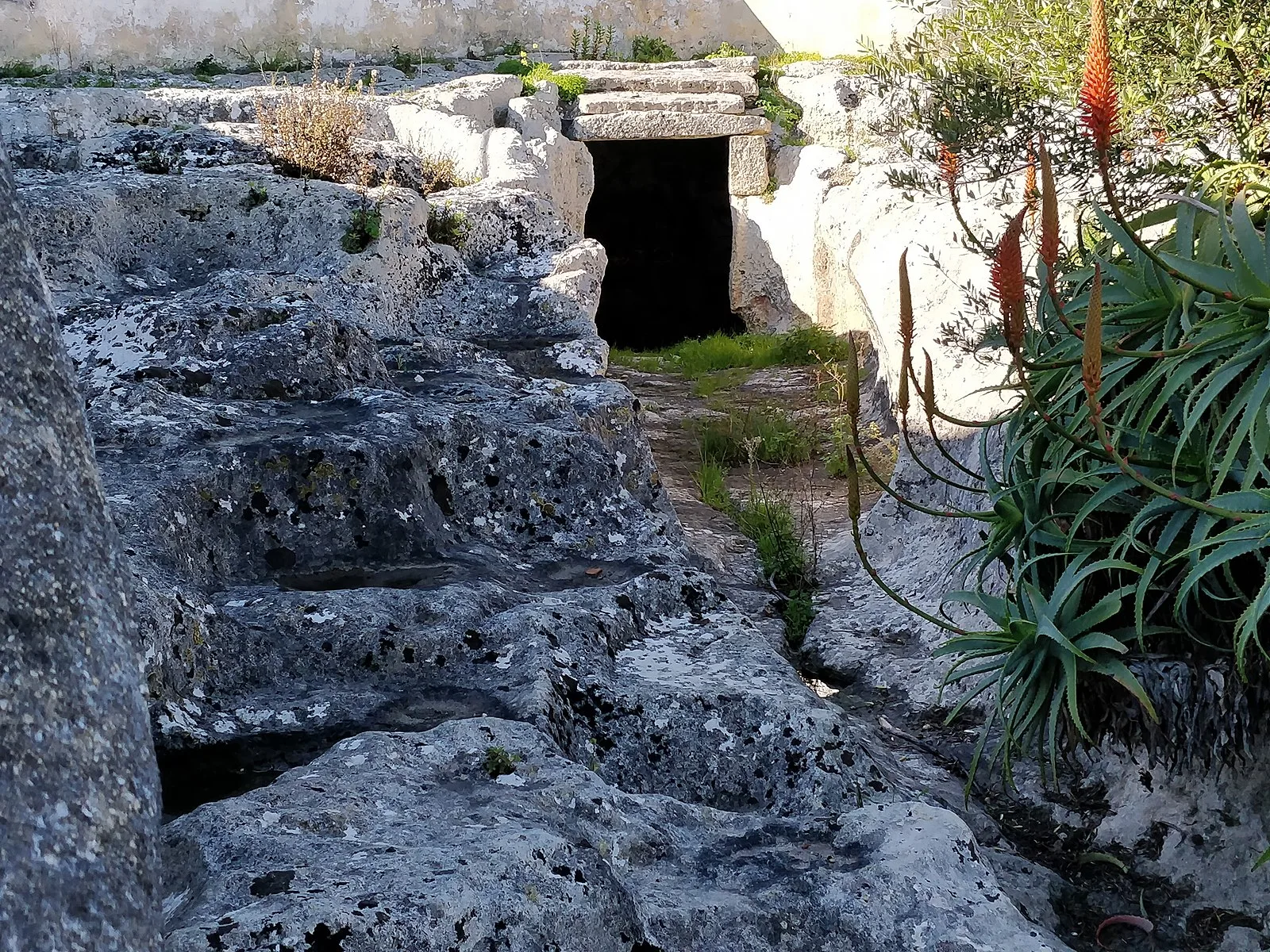
The Artificial caves of Alapraia constitute a prehistoric necropolis formed by four subterranean tombs or hypogea that were created by excavating marlstone rock using stone tools [1]. They are situated in the centre of the suburb of Alapraia in Estoril, Lisbon District, Portugal and are believed to date back to the last quarter of the 4th Millennium BCE and to have been used as a necropolis for over one thousand years [1]. All the caves had the same system of construction, consisting of a long corridor or vestibule for access, with a circular chamber at the end with a skylight at the top, protected by slabs [1]. This is believed to have made possible the placement of bodies into the chamber, when occupancy levels no longer allowed access through the corridor [1]. Cave 1 is 19 m long and was first described by the geologist F. de Paula e Oliveira in 1889 [1]. A spherical chamber has a diameter of 6.2 metres and a height of 2.8 metres in the middle [1].
Text: Wikipedia – 'Artificial caves of Alapraia' (revision of 2026-07-21), CC BY-SA 4.0 · sentences selected and shortened by an AI system · source →Artificial Caves of Alapraia
Also known as: Grutas artificiais de Alapraia, Koguna na wucin gadi na Alapraia, Necrópole Eneolítica de Alapraia, Nekropole von Alapraia
| Type | Necropolis/tombs complex |
|---|---|
| Period | 4500 - 3000 BC |
| Country | Portugal |
| Coordinates | 38.7065° N, 9.3772° W |