
 Germany
The Goseck Circle is a Neolithic circular enclosure in Saxony-Anhalt, Germany, radiocarbon dated to approximately 4900 BC, making it one of the oldest known solar observatories. The structure measures 75 m in diameter with a V-shaped moat up to 1.8 m deep, and features gates aligned with sunrise and sunset on the winter solstice. Discovered in 1991 via aerial photography by Otto Braasch, it was excavated from 2002 by Francois Bertemes and Peter Biehl. Finds include headless skeletons and decapitated animals suggesting ritual activity. The roughly 100-degree angle between its solstice gates matches measurements on the Nebra Sky Disk, found 25 km away.
Goseck Circle
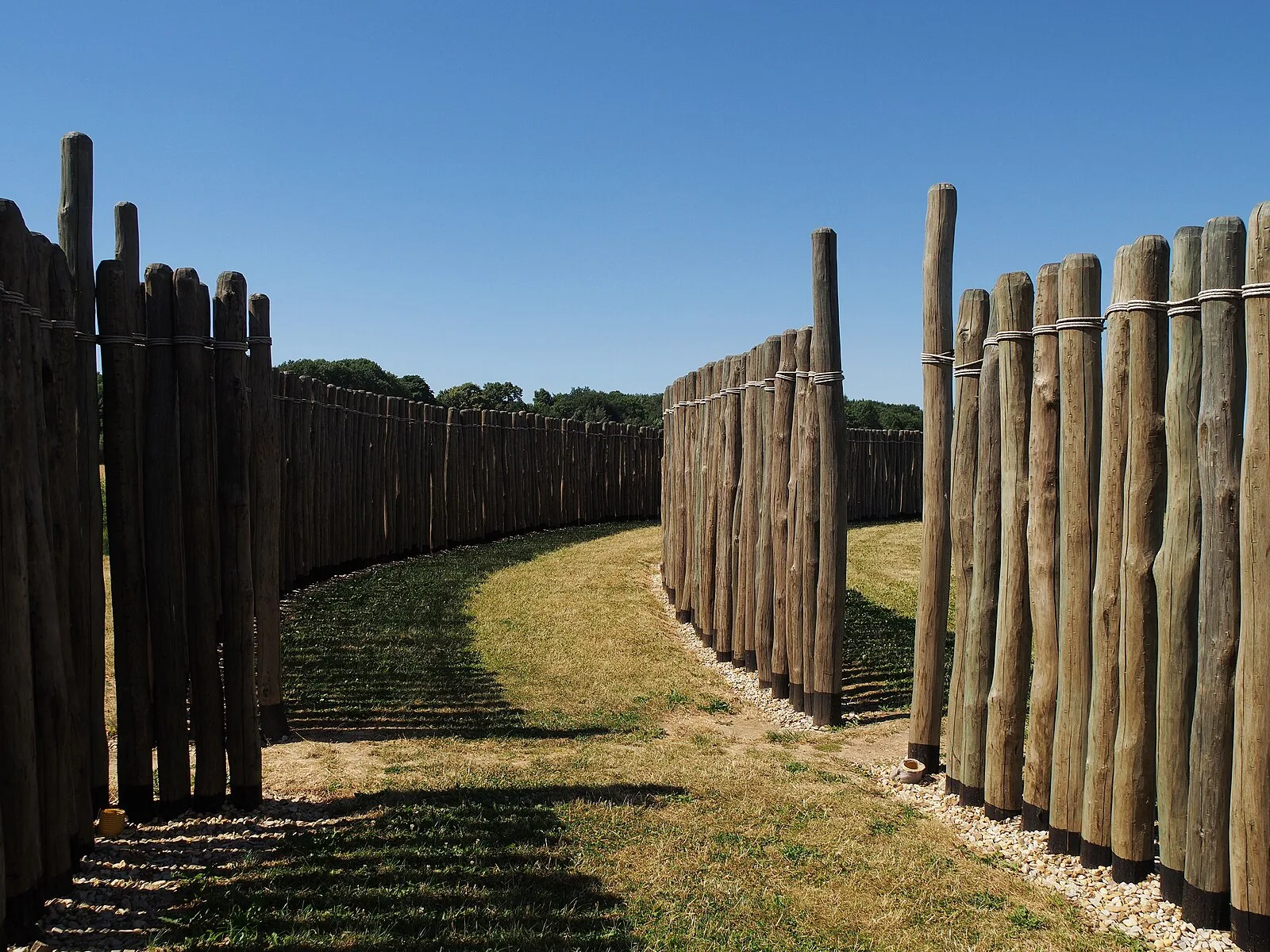
Also known as: Cerchio di Goseck, Cercle de Goseck, Cercul de la Goseck, Círculo de Goseck, Goseck Çemberi, Goseck-cirkel, Gosecks solcirkel, gosecký rondel, Kreisgrabenanlage von Goseck, Obserwatorium słoneczne w Goseck, rondel v Gosecku, Sonnenobservatorium von Goseck
| Type | Timber circle |
|---|---|
| Period | < 4500 BC |
| Country | Germany |
| Coordinates | 51.1984° N, 11.8648° E |