
 Germany
The Leubingen tumulus is an Early Bronze Age "princely" grave of the Leubingen culture dating to about 1940 BC [1]. It is located near the hills of Kyffhäuser in Leubingen [1]. The site was first unearthed in 1877 by Jena art professor and archaeologist Friedrich Klopfleisch [1]. The earthen mound is 7 metres high and contains a burial chamber of 3.90 by 2.10 metres with a maximum height of 1.70 metres [1]. The original height of the mound was around 8.5 metres and its diameter was 34 metres [1]. In a central position lay the body of a man about 50 years old [1].
Text: Wikipedia – 'Leubingen tumulus' (revision of 2026-07-20), CC BY-SA 4.0 · sentences selected and shortened by an AI system · source →Leubingen Tumulus
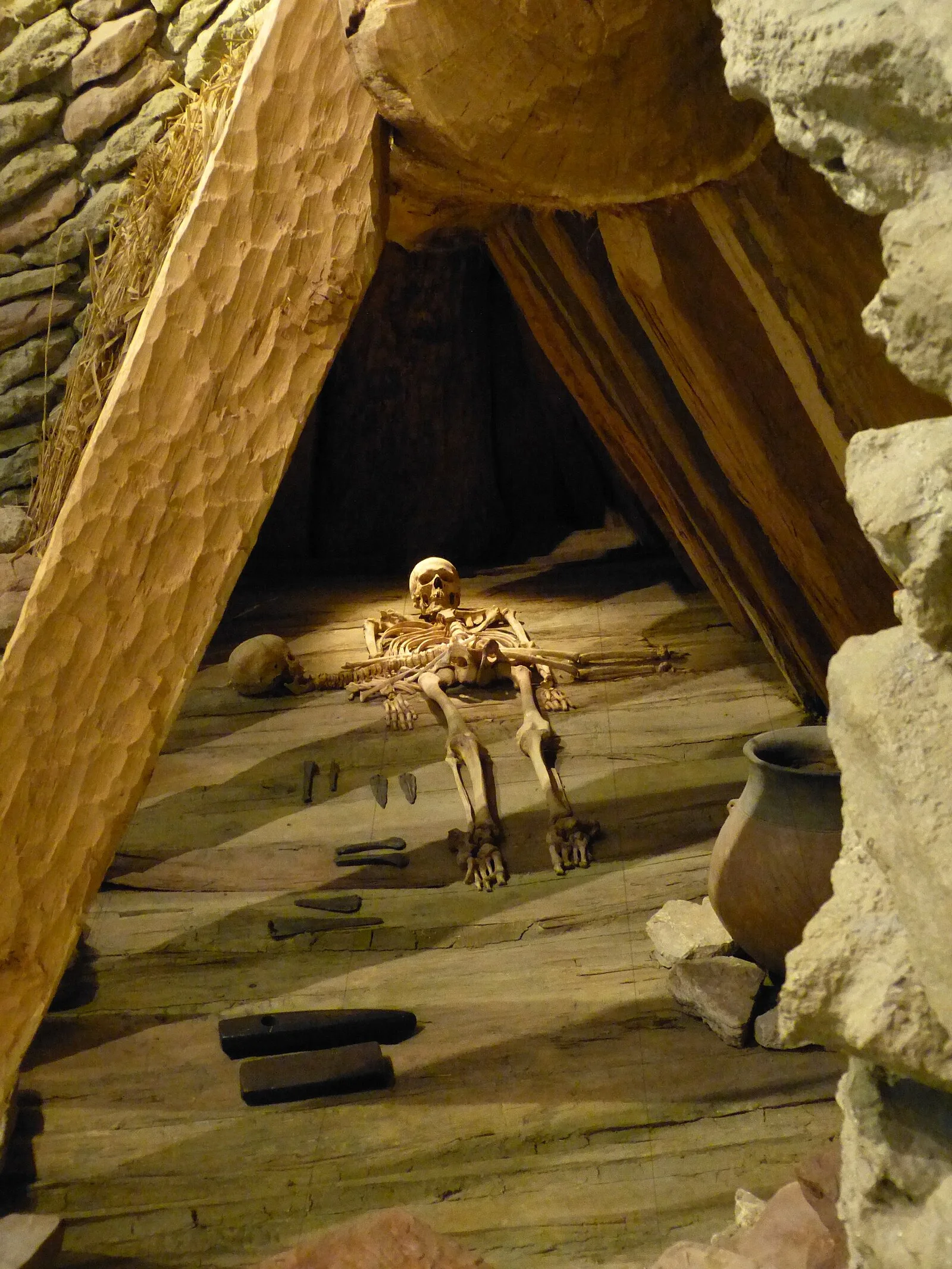
Also known as: Fürstengrab von Leubingen, Fürst von Leubingen, Grabhügel von Leubingen, Grobowiec książęcy w Leubingen, Leubingenin hautakumpu, Leubingenin kumpuhauta, Tomba di Leubingen, tombe de Leubingen, tumulus de Leubingen, Vorstengraf, Vorstengraf (Leubingen), レウビンゲン
| Type | Mound/tumulus |
|---|---|
| Period | 3000 - 1500 BC |
| Country | Germany |
| Coordinates | 51.1903° N, 11.1697° E |