
 England
Danish Camp is an Iron Age fortified settlement in Shoeburyness in Essex [1]. The site is in the Gunners Park and Shoebury Ranges nature reserve [1]. This site is classed by Natural England as a 'slight univallate hillfort' [1]. There are two sections remaining of the defensive banks of the settlement [1]. The surviving part of the north-western bank is around 80 metres long, and it has an average height of 2 metres and width of 11 metres [1]. Pottery vessels have been found dating to the Middle Iron Age, around 400 to 200 years BC, together with four round houses and many post holes and pits [1]. The site is called the Danish Camp because it was thought to have been constructed by the Danish Viking leader Hastein, who is reported by the Anglo-Saxon Chronicle to have built a fort at Shoebury in 894; though he might have re-used the existing camp, no evidence has been found of Viking occupation [1].
Text: Wikipedia – 'Danish Camp' (revision of 2025-12-10), CC BY-SA 4.0 · sentences selected and shortened by an AI system · source →Danish Camp
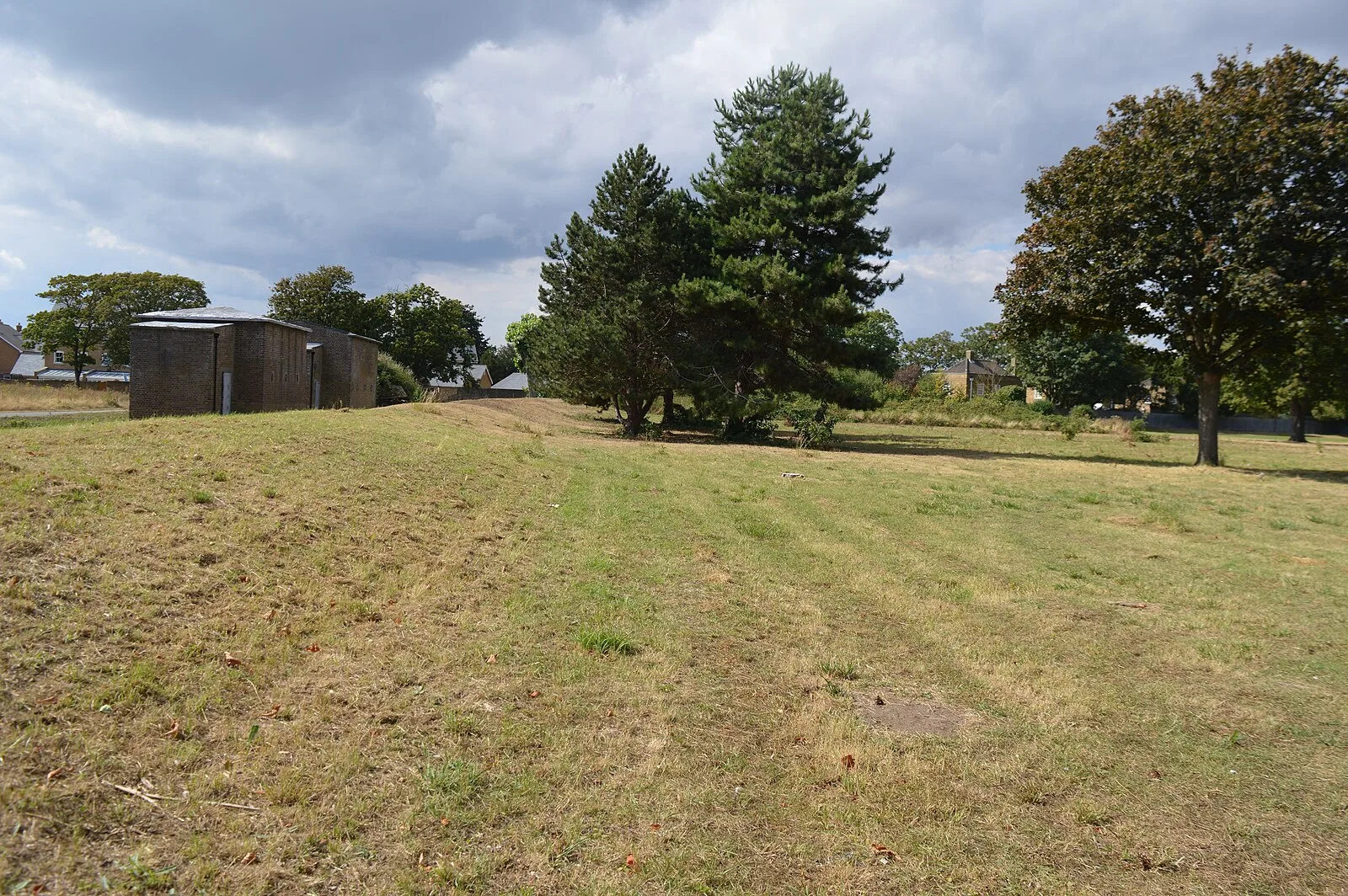
Also known as: Defended prehistoric settlement at Shoeburyness, known as the Danish Camp
| Type | Settlement |
|---|---|
| Period | 500 BC - 1 AD |
| Country | England |
| Coordinates | 51.5271° N, 0.7930° E |