
 England
The Coldrum Long Barrow, also known as the Coldrum Stones and the Adscombe Stones, is a chambered long barrow located near the village of Trottiscliffe in the south-eastern English county of Kent [1]. Probably constructed in the fourth millennium BCE, during Britain's Early Neolithic period, today it survives only in a state of ruin [1]. Archaeologists have established that the monument was built by pastoralist communities shortly after the introduction of agriculture to Britain from continental Europe [1]. Built out of earth and around fifty local sarsen-stone megaliths, the long barrow consisted of a sub-rectangular earthen tumulus enclosed by kerb-stones [1]. Within the eastern end of the tumulus was a stone chamber, into which human remains were deposited on at least two separate occasions during the Early Neolithic [1]. Osteoarchaeological analysis of these remains has shown them to be those of at least seventeen individuals, a mixture of men, women, and children [1]. The ruin attracted the interest of antiquarians in the 19th century, while archaeological excavation took place in the early 20th [1].
Text: Wikipedia – 'Coldrum Long Barrow' (revision of 2026-09-21), CC BY-SA 4.0 · sentences selected and shortened by an AI system · source →Coldrum Long Barrow
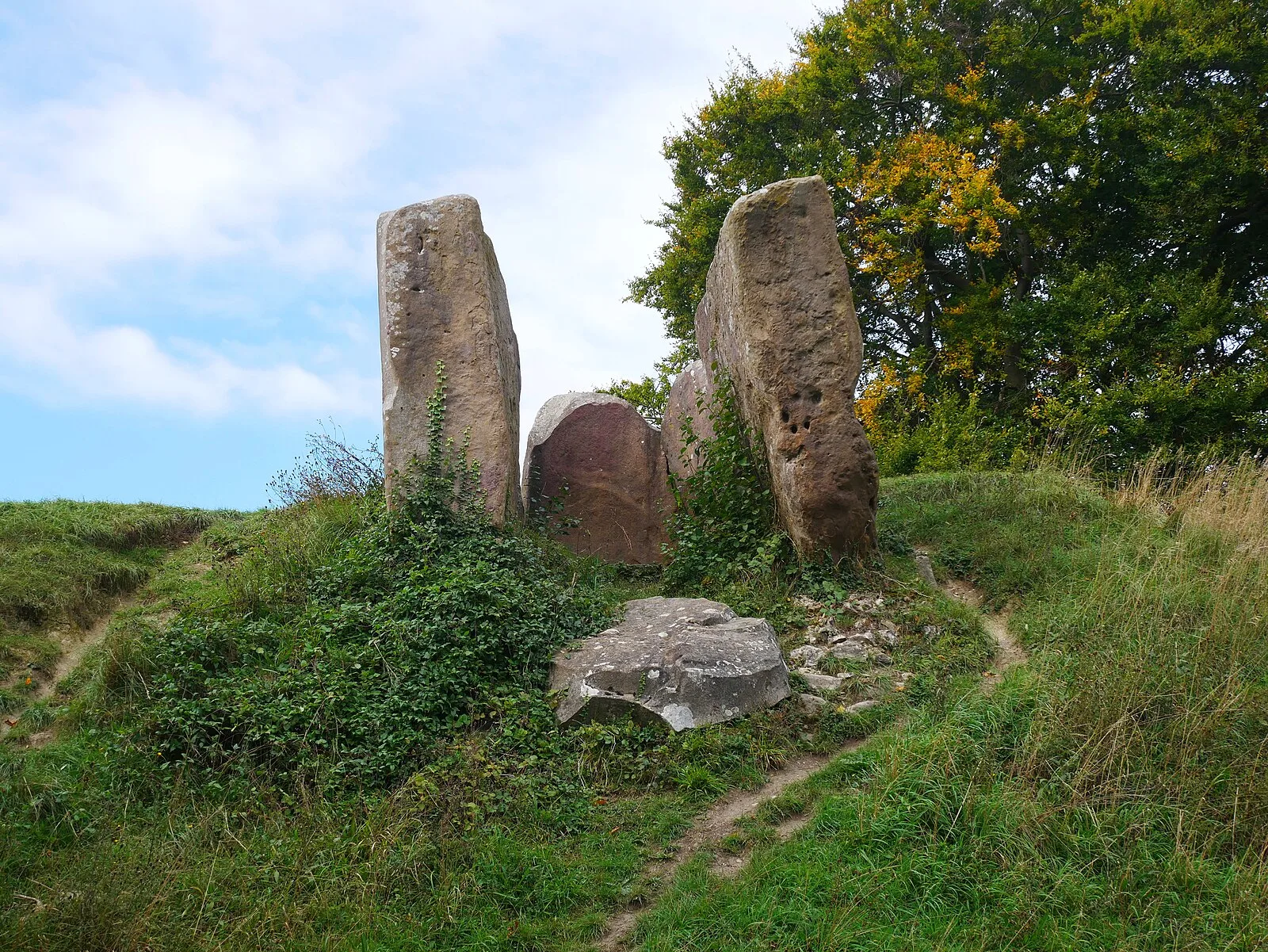
Also known as: Coldrum Megalithic Tomb, Trottiscliffe, Túmulo alargado de Coldrum, گورپشته کولدروم
| Type | Barrow |
|---|---|
| Period | 4500 - 3000 BC |
| Country | England |
| Coordinates | 51.3217° N, 0.3728° E |