
 England
Durovernum Cantiacorum was a town and hillfort in Roman Britain at the site of present-day Canterbury in Kent [1]. It occupied a strategic location on Watling Street at the best local crossing of the Stour, which prompted a convergence of roads connected to the ports of Dubris, Rutupiae, Regulbium and Portus Lemanis [1]. The Iron-Age oppidum at the site was triple-ditched [1]. The site seems to have been occupied and fortified by the Romans shortly after their invasion in AD 43 [1]. Military occupation continued until at least the time of Boudica's rebellion [1]. A large religious and administrative complex was soon established at its centre, consisting of forum and basilica, temple enclosure and theatre [1]. The theatre, originally built around AD 80, was totally rebuilt in the early 3rd century [1]. Because of its links with Gaul, Durovernum seems to have survived in good order until the Roman administration left around AD 410 [1].
Text: Wikipedia – 'Durovernum Cantiacorum' (revision of 2025-10-15), CC BY-SA 4.0 · sentences selected and shortened by an AI system · source →Durovernum Cantiacorum
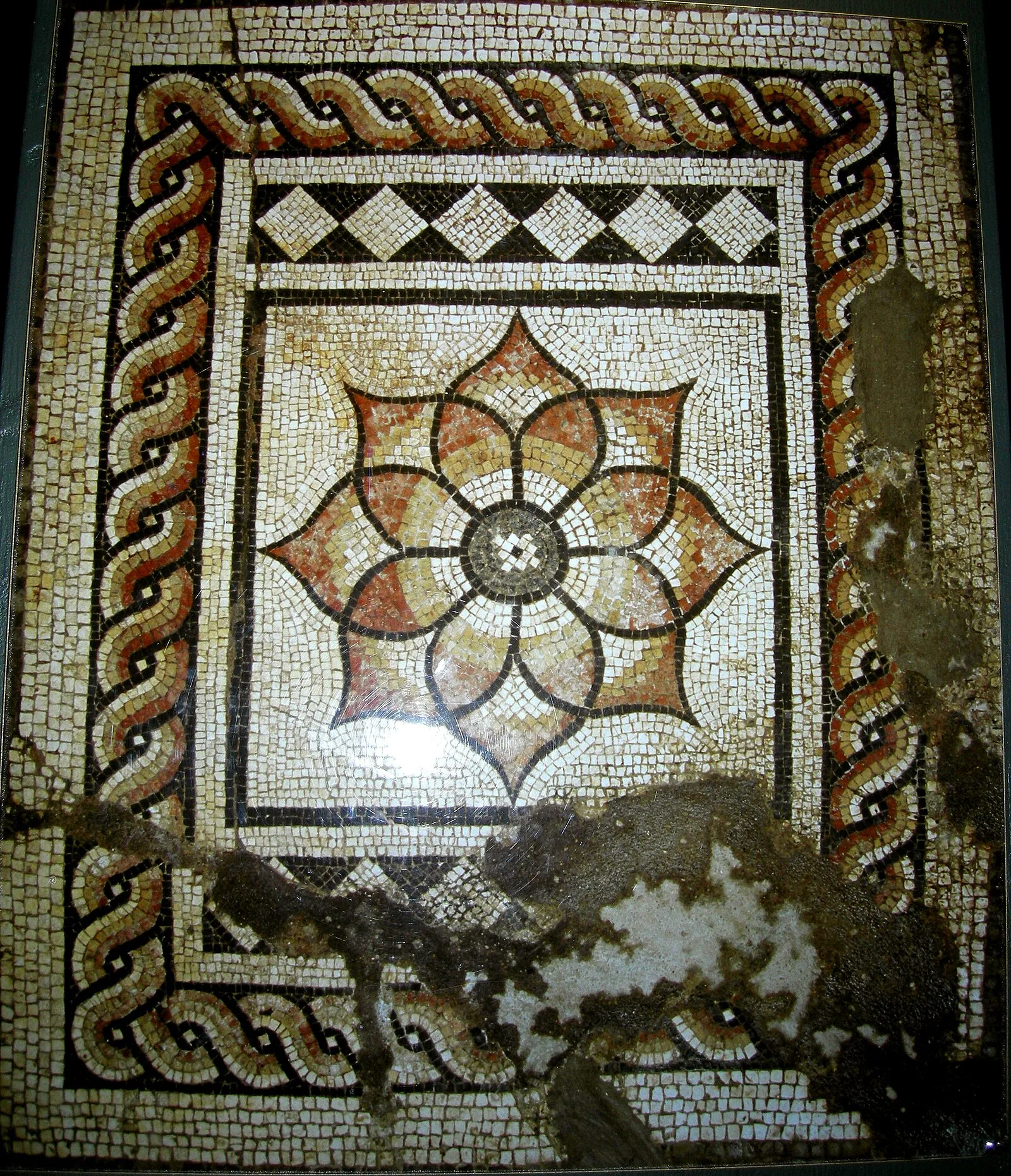
Also known as: デュロヴェルヌム・カンティアコルム, 杜羅伯尼亞
| Type | Town |
|---|---|
| Period | 1 - 500 AD |
| Country | England |
| Coordinates | 51.2788° N, 1.0820° E |