
 England
The Coffin Stone, also known as the Coffin and the Table Stone, is a large sarsen stone at the foot of Blue Bell Hill near Aylesford in the south-eastern English county of Kent [1]. The Coffin Stone is a rectangular slab lying flat that measures 4.42 metres in length, 2.59 metres in breadth, and about 0.61 metres in width [1]. Two smaller stones lie nearby and another large slab is now located atop it [1]. In the 1830s it was reported that local farmers found human bones near the stone [1]. An archaeological excavation of the site led by Paul Garwood took place in 2008–09; it found that the megalith was placed in its present location only in the 15th or 16th centuries [1]. The archaeologists found no evidence of a chambered long barrow at the location, and suggested that the Coffin Stone might once have stood upright in the vicinity [1]. The antiquarian William Stukeley made note of the Coffin Stone in his posthumously published 1776 work Itinerarium Curiosum [1].
Text: Wikipedia – 'Coffin Stone' (revision of 2026-09-21), CC BY-SA 4.0 · sentences selected and shortened by an AI system · source →Coffin Stone
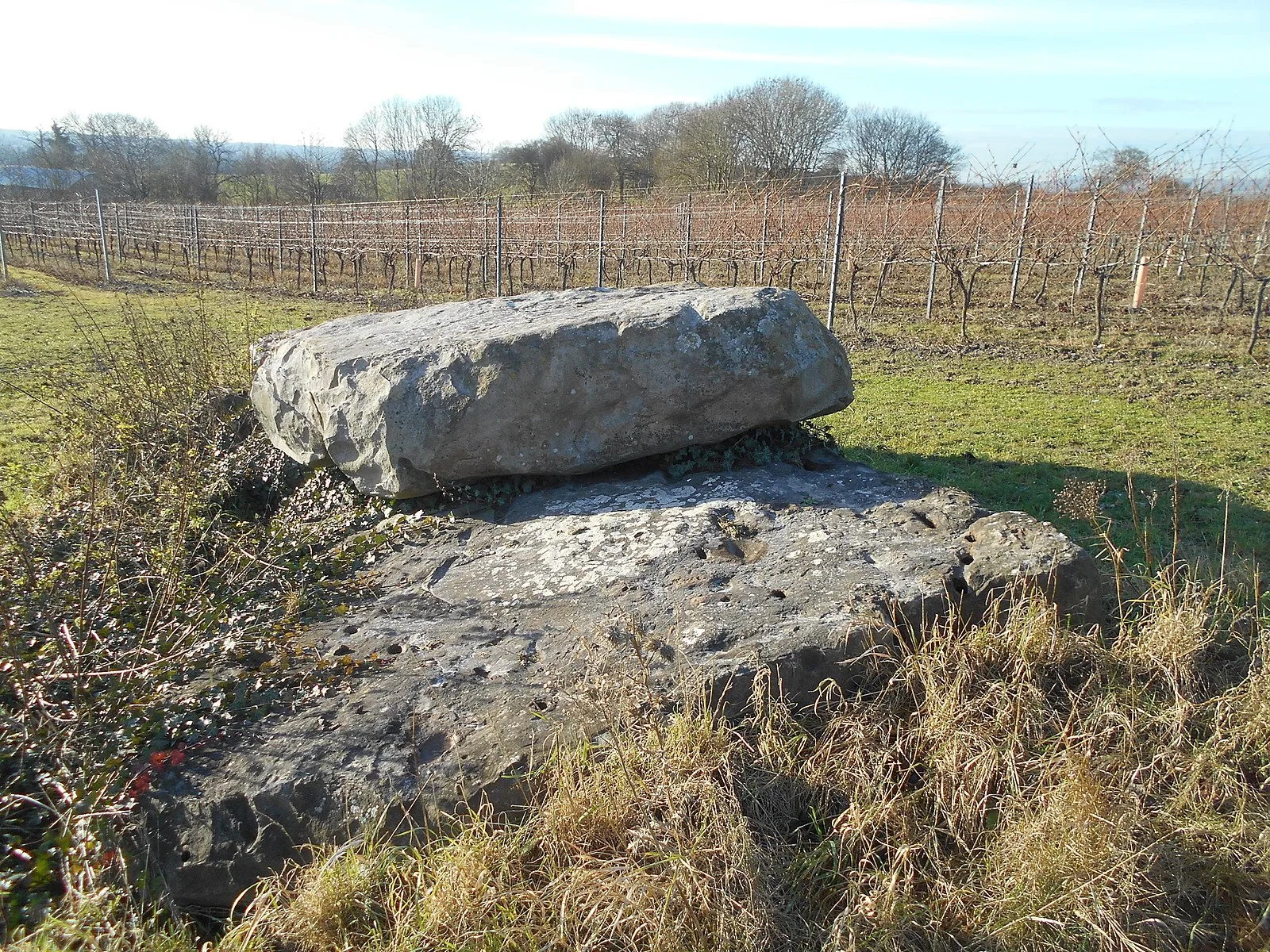
Also known as: Piedra Coffin, Pierre de cercueil, حجر التابوت
| Type | Megalithic stones |
|---|---|
| Period | 4500 - 3000 BC |
| Country | England |
| Coordinates | 51.3179° N, 0.4959° E |