
 England
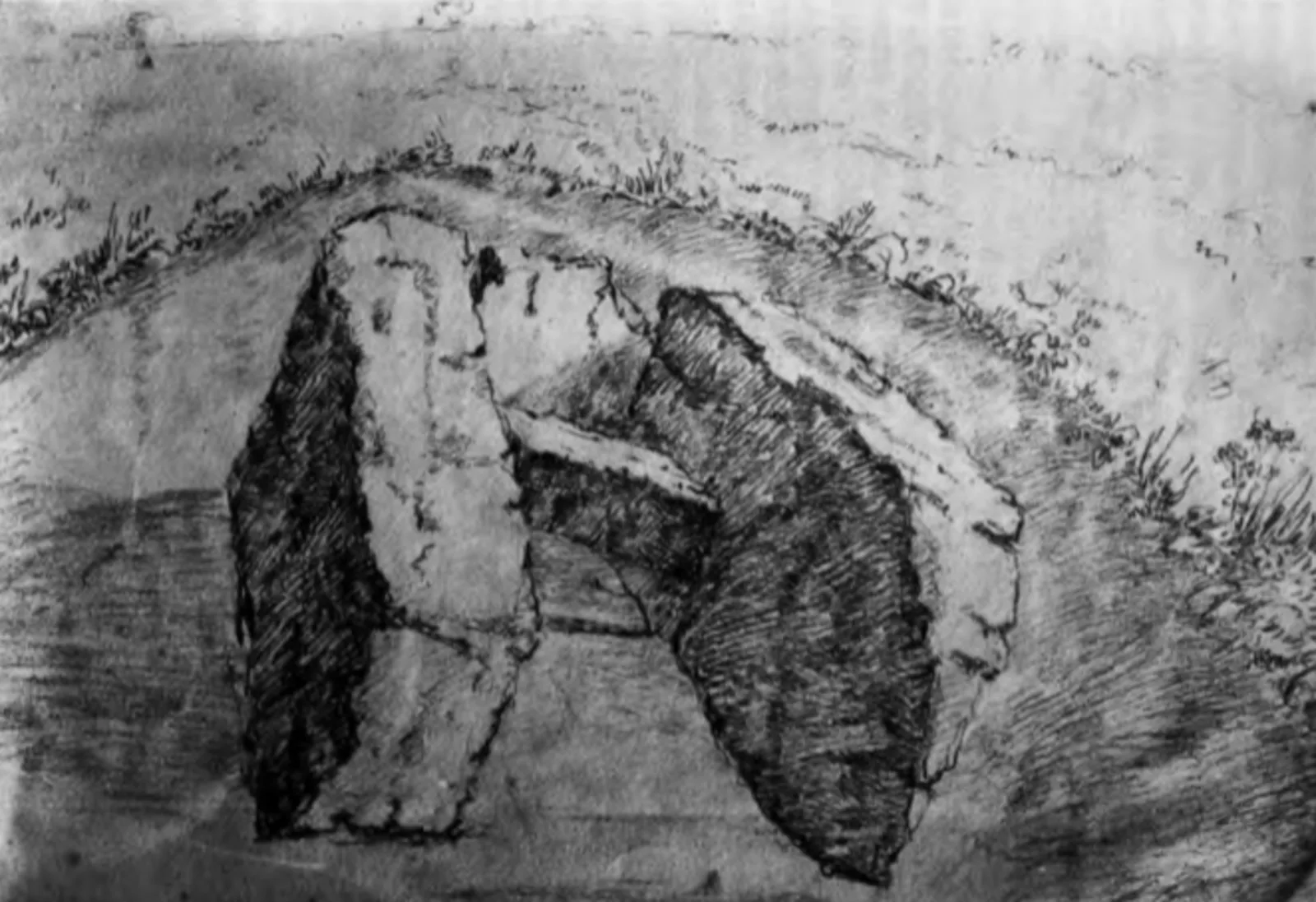
Smythe's Megalith, also known as the Warren Farm Chamber, was a chambered long barrow near the village of Aylesford in the south-eastern English county of Kent [1]. Probably constructed in the 4th millennium BCE, during Britain's Early Neolithic period, it was discovered in 1822, at which point it was dismantled [1]. Built out of earth and at least five local sarsen megaliths, the long barrow consisted of a roughly rectangular earthen tumulus with a stone chamber in its eastern end [1]. Human remains were deposited into this chamber [1]. Archaeologists have established that the monument was built by pastoralist communities shortly after the introduction of agriculture to Britain from continental Europe [1]. Although representing part of an architectural tradition of long barrow building widespread across Neolithic Europe, Smythe's Megalith belonged to a localised regional variant produced in the vicinity of the River Medway, now known as the Medway Megaliths [1].
Text: Wikipedia – 'Smythe's Megalith' (revision of 2026-09-21), CC BY-SA 4.0 · sentences selected and shortened by an AI system · source →Smythe's Megalith
Also known as: جندل سميث
| Type | Tomb |
|---|---|
| Period | 4500 - 3000 BC |
| Country | England |
| Coordinates | 51.3167° N, 0.5166° E |