
 Egypt
EgyptThe Temple of Hibis is the largest and best preserved ancient Egyptian temple in the Kharga Oasis, as well as the only structure in Egypt dating to the Saite-Persian period (664–404 BCE) which has come down to modern times in relatively good condition [1]. The temple of Hibis was once surrounded by the city of Hibis, which nowadays lies under the crops [1]. Construction of the temple started during the 26th Dynasty, most likely under Pharaoh Psamtik II, or possibly even earlier, during the 25th Dynasty [1]. Several decades after Psamtik II, during the 27th Dynasty, the Achaemenid pharaoh Darius I took a particularly active part in its building, being credited with the decoration of the walls [1]. Later, several other rulers made additions or decorations here, such as Hakor of the 29th Dynasty, notably Nectanebo I and Nectanebo II of the 30th Dynasty, possibly Ptolemy IV, and at least one Roman emperor [1]. A first excavation campaign took place in 1909–11 [1].
Text: Wikipedia – 'Temple of Hibis' (revision of 2026-08-10), CC BY-SA 4.0 · sentences selected and shortened by an AI system · source →Temple of Hibis
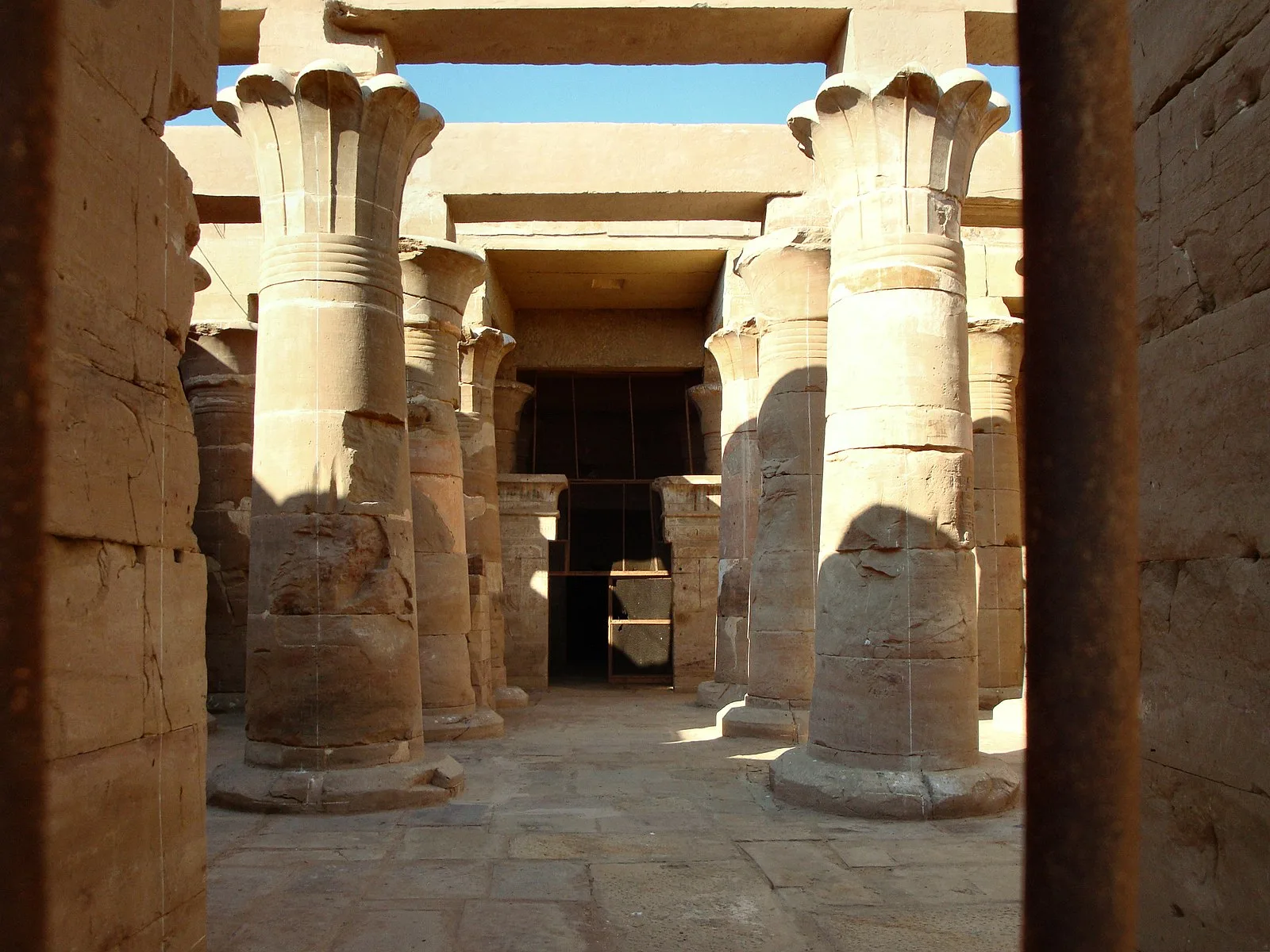
Also known as: Hekalu la Hibis, Hibis Tapınağı, Hibis-Tempel, Hibistemplet, Tempel van Hibis, temple d'Hibis, Temple of Hibis, Kharga, Templo de Hibis, Маъбади Ҳибис, Храм Хибис, Հիբիս տաճար, מקדש היביס
| Type | Temple complex |
|---|---|
| Period | 1500 - 500 BC |
| Country | Egypt |
| Coordinates | 25.4771° N, 30.5562° E |