
 Egypt
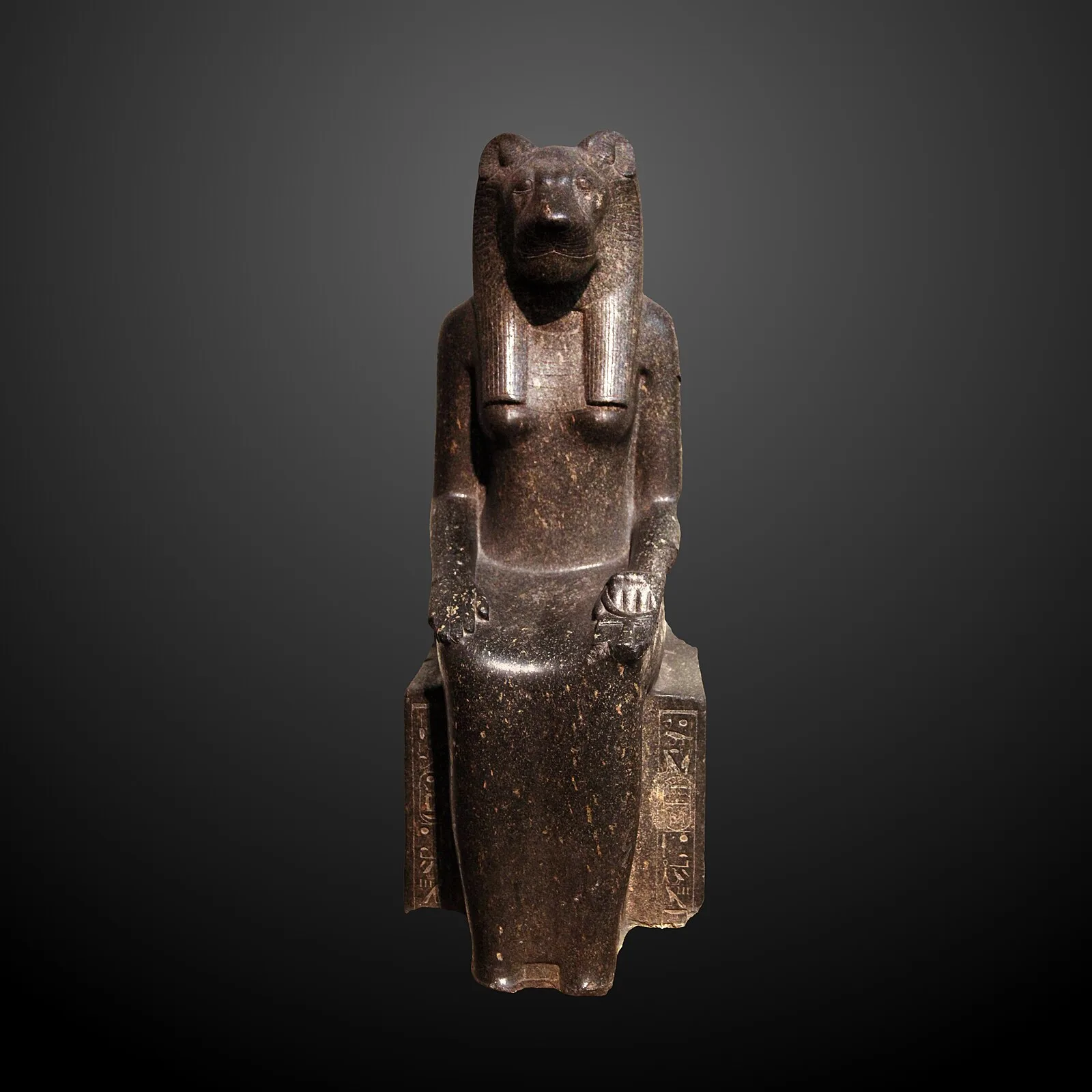
EgyptThe Precinct of Mut is an Ancient Egyptian temple compound located in the present city of Luxor (ancient Thebes), on the east bank of the Nile in South Karnak [1]. The compound is one of the four key ancient temples that creates the Karnak Temple Complex [1]. It is approximately 325 m south of the precinct of the god Amun [1]. The precinct itself encompasses approximately 9 ha of the entire area [1]. The Mut Precinct contains at least six temples: the Mut Temple, the Contra Temple, and Temples A, B, C, and D. Surrounding the Mut Temple proper, on three sides, is a sacred lake called the Isheru [1]. Surrounding the Mut Temple, the Contra Temple, and Temples A, B, C, and D, is an enclosure wall made of mud brick dating to the 30th Dynasty [1]. The earliest dated cartouches are of Thutmose II and III of the 18th Dynasty (some evidence suggest that Thutmose's name is likely a replacement for Hatshepsut's erased name) [1]. The site is notable for the statues of the lion-headed goddess Sekhmet found there [1].
Text: Wikipedia – 'Precinct of Mut' (revision of 2026-09-13), CC BY-SA 4.0 · sentences selected and shortened by an AI system · source →Mut Precinct
Also known as: Mut Bölgesi, Mut-Tempel-Bezirk, Precinct of Mut, recinto de Mut, Tempelbezirk der Mut, Tempel van Moet, Tempel van Mut, tempio di Mut, temple de Mout, Temple de Mout (Karnak), temple de Mut, Temple of Mut
| Type | Temple complex |
|---|---|
| Period | 1500 - 500 BC |
| Country | Egypt |
| Coordinates | 25.7129° N, 32.6555° E |