
 Egypt
EgyptDeir el-Medina, or Dayr al-Madīnah, is an ancient Egyptian workmen's village which was home to the artisans who worked on the tombs in the Valley of the Kings during the 18th to 20th Dynasties of the New Kingdom of Egypt (ca. 1550–1080 BC) [1]. The site is located on the west bank of the Nile, across the river from modern-day Luxor [1]. The village is laid out in a small natural amphitheatre, within easy walking distance of the Valley of the Kings to the north, funerary temples to the east and south-east [1]. A French team directed by Bernard Bruyère excavated the entire site, including village, dump and cemetery, between 1922 and 1951 [1]. The first datable remains of the village belong to the reign of Thutmose I (c. 1506–1493 BC) with its final shape being formed during the Ramesside Period [1]. In about the 25th year of the reign of Ramesses III (c. 1170 BC) the tomb laborers were so exasperated by delays in supplies that they threw down their tools and walked off the job in what may have been the first sit-down strike action in recorded history [1].
Text: Wikipedia – 'Deir el-Medina' (revision of 2026-08-12), CC BY-SA 4.0 · sentences selected and shortened by an AI system · source →Deir el-Medina
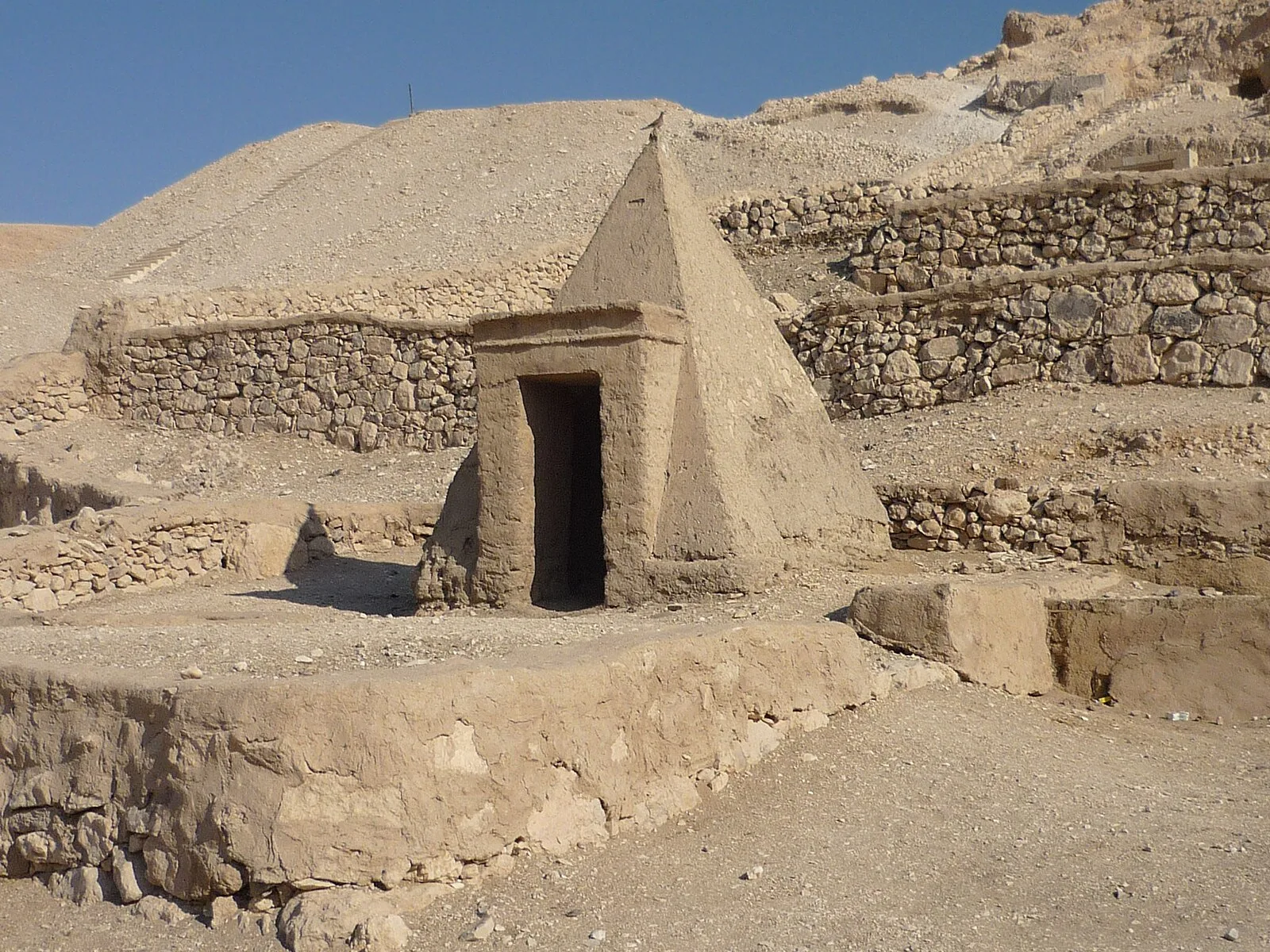
Also known as: Dair al-Madīna, Dayr al-Madīna, Dayr al-Madinah, Deir al-Madinah, Deir Almedina, Deir al-Médîna, Deir al-Medinah, Deir el Medina, Deir el-Medine, Deir el-Medineh, Deir-el-Medineh, Dejr el-Medina
| Type | City/town/settlement |
|---|---|
| Period | 3000 - 1500 BC |
| Country | Egypt |
| Coordinates | 25.7291° N, 32.6014° E |