
 Egypt
EgyptThe Serapeum of Saqqara was the ancient Egyptian burial place for sacred bulls of the Apis cult at Memphis [1]. Over a timespan of approximately 1400 years, from the New Kingdom of Egypt to the end of the Ptolemaic Period, at least sixty Apis are attested to have been interred at the Serapeum [1]. In 1850 Auguste Mariette rediscovered the Serapeum, and excavated it the following years [1]. He found two undisturbed Apis burials, as well as thousands of objects related to centuries of cult activity [1]. The most ancient burials at the Serapeum, found in isolated tombs, date back to the reign of Amenhotep III of the Eighteenth Dynasty in the 14th century BC [1]. Khaemweset, working as an administrator during the reign of his father Ramesses II (1279–1213 BC) in the Nineteenth Dynasty, ordered a tunnel with side chambers – now known as the "Lesser Vaults" – to be excavated, for the burial of the Apis bulls [1]. The Serapeum was abandoned at the beginning of the Roman Period, shortly after 30 BC [1].
Text: Wikipedia – 'Serapeum of Saqqara' (revision of 2026-07-31), CC BY-SA 4.0 · sentences selected and shortened by an AI system · source →Serapeum of Saqqara
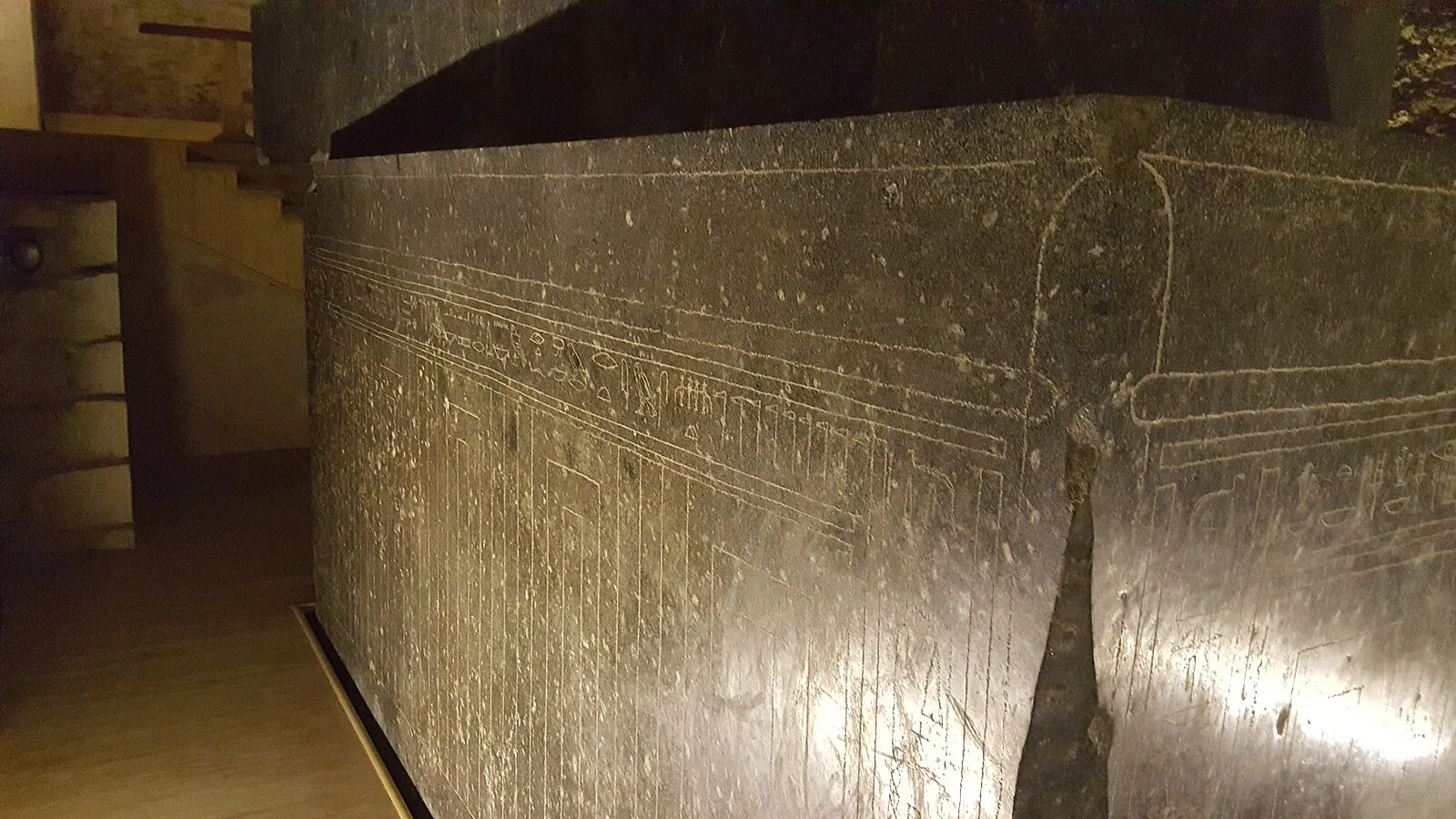
Also known as: Sakarski serapej, Sakkarako serapeuma, Sakkara Serapeumu, Saqqarako Serapeuma, Serapeo di Menfi, Serapeo di Saqqara, Serapeu de Sacará, serapeu de Saqqara, Serapeum, Sérapéum de Memphis, Serapeum de Saqqara, Sérapéum de Saqqarah
| Type | Necropolis/tombs complex |
|---|---|
| Period | 1500 - 500 BC |
| Country | Egypt |
| Coordinates | 29.8749° N, 31.2125° E |