
 Egypt
EgyptThe Pyramid of Pepi II was the tomb of King Pepi II, located in southern Saqqara, to the northwest of the Mastabat al-Fir'aun [1]. It was the final full pyramid complex to be built in Ancient Egypt [1]. Long used as a quarry, the pyramid was excavated for the first time by Gaston Maspero in 1881 [1]. Its ruins were studied in exhaustive detail by Gustave Jéquier, who was able to reconstruct the funerary complex and the texts on the walls of the funerary chamber in the course of his excavation campaigns from 1932–1935 [1]. The complex consists of the main pyramid, a Ka pyramid, three queen's pyramids, a valley temple and a mortuary temple, linked by a four hundred meter long covered causeway, running through the desert from the Nile River to the pyramid [1]. The pyramid was a little over 52 m high and each side was over 78 m long [1].
Text: Wikipedia – 'Pyramid of Pepi II' (revision of 2026-06-28), CC BY-SA 4.0 · sentences selected and shortened by an AI system · source →Pyramid of Pepi II
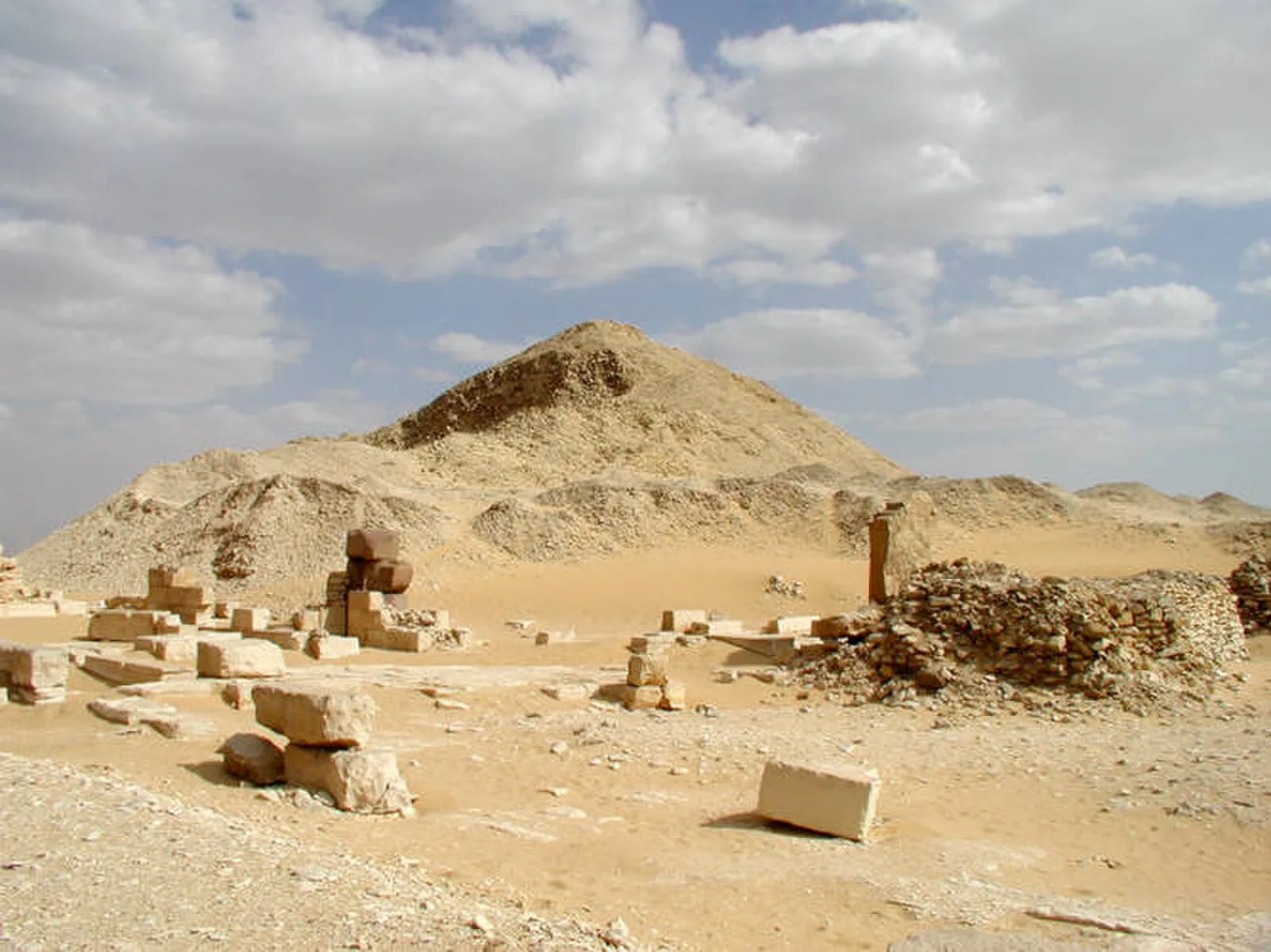
Also known as: Kim tự tháp Pepi II, Pepi II Piramidi, Pepi-II.-Pyramide, Pepi II:s pyramid, Piramida Pepiego II, Pirámide de Pepi II, Piramide van Pepi II, Pyramída Pepiho II., Pyramide de Pepi II, Пирамида Пепи II, هرم بيبى التانى, هرم بيبي الثاني
| Type | Pyramid complex |
|---|---|
| Period | 3000 - 1500 BC |
| Country | Egypt |
| Coordinates | 29.8423° N, 31.2135° E |