
 Egypt
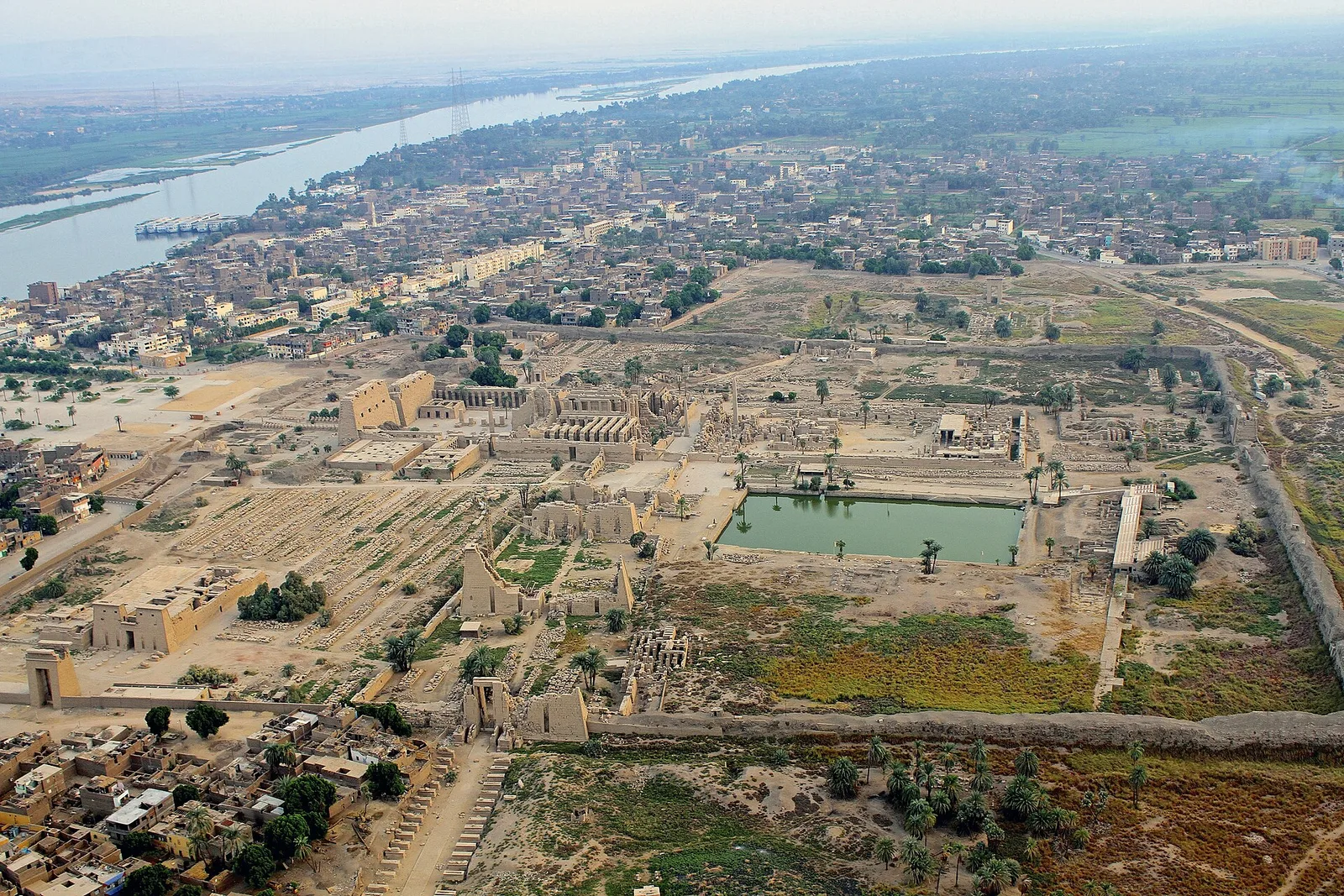
EgyptThe Karnak Temple Complex, commonly known as Karnak, comprises a vast mix of temples, pylons, chapels, and other buildings near Luxor, Egypt [1]. Construction at the complex began during the reign of Senusret I in the Middle Kingdom (c. 2000–1700 BC) and continued into the Ptolemaic Kingdom, although most of the extant buildings date from the New Kingdom [1]. The area around Karnak was the ancient Egyptian Ipet-isut and the main place of worship of the 18th Dynastic Theban Triad, with the god Amun as its head [1]. It is part of the monumental city of Thebes [1]. The Great Hypostyle Hall in the Precinct of Amun-Re has an area of 5,000 m2 with 134 massive columns arranged in 16 rows [1]. The earliest known artifact found in the area of the temple is a small, eight-sided column from the Eleventh Dynasty, which mentions Amun-Re [1].
Text: Wikipedia – 'Karnak' (revision of 2026-09-24), CC BY-SA 4.0 · sentences selected and shortened by an AI system · source →Karnak Temple Complex
Also known as: 카르나크 신전, Carnac, Carnaque, Complesso templare di Karnak, Đền Karnak, Karnak, Karnaka, Karnak (Egypte), Karnakeko Tenpluko Konplexua, Karnakin temppeli, Karnaki templom, Karnak (məbəd kompleksi)
| Type | Temple complex |
|---|---|
| Period | 3000 - 1500 BC |
| Country | Egypt |
| Coordinates | 25.7183° N, 32.6583° E |