
 Egypt
EgyptThe Great Hypostyle Hall is located within the Karnak Temple Complex, in the Precinct of Amon-Re [1]. The structure was built around the 19th Egyptian Dynasty (c. 1290–1224 BC) [1]. The Great Hypostyle Hall covers an area of 5,000 m2 [1]. In 1899, eleven of the massive columns of the Great Hypostyle Hall collapsed in a chain reaction, because their foundations were undermined by ground water [1].
Text: Wikipedia – 'Great Hypostyle Hall' (revision of 2026-09-01), CC BY-SA 4.0 · sentences selected and shortened by an AI system · source →Hypostyle Hall
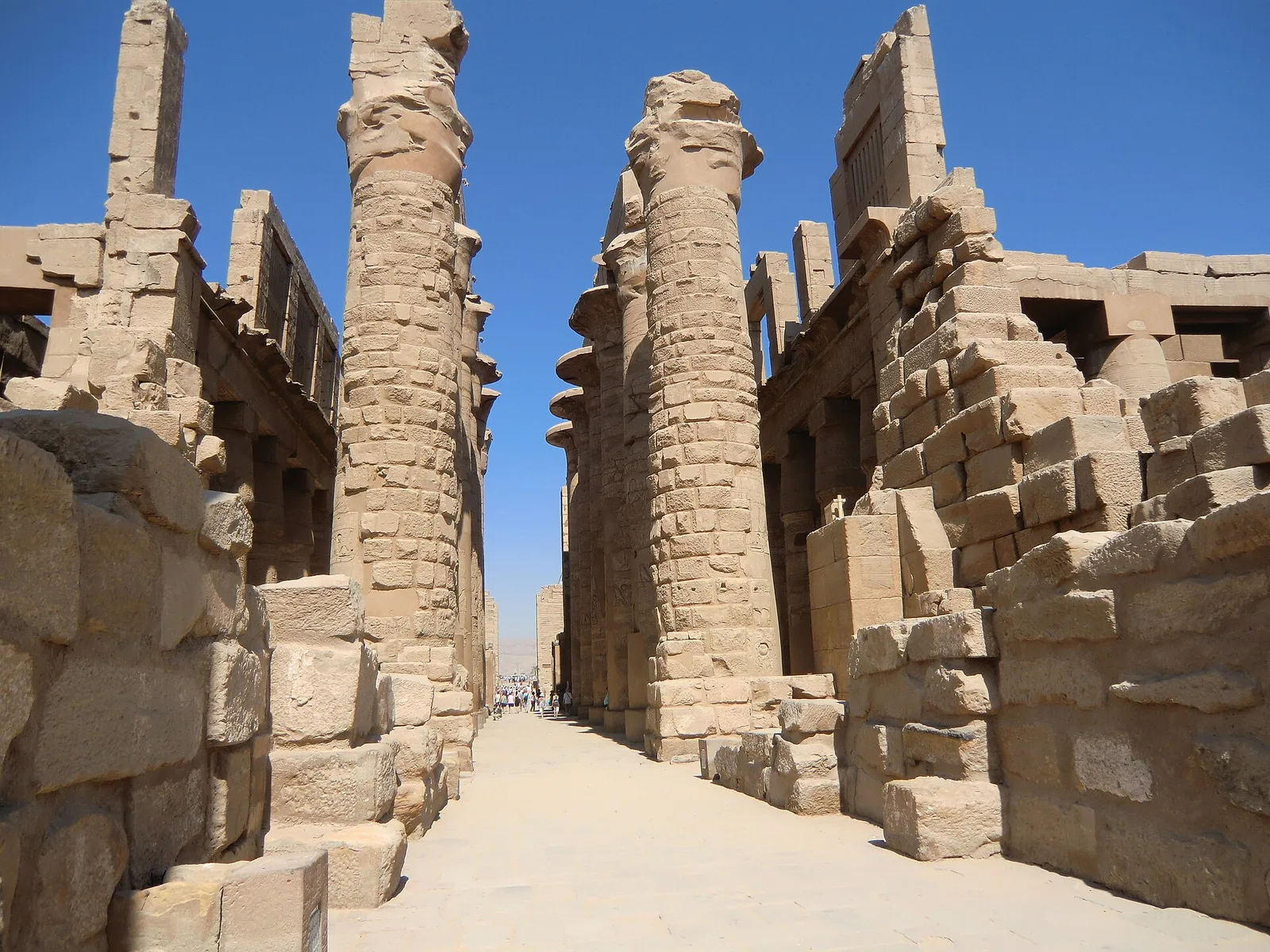
Also known as: Balai Hipostilium Agung, Dewan Hipostil Besar, Grande sala ipostila, Grande Salão Hipostilo, Grande salle hypostyle, gran sala hipóstila, Great Hypostyle Hall, Salle hypostyle, Большой гипостильный зал, Велика гіпостильна зала, Голяма хипостилна зала, عظیم ستونوں والا ہال
| Type | Temple |
|---|---|
| Period | 1500 - 500 BC |
| Country | Egypt |
| Coordinates | 25.7187° N, 32.6578° E |