

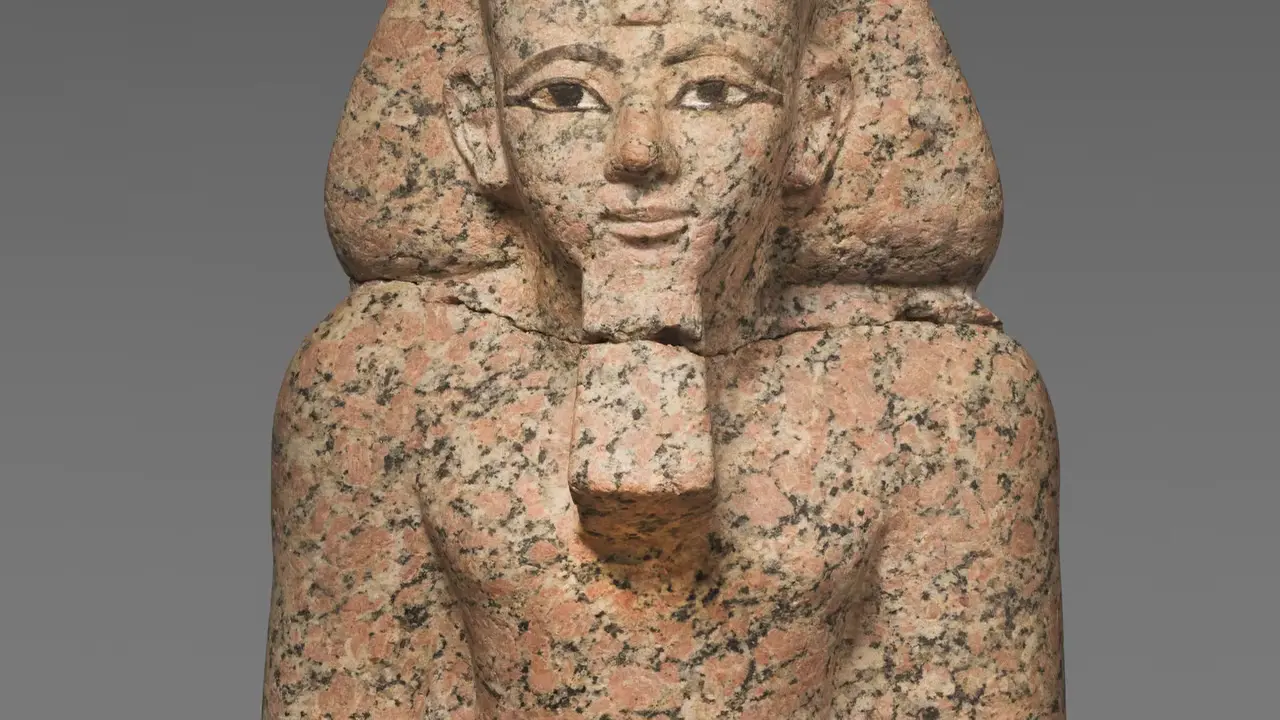
A 2025 study of 18 surviving Hatshepsut statue heads found half essentially intact, with 5 of 6 from the 'Hatshepsut hole' at Karnak showing undamaged faces. The breakage patterns suggest her erasure was a selective, unfinished political campaign by multiple actors—possibly including Amenhotep II—rather than a single vengeful purge.
Karnak evidence shows Hatshepsut erasure was selective and gradual, not vengeful purge
 EgyptArtifactNew Research
Key facts
- Hatshepsut died around 1458 BCE; Thutmose III's systematic erasure was delayed by at least 20 years
- Charles Nims (1966) documented Karnak building sequence showing Hatshepsut's year 17 inscription was not yet erased when Thutmose III built his festival hall around years 23-24
- Hatshepsut disappeared from the historical record around year 22 of Thutmose III's reign
- A 2025 study of 18 surviving freestanding statue heads of Hatshepsut found half were essentially intact; 5 of 6 heads from the Hatshepsut hole had undamaged faces
- The breakage pattern does not show evidence of a single destructive purge
- Amenhotep II and priests of Osiris are also probably responsible for some destructions
- The erasure was a selective and unfinished political campaign over a lengthy period, likely by multiple actors
Sources
(PDF) The afterlife of Hatshepsut's statuary - ResearchGateresearchgate.net
Ancient Egyptian queen's statues were not destroyed out of hatred but ...theartnewspaper.com
Hatshepsut's statues - The Pastthe-past.com
Head of Queen Hatshepsutegyptianmuseumcairo.eg
Was this story useful?
Keep exploring
Every site on this page sits on the globe, and the people who research them are on the Discord.
3D Globe · Sites by country · Story Archive · Research Library · Weekly Journal · Search
AI-generated text · images from the original sources · always verify with the sources.