
 Albania
Butrint was an ancient Greek polis and later Roman city and the seat of an early Christian bishopric in Epirus [1]. Bouthroton (modern day Butrint) was originally one of the major centres of the Epirote tribe of the Chaonians, part of the northwestern Greek group of tribes [1]. The inventories of bishoprics from the 10th to 12th centuries identify the bishop of Butrint as subject to the metropolitan bishopric of Nafpaktos [1]. Butrint became Catholic after it was conquered by the Angevins, and remained so throughout the fourteenth century [1]. The first modern archaeological excavations began in 1928 when the Fascist government of Benito Mussolini's Italy sent an expedition to Butrint [1]. Since 1993 further major excavations have taken place led by the Butrint Foundation in collaboration with the Albanian Institute of Archaeology [1].
Text: Wikipedia – 'Butrint' (revision of 2026-07-24), CC BY-SA 4.0 · sentences selected and shortened by an AI system · source →Butrint
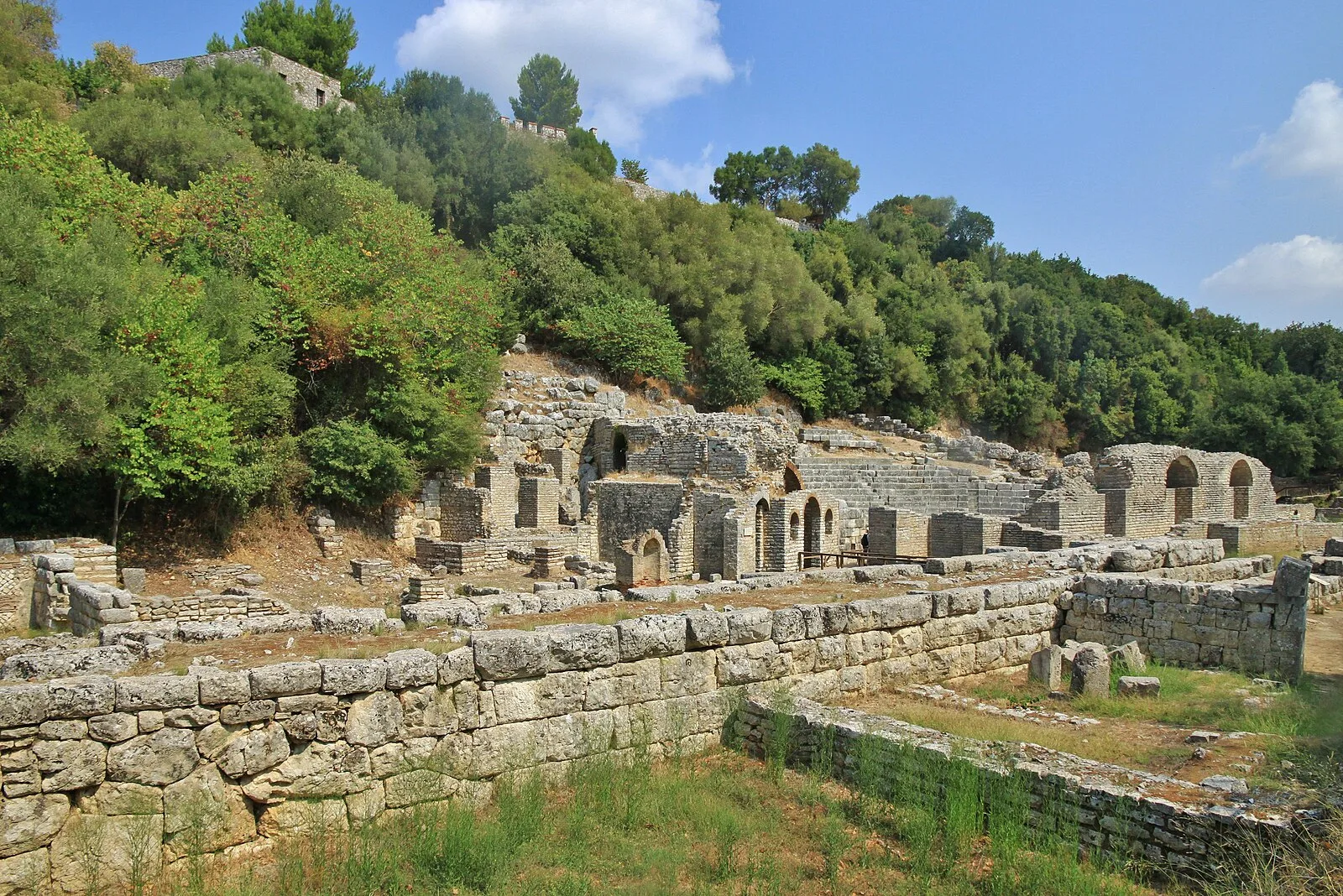
Also known as: 부트린트, Bouthrote, Bouthroton, Buthrote, Buthroton, Buthrotum, Butrinitas, Butrintas, Butrinte, Butrinti, Butrinto, Butrolum
| Type | City |
|---|---|
| Period | 1500 - 500 BC |
| Country | Albania |
| Coordinates | 39.7456° N, 20.0205° E |