
 Serbia
The Hadži-Prodan's Cave is an archaeological site of the Paleolithic period and a national natural monument, located in the village Raščići around 7 km from Ivanjica in western central Serbia [1]. The 345 m long cave was formed during the Late Cretaceous in "thick-bedded to massive" Senonian limestone [1]. Hadži Prodanova has been the subject of research and study in speleological and archaeological literature for over a century [1]. In 2003 a 2.5 m deep trench of 16 m2 was dug in the entrance, the main cavern and the internal part of the cave plateau [1]. Only fifteen Palaeolithic artifacts were discovered inside the cave [1]. However, Hadži Prodanova and the nearby Šalitrena Cave are so far the only cave sites in the Central Balkan mountains, that have produced evidence for human presence in a Gravettian and/or Epigravettian cultural context [1].
Text: Wikipedia – 'Hadži-Prodan's Cave' (revision of 2026-09-05), CC BY-SA 4.0 · sentences selected and shortened by an AI system · source →Hadži-Prodan's Cave
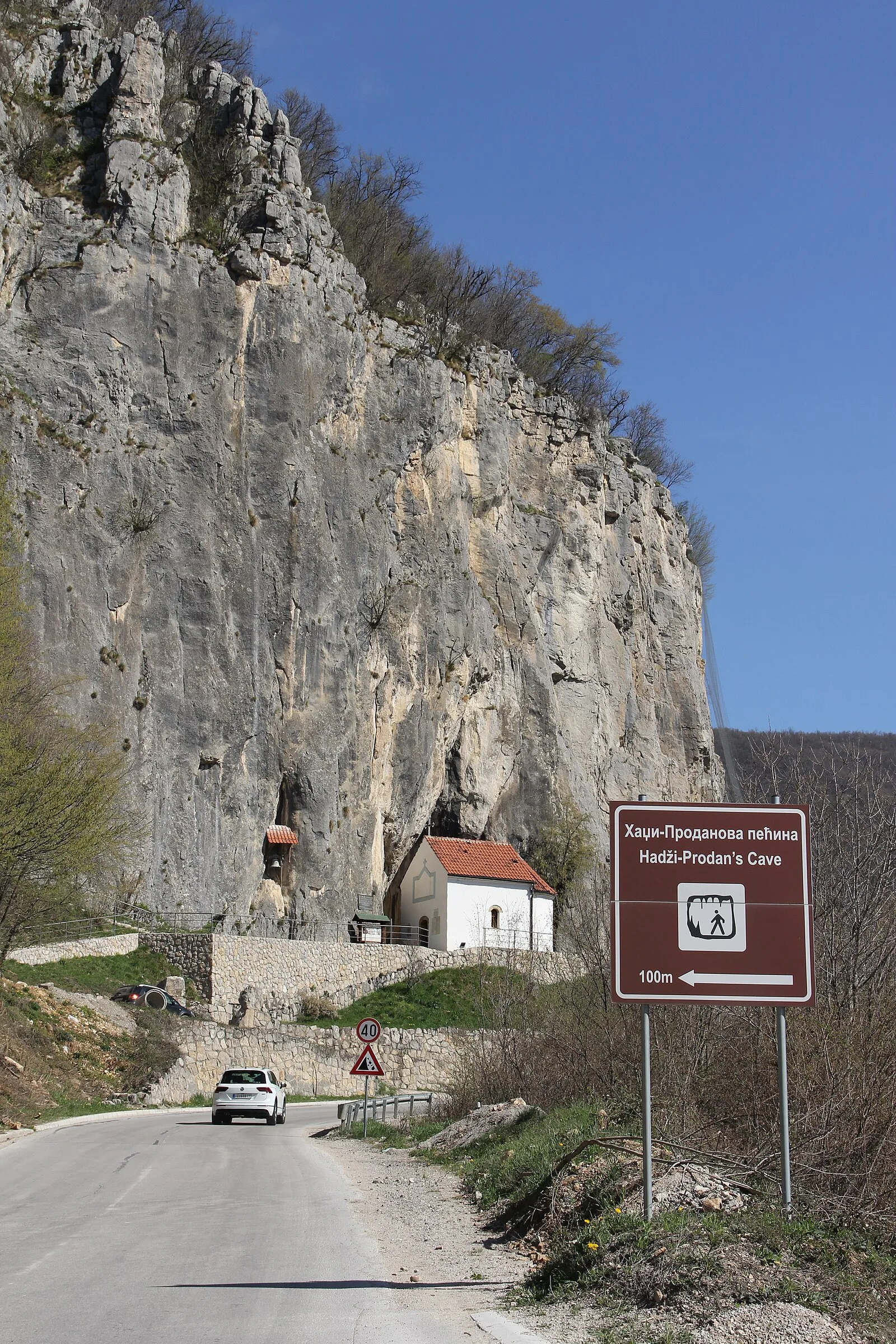
Also known as: Cueva de Hadži-Prodan, Hadži-Prodan Mağarası, Hadži Prodanova pećina, Haji Prodan’s cave, Пештерата Хаџи Проданова, Хаџи Проданова пећина, Хаџи-Проданова пећина, Хаџи Проданова Пештера, كهف حاجي برودان, كهف هادزى برودان
| Type | Cave Structures |
|---|---|
| Period | < 4500 BC |
| Country | Serbia |
| Coordinates | 43.6337° N, 20.2423° E |