
 Portugal
The Roman Bridge of Catribana is located near the village of Catribana in the parish of São João das Lampas, in the municipality of Sintra in the Lisbon District of Portugal [1]. The bridge, which crosses the Bolelas stream, is made of local limestone blocks [1]. It is likely to have provided access for a Roman villa to a main road or connected two important Roman villas at the time when the area was part of the Roman Olisipo, in the province of Lusitania, which formed part of the Roman Empire [1]. It is composed of a single arch and parapet, and has undergone several changes over the centuries [1]. On its south side is a section of a Roman path, about 50 meters long, which gives access to the bridge [1]. Close to the bridge archaeologists have identified vestiges of a Roman-era cemetery together with remains of a Neolithic settlement [1].
Text: Wikipedia – 'Roman Bridge of Catribana' (revision of 2026-07-22), CC BY-SA 4.0 · sentences selected and shortened by an AI system · source →Roman Bridge of Catribana
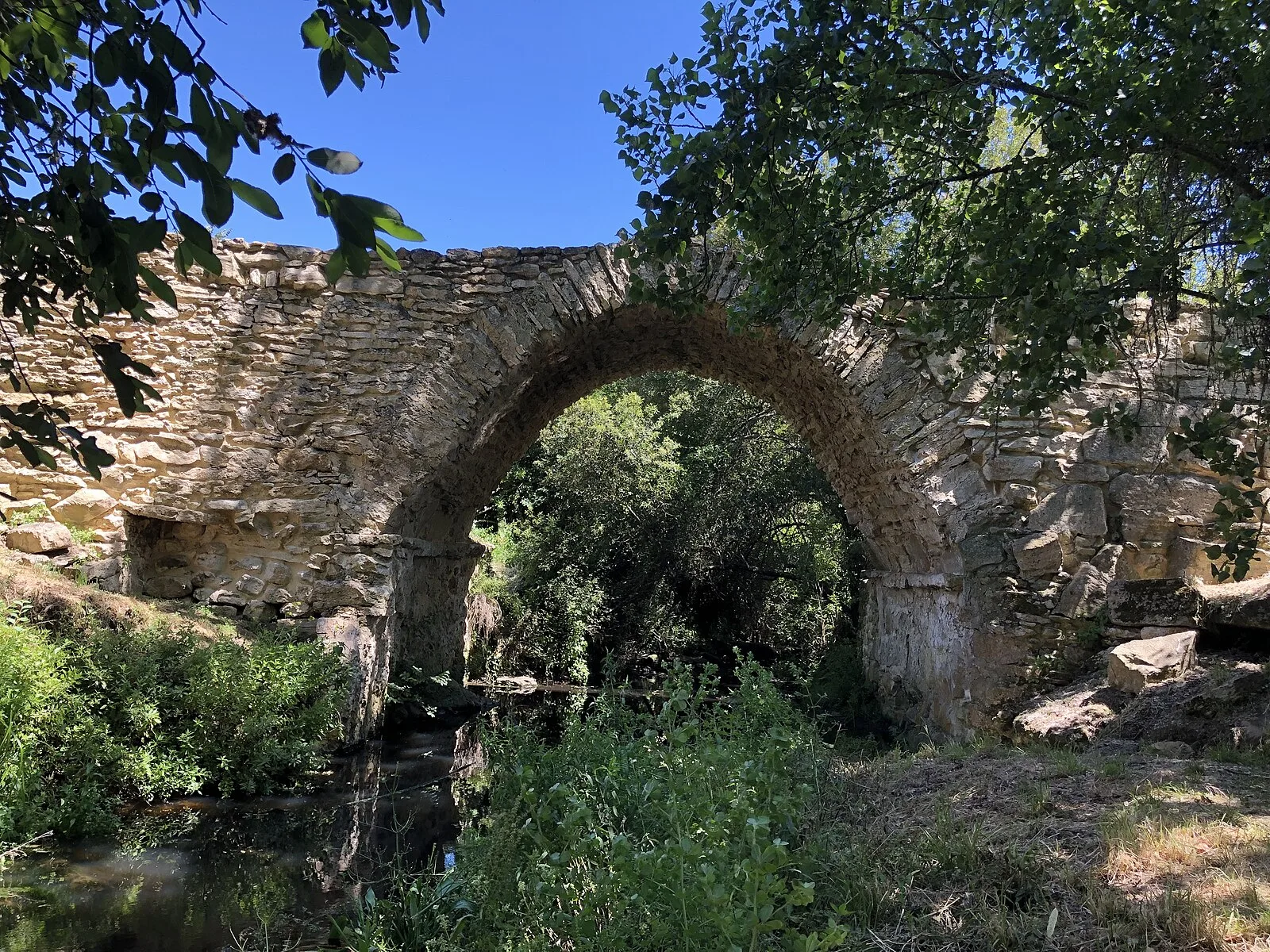
Also known as: Calçada na Catribana, Conjunto constituído pela calçada e ponte romanas e azenha na Catribana, Ensemble consisting of the Roman pavement and bridge and watermill in Catribana, Ponte e Calçada Romanas da Catribana, Ponte romano di Catribana, Pont romà de Catribana, Puente romano de Catribana, Roman bridge at Catribana
| Type | Gate/archway/bridge |
|---|---|
| Period | 1 - 500 AD |
| Country | Portugal |
| Coordinates | 38.8890° N, 9.4135° W |