
 Greece
The Throne Room was a chamber built for ceremonial purposes during the 15th century BC inside the palatial complex of Knossos, Crete [1]. It is found at the heart of the Bronze Age palace of Knossos [1]. The throne room was unearthed in 1900 by British archaeologist Arthur Evans, during the first phase of his excavations in Knossos [1]. It was found in the center of the palatial complex and west of the central court [1]. Moreover, on three sides it contains gypsum benches [1]. It was part of a larger suite that also included an anteroom and an inner chamber with a ledge that was possibly a chapel [1].
Text: Wikipedia – 'Throne Room, Knossos' (revision of 2026-09-15), CC BY-SA 4.0 · sentences selected and shortened by an AI system · source →Throne Room, Knossos
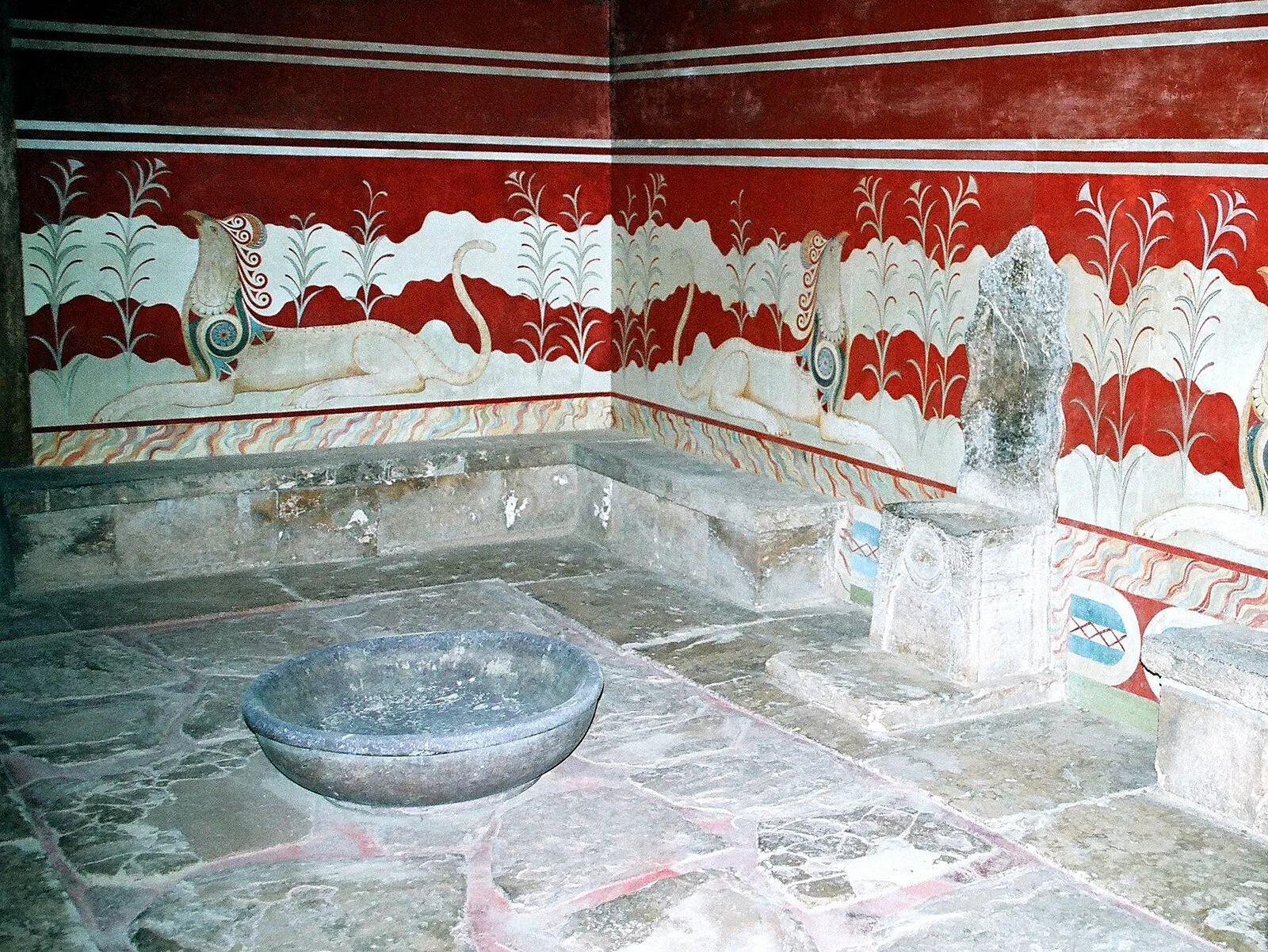
Also known as: Salle du Trône (Knossos), salón del trono de Cnosos, Thronsaal, غرفة العرش، كنوسوس, 克诺索斯御座厅
| Type | Palace |
|---|---|
| Period | 1500 - 500 BC |
| Country | Greece |
| Coordinates | 35.2982° N, 25.1630° E |