
 Greece
La Parisienne is a celebrated Minoan fresco fragment dating to c. 1400-1350 BC, part of the larger Camp Stool Fresco from the palace of Knossos. The figure depicts a woman in formal attire with a sacral knot at her neck, suggesting she is a priestess. Discovered by Sir Arthur Evans during excavations at Knossos, the fresco was named by art historian Edmond Pottier, who likened her appearance to contemporary Parisian women. Now housed in the Heraklion Archaeological Museum, the image features large expressive eyes, bright red lips, and distinctive black curly hair.
La Parisienne - Fresco
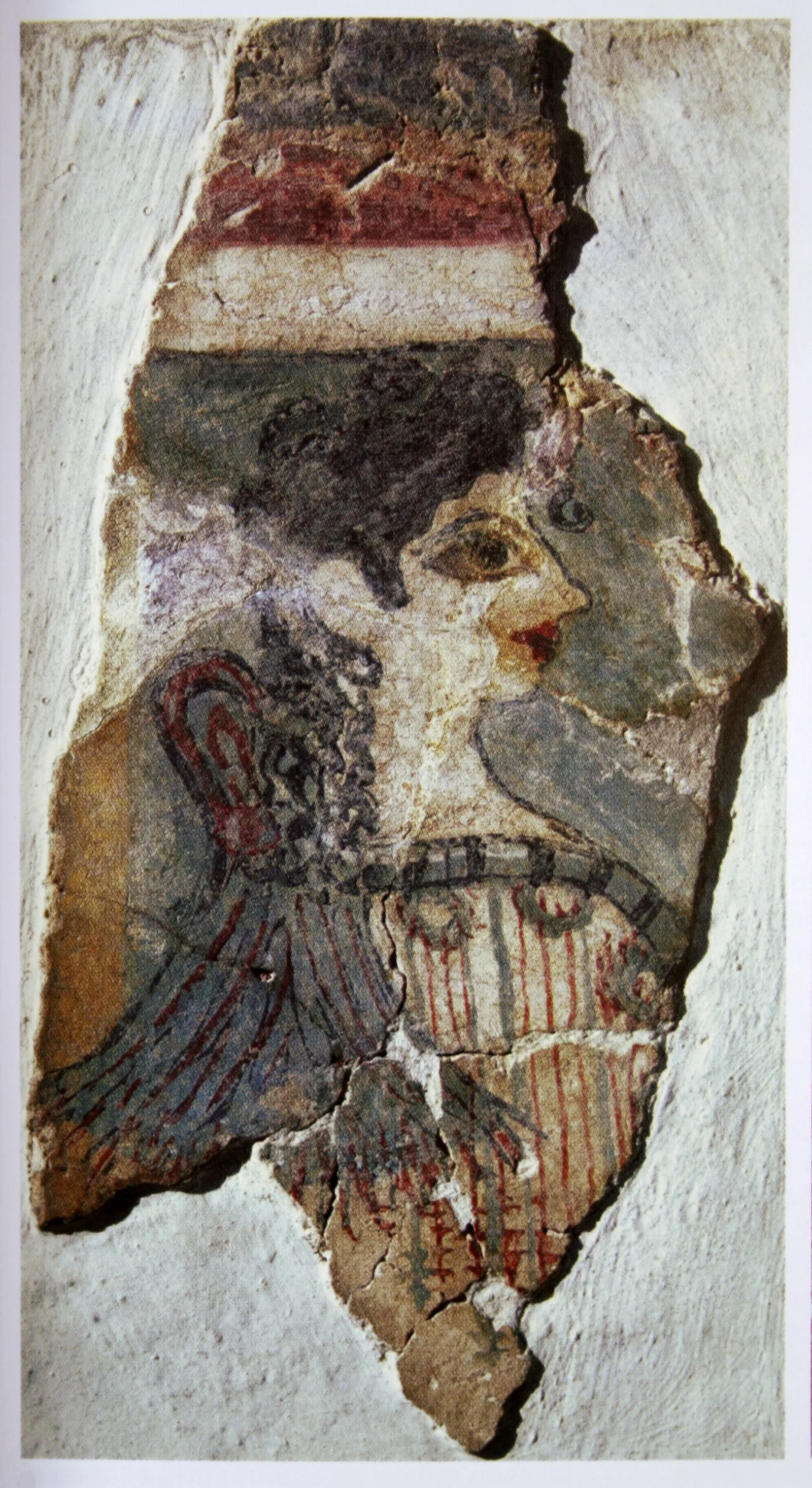
Also known as: Camp-stool fresco, Dama Minoica, Die Pariserin, Dominicella Parisiensis, Iuvenes comissantes, Iuvenes comissantes (pictura muralis Minoa), La Parigina, La Parisienne, La Parisienne (fresco), La Parisienne (fresque), Minoan Lady, Parigina
| Type | Archaeological site |
|---|---|
| Period | 1500 - 500 BC |
| Country | Greece |
| Coordinates | 35.2981° N, 25.1631° E |