
 Greece
Located a few kilometers from the palaces of Knossos and Fourni and the megaron at Vathypetro, Mount Juktas was the site of an important peak sanctuary in the Minoan world [1]. Archaeologists have studied the site over an extensive period, examining fragments of pottery, remains of walls, and some unique kinds of stone that must have been hauled up the mountain because they do not otherwise occur there [1]. Juktas was first excavated in 1909 by Sir Arthur Evans [1]. It can be regarded as an adjunct archaeological site to the important Knossos site a few kilometres away [1]. Among the finds at the Juktas Minoan peak sanctuary were clay human and animal figurines, stone horns, stone altars, bronze double axes, and both bowls and tables with Linear A inscriptions [1]. Pottery sherds from the site date back as far as Middle Minoan IA [1].
Text: Wikipedia – 'Mount Juktas' (revision of 2026-08-15), CC BY-SA 4.0 · sentences selected and shortened by an AI system · source →Mount Juktas
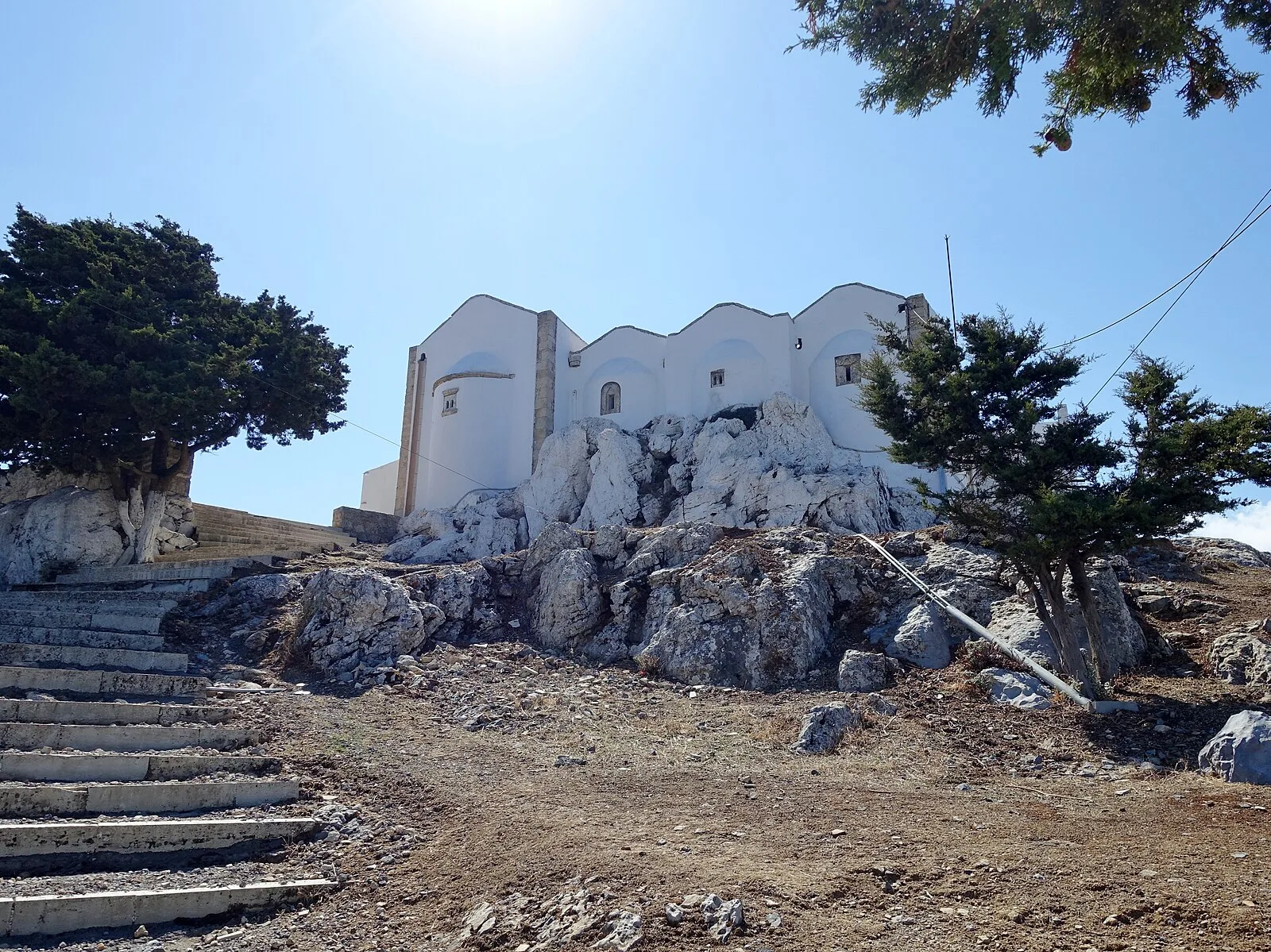
Also known as: Gioúchtas, Juchtas, Juktas, Monte Iuktas, Mont Gioúchtas, mont Iouchtas, Mont Iuktas, Mont Juktas, Yioúktas, Yuktas, Γιούκτας, Γιούχτας
| Type | Sanctuary |
|---|---|
| Period | 3000 - 1500 BC |
| Country | Greece |
| Coordinates | 35.2327° N, 25.1436° E |