
 Greece
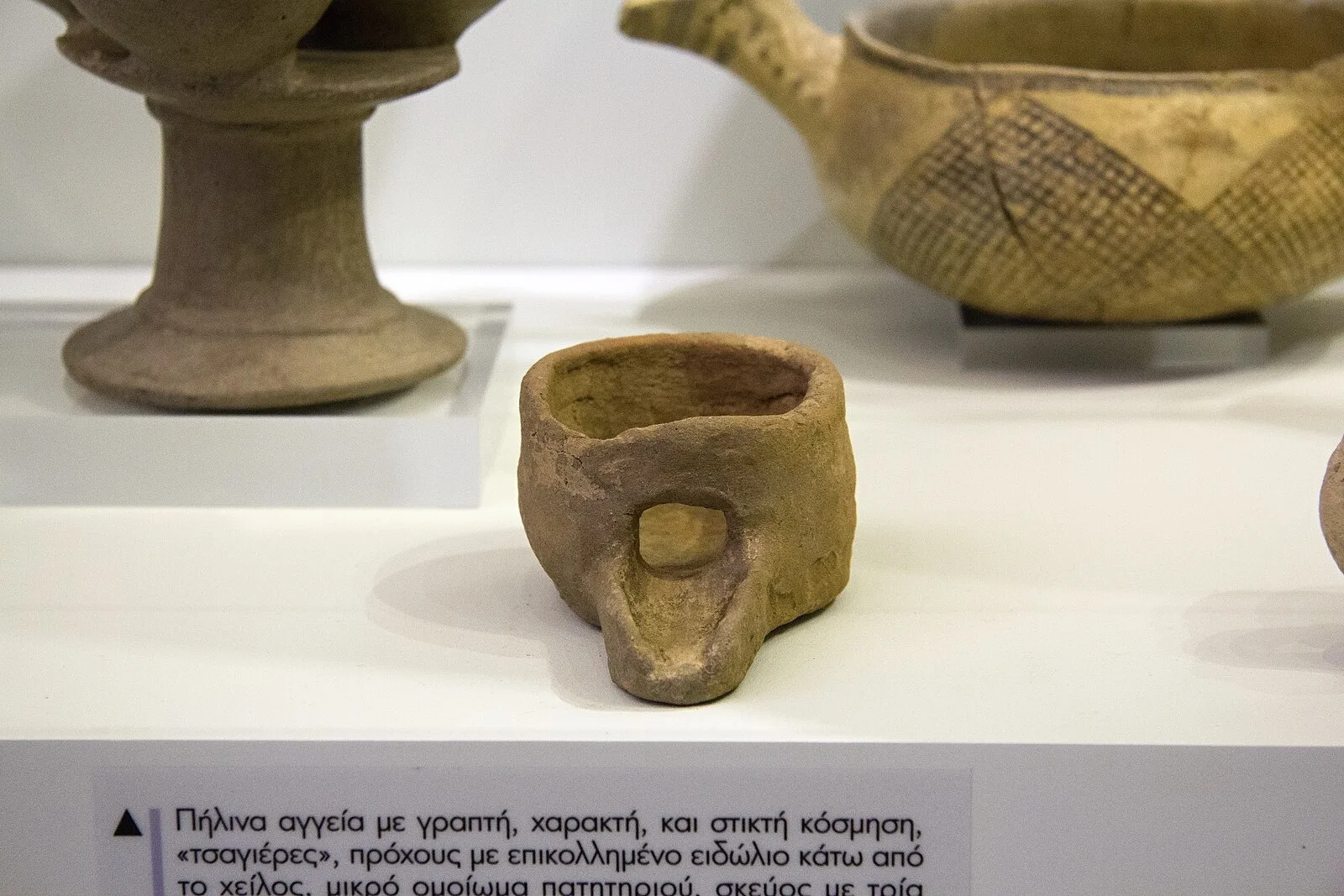
Koumasa is a Minoan archaeological site in southern Crete, best known for its large prepalatial cemetery [1]. It is located between the villages of Loukia and Koumasa, at the southern edge of the Mesara Plain and near the foothills of the Asterousia Mountains [1]. The site was first excavated by Stephanos Xanthoudides between 1904 and 1906 [1]. Koumasa includes both a Prepalatial cemetery and an associated settlement extending across the saddle of the Korakies hill [1]. The site is also notable for its marble folded-arm figurines, which combine Cycladic features with local Minoan styles [1]. The burial architecture at Koumasa is dominated by large circular tholos tombs constructed during the Prepalatial Minoan period [1]. These tombs are built from locally sourced limestone, employing dry-stone construction techniques without the use of mortar [1]. Outside Tholos B, a secondary burial deposit yielded an assemblage of 140 multicolored beads, seven stone seals, gold foil bands, a small rock crystal phiale, obsidian blades, and bronze tools [1].
Text: Wikipedia – 'Koumasa' (revision of 2026-09-23), CC BY-SA 4.0 · sentences selected and shortened by an AI system · source →Koumasa
Also known as: Cumasa, Kumasa, Κουμάσα, Кумаса
| Type | Cemetery |
|---|---|
| Period | 3000 - 1500 BC |
| Country | Greece |
| Coordinates | 34.9835° N, 25.0130° E |