
 Greece
Excavations at Hagia Triada have provided crucial evidence concerning Minoan everyday life [1]. Notable finds include the Hagia Triada sarcophagus and the "Harvester Vase" [1]. About 150 Linear A tablets were found, the largest cache at any Minoan site [1]. All of the Linear A finds date to the Late Minoan IB period, before the site was destroyed by fire and then rebuilt [1]. The site was founded in the Early Minoan I period [1]. Toward the end of the LM IB period (c. 1625–1470 BC) the site was destroyed by fire [1]. Hagia Triada is in south central Crete, 30–40 meters above sea level [1]. The site was not a Minoan palace but an upscale town with some kind of local administration center [1].
Text: Wikipedia – 'Hagia Triada' (revision of 2026-08-13), CC BY-SA 4.0 · sentences selected and shortened by an AI system · source →Hagia Triada
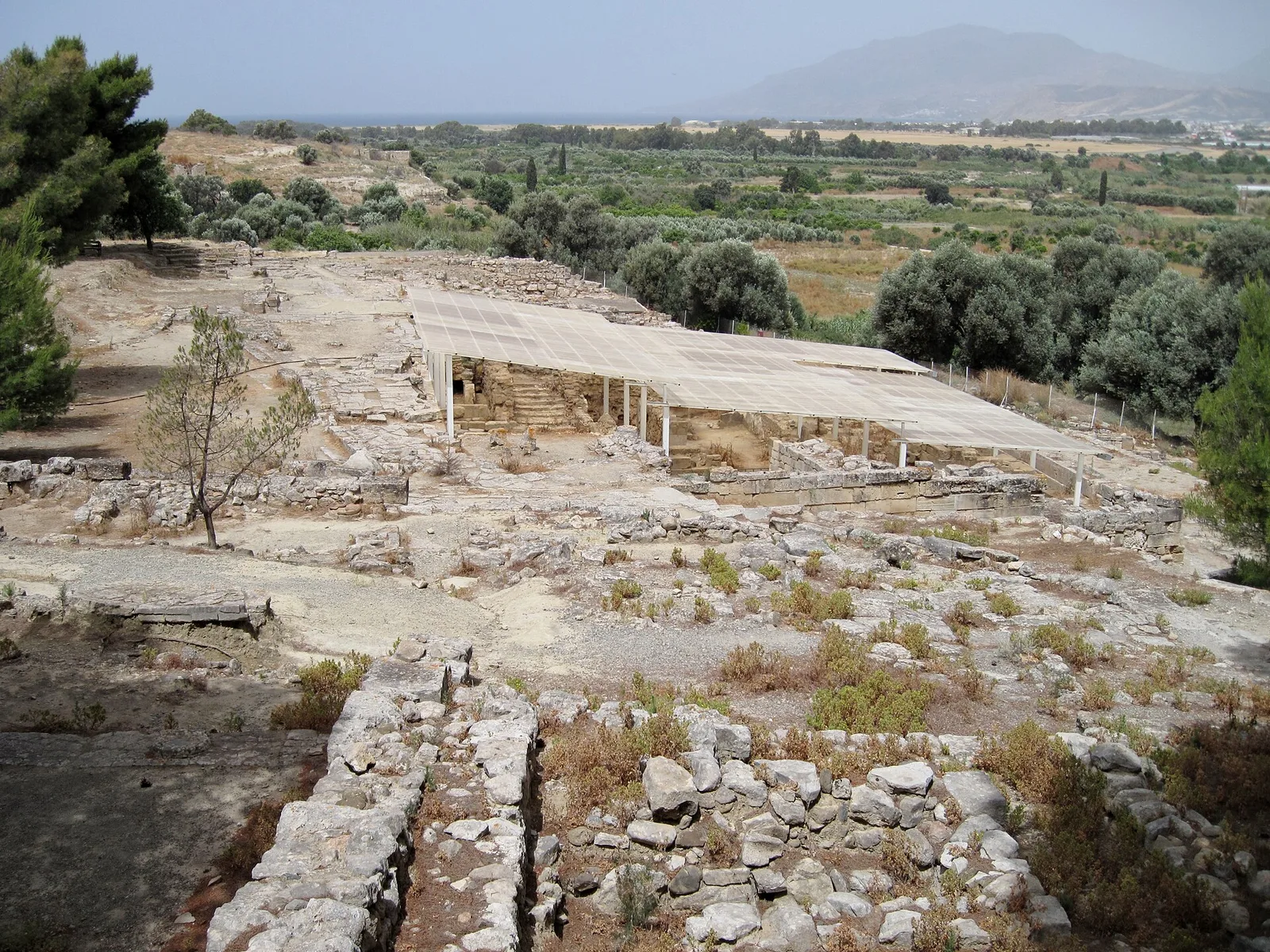
Also known as: Aghia Triada, Agia Triada, Agía Triáda (Iraklion), Agia Triada (Kreta), Aja Triada, Aja Triada (archeologické nálezisko), Aja Triada (Kréta), Ajía Triáda, Haghia Triada, Hagia Triadha, Sancta Trinitas (Creta), Sarcofago de Hagia Triada
| Type | City/town/settlement |
|---|---|
| Period | 3000 - 1500 BC |
| Country | Greece |
| Coordinates | 35.0590° N, 24.7925° E |