
 Greece
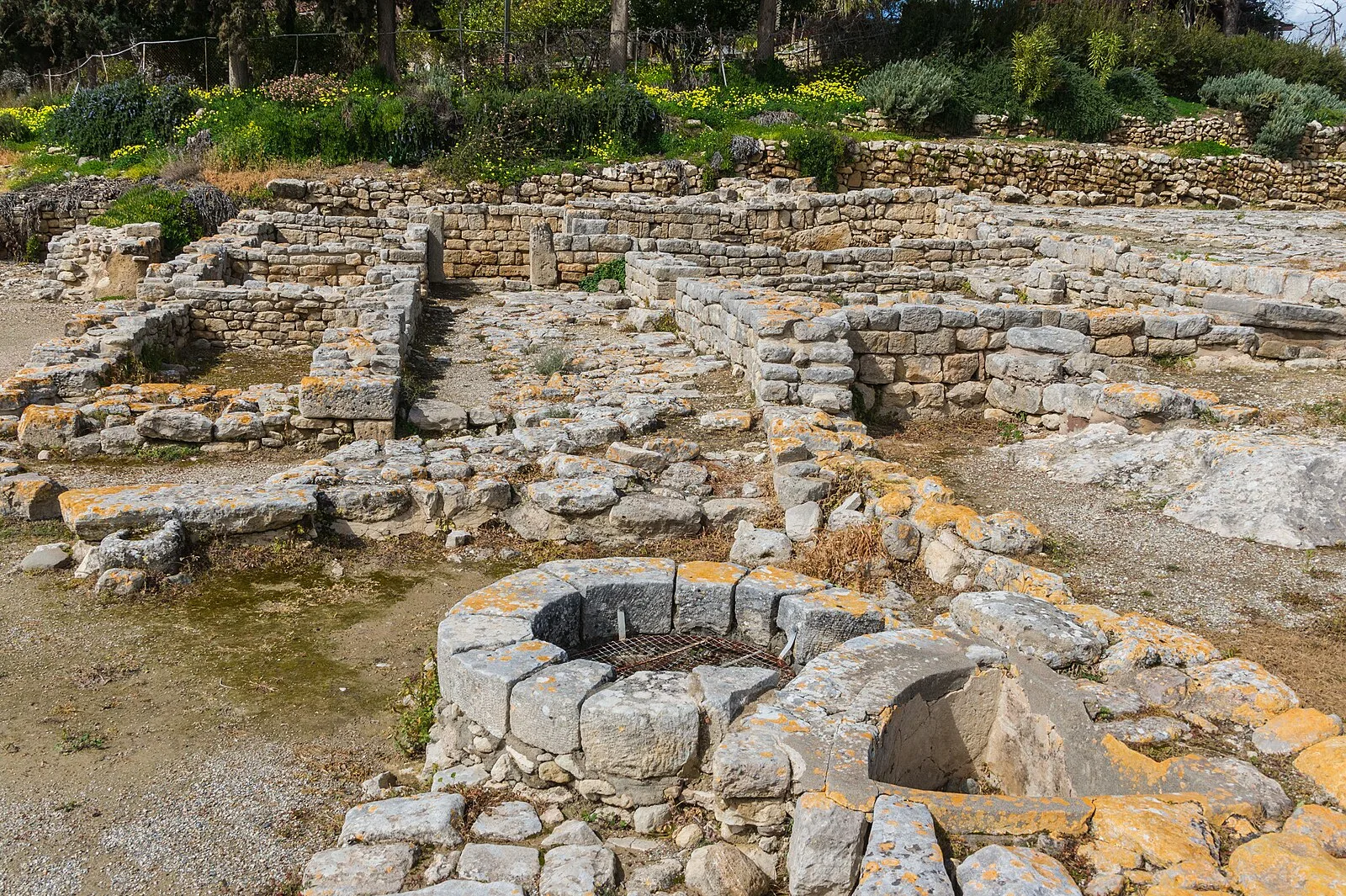
Phaistos, also transliterated as Phaestos, Festos and Latin Phaestus, is a Bronze Age archaeological site at modern Faistos, a municipality in south central Crete [1]. It is notable for the remains of a Minoan palace and the surrounding town [1]. Phaistos was first inhabited around 3600 BCE, slightly later than other early sites such as Knossos [1]. The first palace was built in the Middle Minoan IB period, around 2000 BCE [1]. The initial palace was destroyed and rebuilt three times in a period of about three centuries [1]. The site was reinhabited during the Geometric Age (8th century BCE) [1]. Around the end of the 3rd century BCE, Phaistos was destroyed by the Gortynians and since then has not been present in the history of Crete [1]. From 1900 to 1904 Federico Halbherr and his student Luigi Pernier excavated at Phaistos [1].
Text: Wikipedia – 'Phaistos' (revision of 2026-08-17), CC BY-SA 4.0 · sentences selected and shortened by an AI system · source →Phaistos
Also known as: Faesto (Creta), Faestos (Creta), Faistas, Faistó (Creta), Faistos, Faistós (Creta), Fajstos, Festo, Festos, Festos (Creta), Festo (sítio arqueológico), Mint of Phaestus
| Type | City/town/settlement |
|---|---|
| Period | 4500 - 3000 BC |
| Country | Greece |
| Coordinates | 35.0515° N, 24.8137° E |